

In today’s Beef Buzz, senior farm and ranch broadcaster Ron Hays speaks with University of Missouri livestock market economist Elliot Dennis about recent pressure across the beef market, including declining wholesale beef prices, changing consumer demand and the growing influence of beef-on-dairy cattle in the industry.
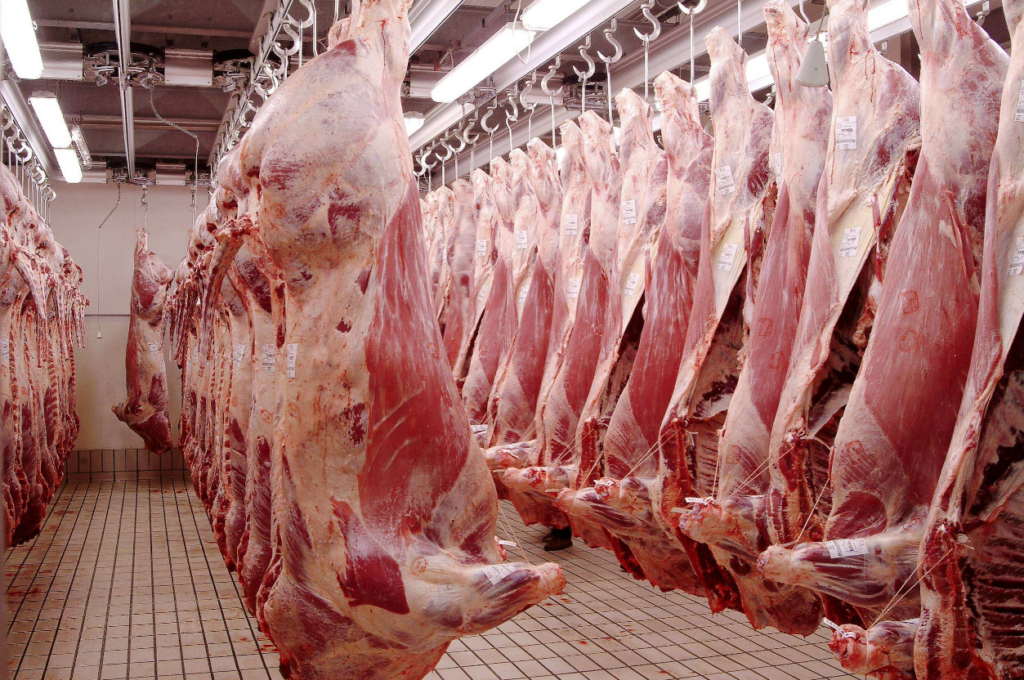
With cash cattle prices under pressure and Choice boxed beef values reaching their lowest levels since January 2026, Dennis explains some of the factors influencing the wholesale market and how changing supplies of imported lean trimmings are affecting beef demand.
Chuck and Rib Primals Carrying the Box Beef Market
Dennis says the wholesale beef cutout has been relatively stagnant, with the rib continuing to account for a significant portion of year-over-year value changes. However, unlike previous years, the chuck has also played an important role in supporting beef values. “When we think about year-over-year change, the rib has definitely been carrying a large portion of it,” Dennis said. “And generally, we think what’s the next cut that’s going to carry it? Probably the loin. That’s actually hasn’t been the case this year.”
Instead, Dennis says the chuck has helped support the market because of its use in ground beef production. Chuck meat can be ground into lean trimmings and blended with fattier trimmings to produce ground beef products such as 80/20.
However, that demand has softened as the industry has increased imports of lean beef trimmings from other countries. “The chuck market has definitely softened,” Dennis said. “As we’ve started to come into the winter months, we’re starting to see some of the market trying to figure out what that cutout should actually be as it tries to balance a lot of these imported trimmings into the market.”
Consumer Beef Prices and Demand Remain Important Factors
While cattle producers and packers have both experienced price pressure, consumers are also seeing changes in beef prices.
Dennis says the latest all-fresh beef price data showed the lowest price since January 2026, following several months of volatility as different policies have been implemented to address beef affordability.
However, he says consumer demand continues to receive support from several factors, including research examining the influence of GLP-1 medications on protein consumption.
The Meat Demand Monitor, housed at Kansas State University and funded through beef checkoff dollars, has examined how GLP-1 use influences consumers’ willingness to pay for beef. “What they found is that if a person uses GLP-1s, they’re willing to pay more in dollars per pound across beef products,” Dennis said.
He explained that while GLP-1 users may skip certain meals, they can be willing to spend more on the meals they do eat, particularly when it comes to protein. “If we’re skipping breakfast as a GLP-1 user, on the meals that we are eating, we’re actually spending a lot more money and willing to pay more, particularly for protein products,” Dennis said.
Dennis added that beef quality and the overall eating experience have also helped support demand. “All of those things have been very positive and has continued to kind of support the beef market,” he said.
Beef-on-Dairy Cattle Adding Another Dimension to the Industry
Dennis also discussed the growing influence of beef-on-dairy cattle, which he says has become an increasingly important part of the cattle feeding industry in 2026.
He attributes the growth to increased availability of dairy bull calves, driven in part by the use of sexed semen, along with expansion in the dairy herd. “Over really since the middle of 2025 and through this year, we’ve continually seen the dairy herd start to grow, which has ultimately meant more beef-on-dairy that’s coming to the industry,” Dennis said.
Looking ahead, Dennis says the trend could have important implications for cattle feeding profitability and how the industry evaluates red meat yields.
He noted that differences in red meat yields across cattle types will become an increasingly important consideration as beef-on-dairy animals make up a larger share of the cattle supply. “As we start to think about modifying the red meat yield equation, things like the beef-on-dairy is going to be a really interesting conversation as we start to think about how those animals kind of deposit meat and fat relative just to a traditional Angus breed,” Dennis said.
The Beef Buzz is a regular feature heard on radio stations around the region on the Radio Oklahoma Ag Network and is a regular audio feature found on this website as well. Click on the LISTEN BAR above for today’s show and check out our archives for older Beef Buzz shows covering the gamut of the beef cattle industry today.







