
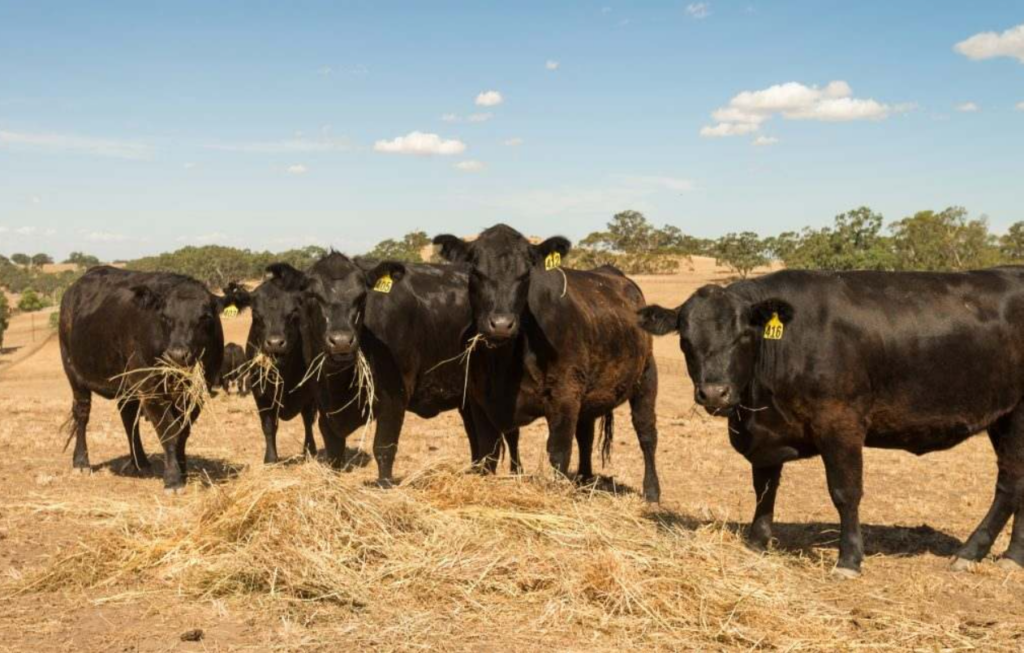
In the past two weeks, cattle feeders have found themselves in a more defensive cash market position as the steer price averaged nearly $1/cwt. lower last week at $214.75/cwt. The second week of price declines followed a respectable price recovery into the mid-$220/cwt. range during October.
The heavy carcass theme continued to play out as data for the October’s last week brought the average steer carcass weight to another record 995 lb. each. Heavy cattle are prevalent in the North where the bulk of the cash trade occurs, keeping prices on a lower trend for the area again last week.
Just as heavy cattle pressure cattle prices, boxed beef values have come under additional price pressure before Thanksgiving. In the past three years, cutout values posted varying degrees of upward momentum for the last week of October and the first week of November. The trend did not develop again in 2026, leaving the Comprehensive Cutout in a declining price pattern since the week of September 28. Through last week, the Comprehensive Cutout price fell $0.19/lb. or 5%.
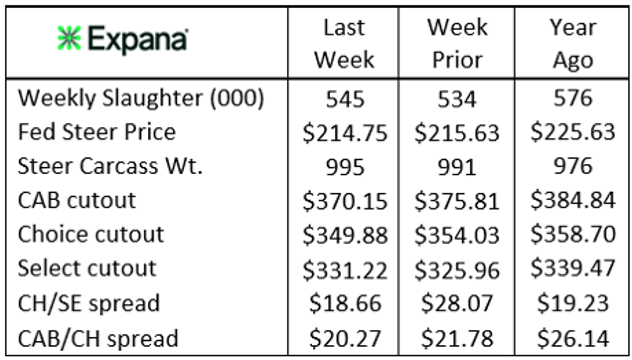
Price spreads for carcass quality are within expected ranges in November, although mild narrowing of those spreads occurred last week. Following this summer’s lows near $10/cwt., the USDA Prime cutout premium to Choice remains at $40/cwt. on a very strong seasonal increase.
The ribeye stands alone as the one subprimal beef item that is topping charts with recent record highs more than $16/lb., wholesale. To broadly describe it, the remaining Certified Angus Beef ® carcass cutout could be classified as having a lower price trend last week. Chuck and round items suffered most of the pressure as the focus on Thanksgiving pressured roast items to the backburner. Strip loins, sirloins —and, surprisingly, tenderloins—are all priced cheaper than a year ago. While tenderloins have found their expected fourth quarter increased price plateau, the current $17/lb. wholesale value is uncharacteristically $1/cwt. higher than the elevated ribeye price.
Ground beef values are in a seasonally anticipated lower price range, with ample supply of 90% lean trim adding pressure. As well, fat trim is priced the weakest of the components in the grind market.
Yield Grade 4s and 5s Climb
In the current era of smaller domestic calf crops, the beef industry’s push to maintain a steady supply of beef for consumers has forced a few compromises. As the latest record-heavy steer carcass weights (995 lb.) were just confirmed for the last week in October, it’s widely understood that increased pounds per head has been an overarching theme.
The unwanted baggage of the rapidly increasing percentage of Yield Grade 4 and 5 carcasses is a highly correlated outcome. While those outside of the feeding and packing sectors may be less familiar with these dynamics, end-users and consumers have undoubtedly seen increased proportions of kernel fat in ribeyes and more seam fat in other subprimal cuts.
Even as cattle feeders, responding to economic signals, watch YG 4s and 5s creep higher in their closeout data, they too may be unaware of the magnitude of these increases over the past few years. In the last decade, the combined categories of YG 4s and 5s has quickly ratcheted up from 11.5% in 2017, the brief period in which these fattest carcasses stepped backward. From 2017 to 2023, the average annual increase was 1% annually, with the largest jump of 2.6% in 2020, the Covid-19 backlog year.
While fed cattle supplies quickly tightened beginning in 2024, YG 4s and 5s jumped an enormous 12.1% in nearly three years, with the remaining two months of 2026 data yet to be recorded. A longer history dating back to 2000 shows a miniscule 2.2% of cattle graded in these combined categories. This fact may astonish those less experienced with this depth of history in carcass grading trends. Much has changed in grading technology and feeding technology in 26 years. It’s worth noting that packers commissioned USDA yield grades on just 18% of fed cattle carcasses this year, opting instead to assign an equivalent through the same camera technology used by USDA graders.
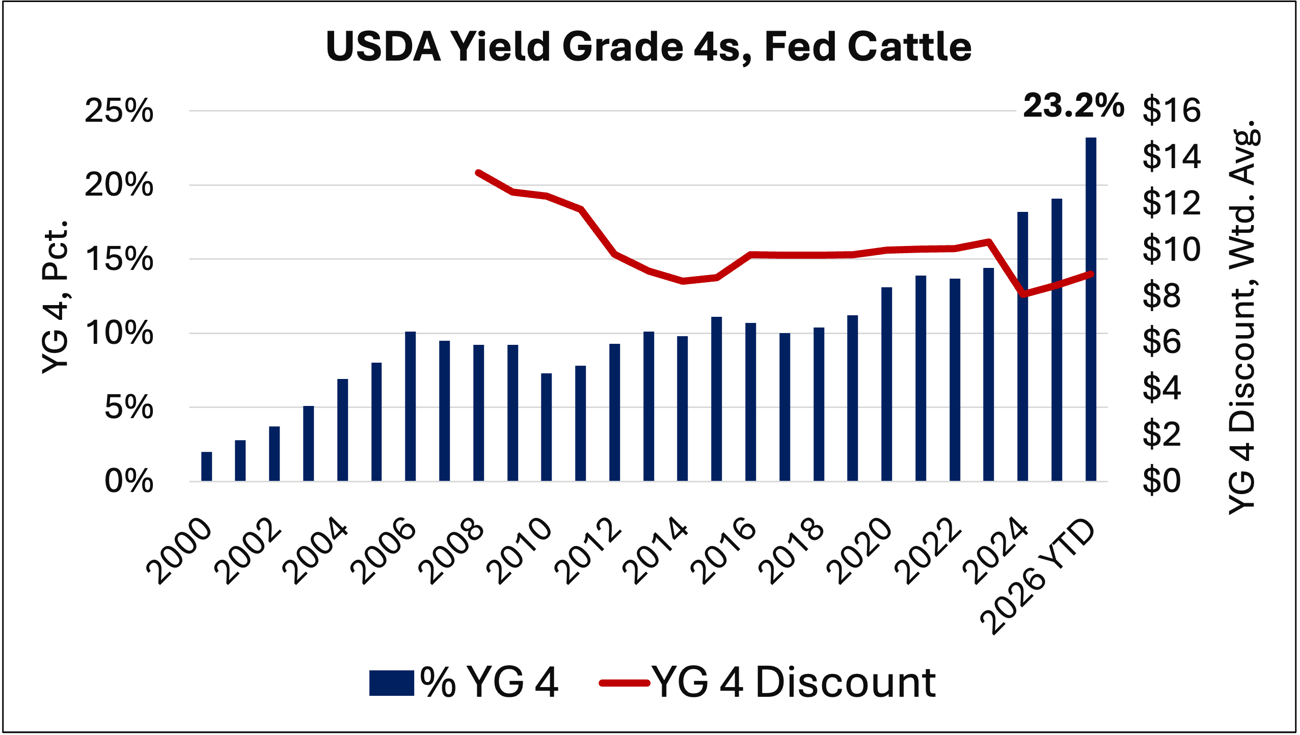
As consumers have continued to respond positively to the elevated flavor and juiciness profile of more richly marbled beef, the supply chain has adapted as well. While genetically-driven marbling improvement has been a boon to consumer satisfaction, packers have encouraged elevated marbling by lowering, on average, their YG 4 and 5 grid discounts. Some include allowances for a share of YG 4s, at least, on their grids before penalties are imposed.
With leverage having strongly favored the feeding sector during the past two years and “pounds per shackle” in the packing plant a focus, the sharp uptick in external fat has created a shockingly large 23.2% YG 4 and 6.3% YG 5 balance of fed cattle produciton so far this year. As we compare costs of gain against much higher sales prices per pound feedyard arithmatic has shown this to be a profitable endpoint in the face of hisorically wide feeding margins. While this yield grade mix grows increasingly distasteful from an efficiency and red meat yield perspective, it’s unreasonable to expect any different outcome. We must consider the economics driving the trend, not to mention the viability of an industry struggling to keep fed cattle tonnage high enough to maintain demand amid escalating beef prices.
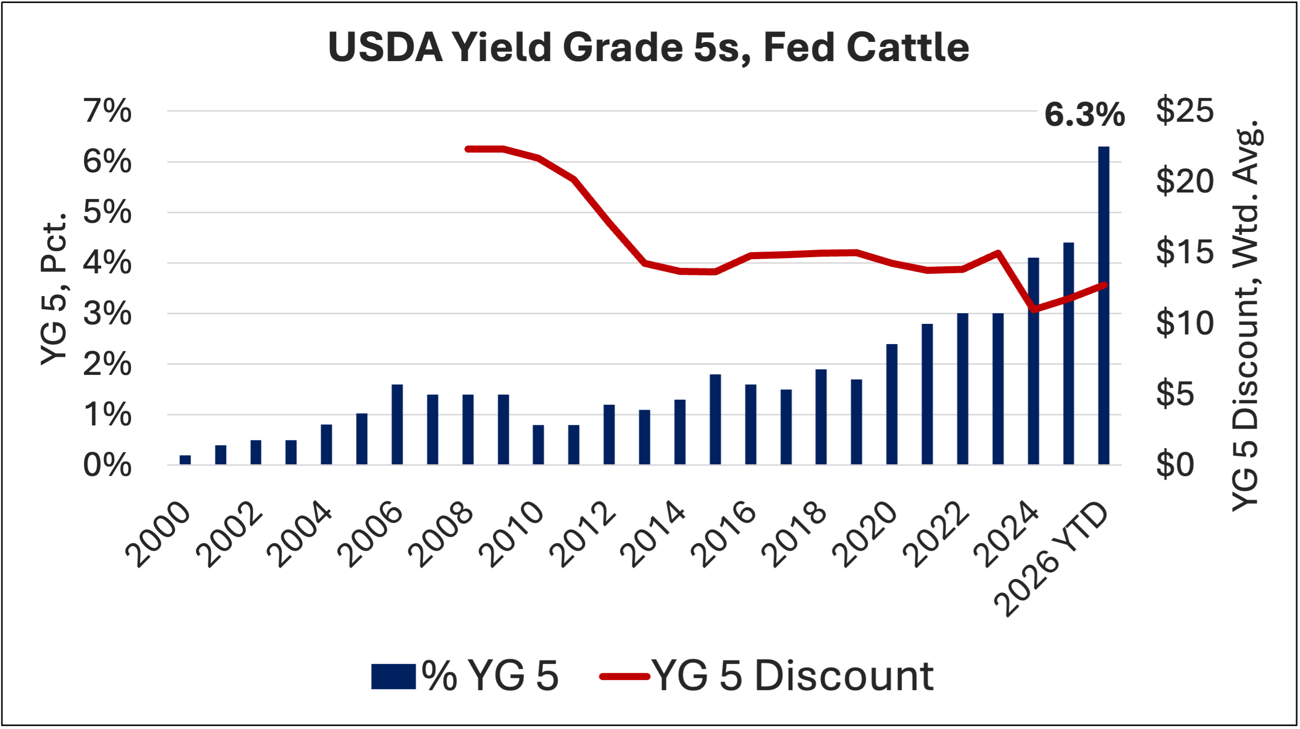
As the U.S. beef supply chain ponders improvements to red meat yield measurement via advanced technology, we should consider potential shifts in the value proposition of external carcass fat in the future. These outcomes and timelines aren’t especially clear today, yet if changes in carcass valuation lie ahead, imagining this future possibility deserves attention.
When consumers are polled on top attributes when buying beef, taste (by way of marbling-rich carcasses that provide the highest consumer satisfaction) is second—only to freshness. Beef suppliers should continue this quality focus in production, while being wise enough to consider potential adaptations. Rapidly evolving carcass composition and the probability of more precise red meat yield measurement urge us to pursue the best we can create in quality and yield. As it is today, economics will continue to drive the beef supply and shape outcomes.