Thu, 08 Sep 2022 13:11:35 CDT
Today, twelve agricultural organizations sent a letter to President Biden requesting a seat at the table during the White House Conference on Hunger, Nutrition, and Health. Since the White House launched the…


Sep 08
Thu, 08 Sep 2022 13:11:35 CDT
Today, twelve agricultural organizations sent a letter to President Biden requesting a seat at the table during the White House Conference on Hunger, Nutrition, and Health. Since the White House launched the…
Sep 08
Thu, 08 Sep 2022 13:59:45 CDT
U.S. beef exports again topped $1 billion in July and posted the fifth-largest volume on record, according to data released by USDA and compiled by the U.S. Meat Export Federation (USMEF). Pork exports remai…
Sep 08
Thu, 08 Sep 2022 13:16:10 CDT
Below is an opinion piece by USCA Director Brett Crosby:
A blog post published by the U.S. Chamber of Commerce on July 12, 2022, claimed that Congress is “rushing” to consider “aggressive legislation to regulate beef markets.”
Boy, if only that were true.
In February 2020, the U.S. Cattlemen’s Association (USCA) hosted its annual Cattle Producer’s Forum at the Public Auction Yards in Billings, Montana. It was there that a group of producers discussed the idea of reigniting a concept previously advanced by Senator Chuck Grassley of Iowa to improve the cash cattle market.
That concept was introduced by Iowa’s senior senator in 2002 as the Transparency for Independent Livestock Producers Act. It would require 25 percent of a packer’s daily kill to come as a result of purchases made on the daily, open market or spot market.
That was 20 years ago.
Since that time, we’ve seen a 75% decrease in the number of cattle feedlots – from 55,472 in 2002 to 13,379 in 2017 according to U.S. Census of Agriculture data. We’ve also lost approximately 1,200 cow-calf producers and backgrounders each year.
“Rushing” into legislation? While we continue to hem and haw over whether or not bold Congressional action is needed, independent producers will exit the business.
From an outsider’s view, it can certainly seem like all this talk of consolidation and anticompetitive practices in the U.S. beef and cattle industries suddenly sprung up. But USCA and other stakeholders have worked towards restoring leverage and true price discovery in the cattle marketplace for decades. Congressional passage of the Cattle Price Discovery and Transparency Act and the Meat and Poultry Special Investigator Act represents a significant step toward achieving that goal.
In testimony to the U.S. Senate Committee on Agriculture, Nutrition, and Forestry, Dr. Stephen Koontz of Colorado State University observed that, “There are no other industries outside of cattle and beef…that work in their entirety in this type of setting – whereby supply decisions, demand revelation, and changing the product form are in distinctly different industries. Coordinating the system is difficult.”
“Difficult” is certainly understated, but the point remains: The U.S. cattle and beef industries’ marketing process and dynamics are entirely unique. In our business, we need a referee to ensure a competitive playing field free from interference. We also need a healthy and viable cash market to keep our independent producers in business.
Not many have accused Congress of moving too quickly. Democracy is designed to be a slow, laborious process. Momentum for these two historic pieces of legislation grew over nearly two years from an idea conceived by a small group of from concerned producers to widespread support from producers and consumers, grassroots organizations, Members of Congress, and the White House. Now it’s time to finish what Senator Grassley began twenty years ago: Set aside the interests of multinational meatpackers and secure the future of our sovereign food system.
Brett Crosby currently serves as Region IV Director for the U.S. Cattlemen’s Association, representing Utah, Wyoming, and Colorado.
Sep 08
Thu, 08 Sep 2022 13:11:36 CDT
Today, twelve agricultural organizations sent a letter to President Biden requesting a seat at the table during the White House Conference on Hunger, Nutrition, and Health. Since the White House launched the…
Sep 08
Thu, 08 Sep 2022 11:26:47 CDT
Oklahoma State University just kicked off its football season with a change to one of football’s biggest staples.
Beer.
Last month, Stillwater’s Iron Monk Brewing Company released a beer called 1890 Original, a crisp blonde ale brewed for OSU Cowboys, which is now the official craft beer offered at OSU football games.
But what fans inside Boone Pickens Stadium don’t know is that the university has had a long relationship with craft beer.
“People like to go out and buy local beer because they can be in the place where it was brewed,” said Charles Fontanier, associate professor, in the OSU Department of Horticulture and Landscape Architecture. “If a business can have a beer that is 100% Oklahoma ingredients, that elevates the whole industry to be able to say that. OSU Ag Research and Extension can help facilitate a connection between brewers and potential producers to help create that market and an interest in it.”
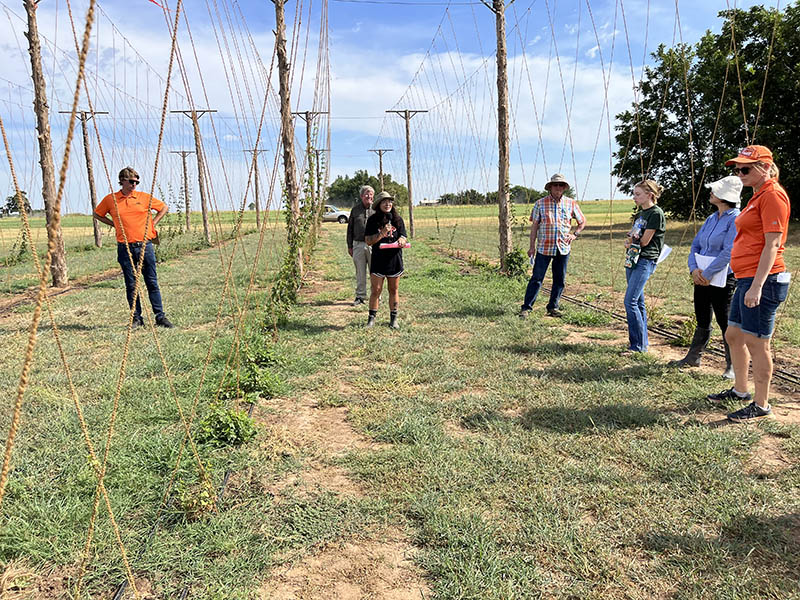
Five years ago, Bruce Dunn, a professor in the horticulture and landscape architecture department, decided to throw hops into his greenhouse mix because he had some extra space.
“It grew well but was attacked by spider mites, so I took it out to The Botanic Garden at OSU, and I was surprised to see it did really well there,” Dunn said. “One year, I harvested a trash bag full of a few different varieties, and I took that bag to Iron Monk, and they said they would see what they could do with it. A couple of weeks later, they called me and said they had made a batch with it.”
Armed with the knowledge that hops could do well in both greenhouse and field environments, Dunn approached Fontanier.
“What I really wanted to see was if we could grow better yields or higher quality plants in a greenhouse compared to field production,” Dunn said.
Fontanier said to their knowledge, OSU is one of only three hops growers in Oklahoma – a number he, Dunn and doctoral student Katie Stenmark want to change.
“The specific goal is to verify that quality hops can be grown in Oklahoma and to select the cultivars that grow best here, so we can create a local source of hops for Oklahoma craft breweries,” said Stenmark, who is working on the project for her dissertation.
Oklahoma brewers have access to the other three main ingredients in beer production: water, grain and yeast.
“We have all three of those in Oklahoma, but what we do not have is a local source of hops,” Stenmark said. “So, with the growing industry we have, it would be nice to see Oklahoma have that specialty crop.”
Stenmark, who works for Iron Monk, said when the brewery opened its doors in 2015, it was one of five craft breweries in Oklahoma. Now, there are over 67 craft breweries in the state.
“This would be a very high value crop for an Oklahoma grower to be informed about,” Stenmark said.
And gathering information is the entire goal of the hops research project.
Stenmark said the idea began with a three-year survey asking Oklahoma craft brewery professionals what cultivars of hops they would be interested in seeing grown in Oklahoma. Researchers then selected cultivars based on early to mid- and late-season ripening as well as specific aromatic qualities and essential oil profiles.
The in-field project is growing eight varieties of hops, and three of them show strong potential. Three of the greenhouse project’s five varieties are growing well and two are not, Dunn said. The greenhouse project goal is to get both a fall and spring harvest.
“At this point, we are taking visual information on what the hops cones are doing,” Fontanier said. “There shouldn’t be any discrepancies between what a variety of hops smells like and looks like in Oklahoma compared to the Pacific Northwest, but we want to verify that.”
Stenmark said for the in-field project, she and her team are studying the maintenance style of the hops trellis, the height of the canopy and the number of cones grown, as well as identifying the timing and sequence of how they grow. They will study what it takes to harvest the crops, and the quality of the crops will be analyzed in a laboratory setting.
“There has become a very high demand for the product of craft beer,” Stenmark said. “It would be good to see a lot more OSU Extension fact sheets come out of this project, so that interested growers can have information on what it would take physically and financially to grow this crop. We want to make this as feasible as possible for Oklahoma growers.”
OSU Ag Research is Oklahoma’s premier research and technology development agency in agriculture, natural resources and the life sciences.
Sep 08
Thu, 08 Sep 2022 11:13:18 CDT
By: Kelsea Forward
Started in 1993 in Gustine, Texas, with just 50 cows, Volleman’s Family Farm now has 5,000 dairy cows, its own unique milk brand and 14 different milk products.
Volleman br…
Sep 08
Thu, 08 Sep 2022 11:26:47 CDT
Oklahoma State University just kicked off its football season with a change to one of football’s biggest staples.
Beer.
Last month, Stillwater’s Iron Monk Brewing Company released a beer called 1890 Original, a crisp blonde ale brewed for OSU Cowboys, which is now the official craft beer offered at OSU football games.
But what fans inside Boone Pickens Stadium don’t know is that the university has had a long relationship with craft beer.
“People like to go out and buy local beer because they can be in the place where it was brewed,” said Charles Fontanier, associate professor, in the OSU Department of Horticulture and Landscape Architecture. “If a business can have a beer that is 100% Oklahoma ingredients, that elevates the whole industry to be able to say that. OSU Ag Research and Extension can help facilitate a connection between brewers and potential producers to help create that market and an interest in it.”
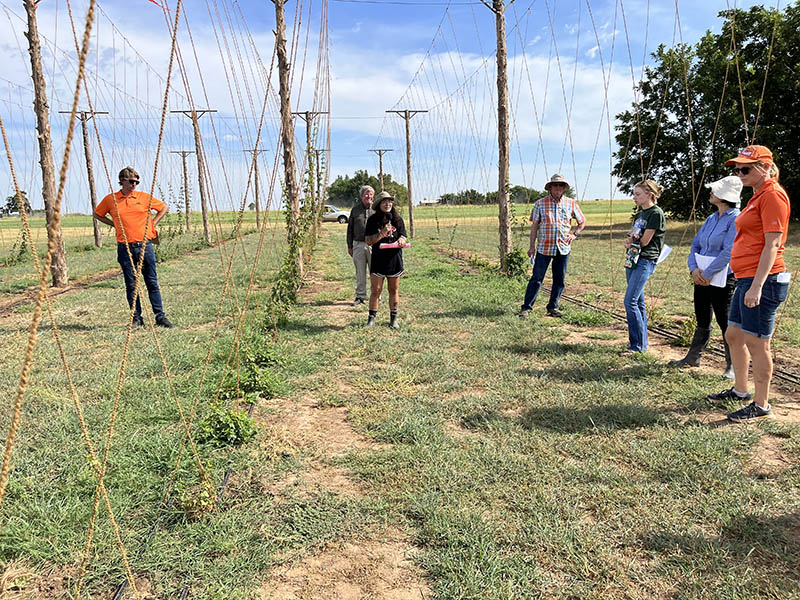
Five years ago, Bruce Dunn, a professor in the horticulture and landscape architecture department, decided to throw hops into his greenhouse mix because he had some extra space.
“It grew well but was attacked by spider mites, so I took it out to The Botanic Garden at OSU, and I was surprised to see it did really well there,” Dunn said. “One year, I harvested a trash bag full of a few different varieties, and I took that bag to Iron Monk, and they said they would see what they could do with it. A couple of weeks later, they called me and said they had made a batch with it.”
Armed with the knowledge that hops could do well in both greenhouse and field environments, Dunn approached Fontanier.
“What I really wanted to see was if we could grow better yields or higher quality plants in a greenhouse compared to field production,” Dunn said.
Fontanier said to their knowledge, OSU is one of only three hops growers in Oklahoma – a number he, Dunn and doctoral student Katie Stenmark want to change.
“The specific goal is to verify that quality hops can be grown in Oklahoma and to select the cultivars that grow best here, so we can create a local source of hops for Oklahoma craft breweries,” said Stenmark, who is working on the project for her dissertation.
Oklahoma brewers have access to the other three main ingredients in beer production: water, grain and yeast.
“We have all three of those in Oklahoma, but what we do not have is a local source of hops,” Stenmark said. “So, with the growing industry we have, it would be nice to see Oklahoma have that specialty crop.”
Stenmark, who works for Iron Monk, said when the brewery opened its doors in 2015, it was one of five craft breweries in Oklahoma. Now, there are over 67 craft breweries in the state.
“This would be a very high value crop for an Oklahoma grower to be informed about,” Stenmark said.
And gathering information is the entire goal of the hops research project.
Stenmark said the idea began with a three-year survey asking Oklahoma craft brewery professionals what cultivars of hops they would be interested in seeing grown in Oklahoma. Researchers then selected cultivars based on early to mid- and late-season ripening as well as specific aromatic qualities and essential oil profiles.
The in-field project is growing eight varieties of hops, and three of them show strong potential. Three of the greenhouse project’s five varieties are growing well and two are not, Dunn said. The greenhouse project goal is to get both a fall and spring harvest.
“At this point, we are taking visual information on what the hops cones are doing,” Fontanier said. “There shouldn’t be any discrepancies between what a variety of hops smells like and looks like in Oklahoma compared to the Pacific Northwest, but we want to verify that.”
Stenmark said for the in-field project, she and her team are studying the maintenance style of the hops trellis, the height of the canopy and the number of cones grown, as well as identifying the timing and sequence of how they grow. They will study what it takes to harvest the crops, and the quality of the crops will be analyzed in a laboratory setting.
“There has become a very high demand for the product of craft beer,” Stenmark said. “It would be good to see a lot more OSU Extension fact sheets come out of this project, so that interested growers can have information on what it would take physically and financially to grow this crop. We want to make this as feasible as possible for Oklahoma growers.”
OSU Ag Research is Oklahoma’s premier research and technology development agency in agriculture, natural resources and the life sciences.
Sep 08
Thu, 08 Sep 2022 10:16:06 CDT
The Oklahoma Youth Expo hosted the largest single day shotgun sports contest September 7, 2022, at the Oklahoma Trapshooting Association in El Reno, Oklahoma, and Silverleaf Shotgun Sports in Guthrie, …
Sep 08
Thu, 08 Sep 2022 11:13:18 CDT
By: Kelsea Forward
Started in 1993 in Gustine, Texas, with just 50 cows, Volleman’s Family Farm now has 5,000 dairy cows, its own unique milk brand and 14 different milk products.
Volleman br…
Sep 08
Thu, 08 Sep 2022 10:04:36 CDT
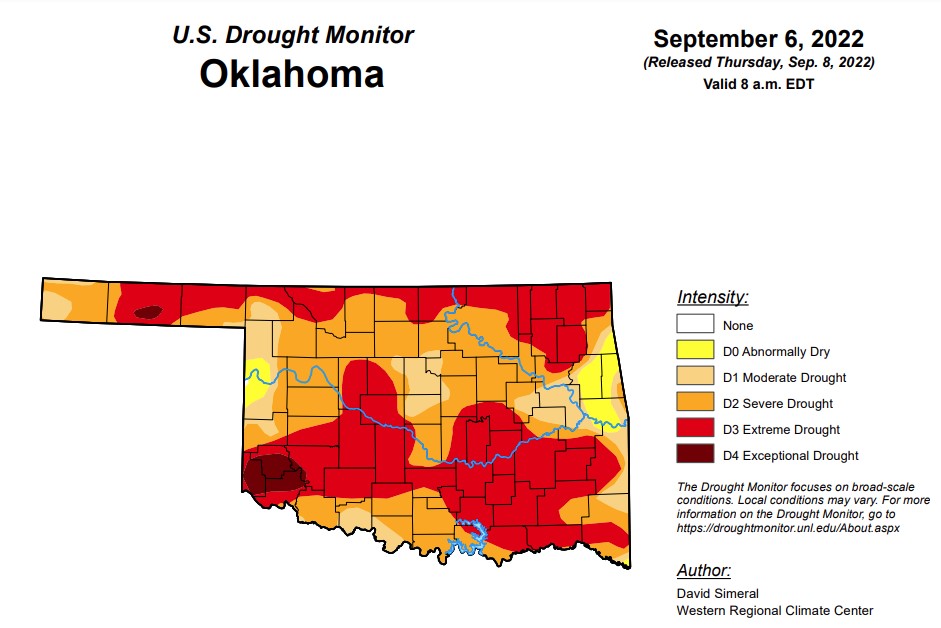
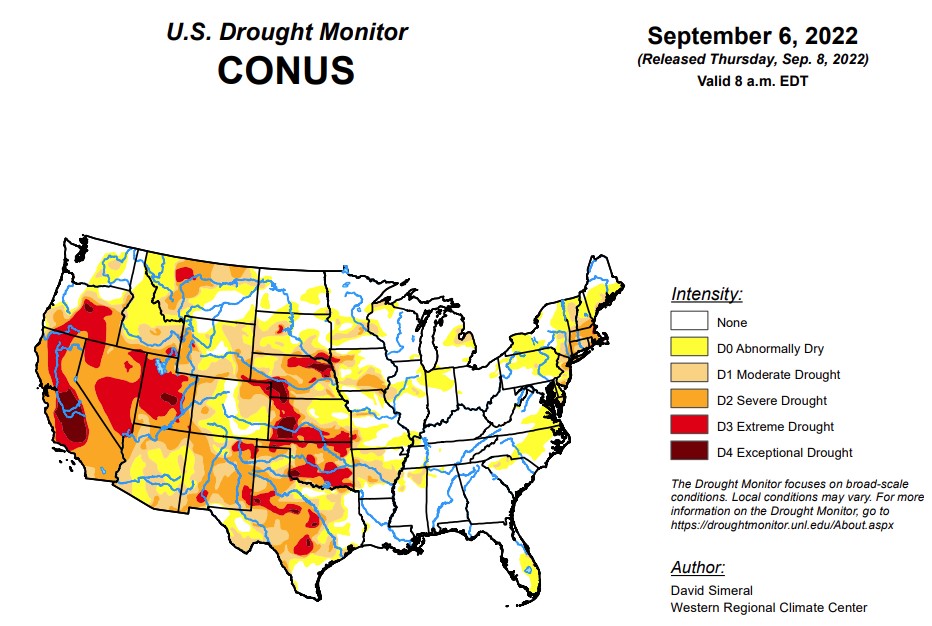
While some parts of the state saw improvements with heavy, but spotty rains this previous week, other parts of the state saw an intensification of drought over the period.
According to the latest drought monitor report, in Oklahoma, exceptional drought is unchanged from the last two weeks at 2.19 percent.
Extreme drought or worse is at 47.7 percent, just a bit higher than last week’s 47.1 percent.
Severe drought or worse is at 84.8 percent, down from last week’s 88.2 percent.
Moderate drought or worse is now at 96.5 percent, down from last week’s 98.9 percent.
Abnormally dry or worse conditions are the same as the past few weeks at 99.9 percent.
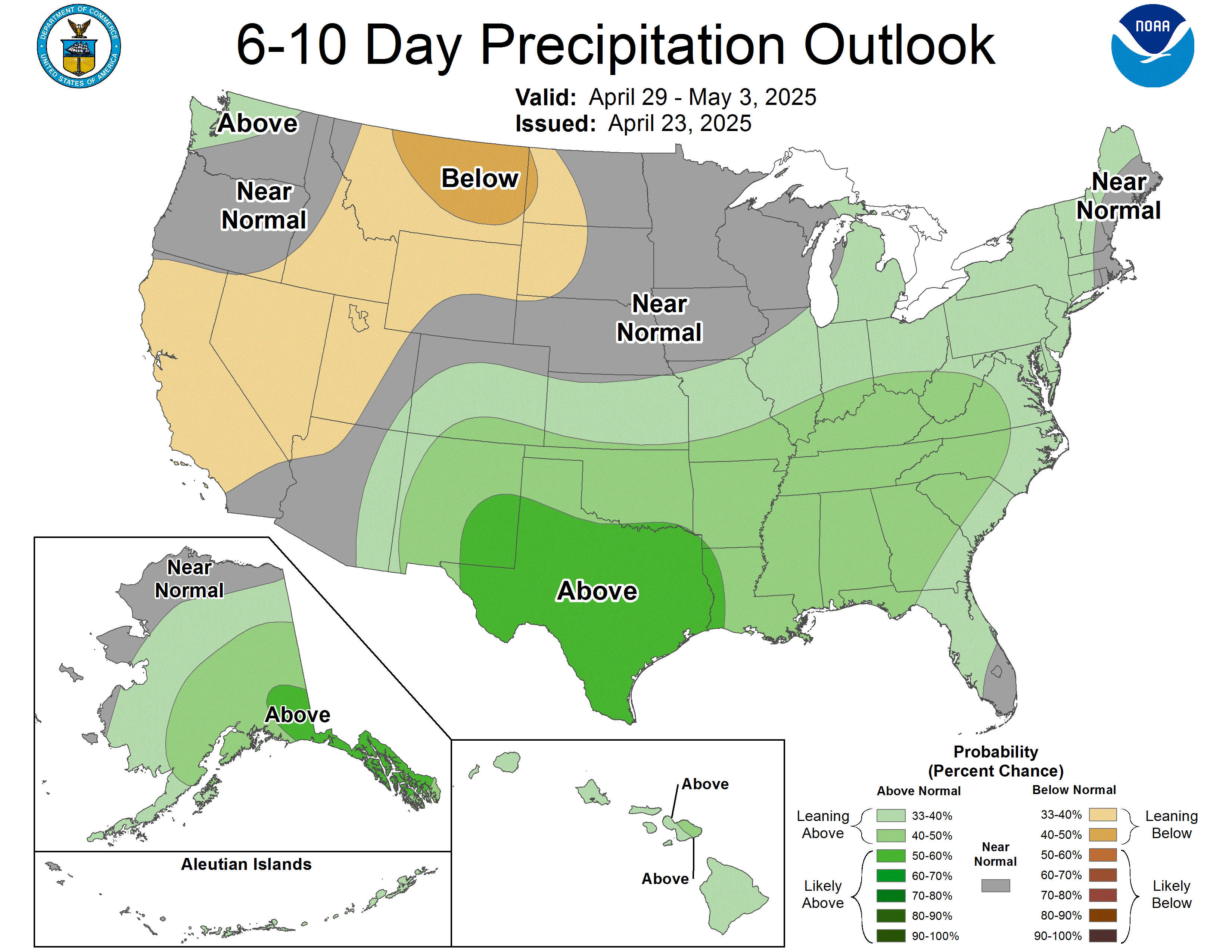
The 6-10 precipitation outlook map shows low chances of rain through September 17th with the majority of Oklahoma leaning below a 40-50 percent chance of rain.
To view the Oklahoma drought map, click here.
According to the latest U.S. drought monitor report, the week saw continued improvements on the map across areas of the South, including Texas, in response to another round of localized heavy rainfall during the past week. Overall, the recent rainfall in Texas throughout the past month has started to make a significant dent in the state’s drought conditions in some areas. In contrast, drought conditions intensified in areas of the central and northern Plains with additional degradations on this week’s map. In these areas, recent drought impact reports submitted to the National Drought Mitigation Center indicated drought-related impacts within the agricultural sector including reduced crop yields as well as deteriorating pasture and rangeland conditions. Out West, the big story of the past week has been the heat wave that has impacted the region with record-setting temperatures and critical fire-weather conditions. The hot temperatures and strong winds exacerbated conditions on the Mill Fire, which broke out in Northern California on Friday, forcing the evacuation of the town of Weed, California as well as neighboring communities. In Death Valley, California, high temperatures exceeded 125 deg F multiple times during the past week including on September 1st when the high temperature reached 127 deg F?potentially breaking the record for the hottest temperature ever recorded during September, according to preliminary reports. Elsewhere, shower activity in the Northeast led to isolated improvements in drought-affected areas of Massachusetts and Connecticut, while further to the south conditions deteriorated on the map in Delaware. In the Midwest, short-term precipitation deficits and declining soil moisture levels led to the expansion of areas of drought in northern Missouri and central Illinois.
In the Southern Plains, widespread improvements were made across Texas this week in response to another round of moderate-to-heavy rainfall that impacted isolated areas of the state, with accumulations ranging from 2 to 6+ inches. The recent rains have provided a much-needed boost to soil moisture and streamflow levels. Despite the recent rains, streamflow levels in some areas of the Hill Country have yet to recover, with gaging stations on numerous rivers and creeks reporting below-normal flows (ranging from the 2nd to the 24th percentile), according to the U.S. Geological Survey. Elsewhere in the region, this week’s rainfall led to improvements in eastern Oklahoma, northern Arkansas, northern Mississippi, and western portions of Tennessee. For the past 30-day period, much of the region experienced above-normal precipitation with the greatest positive departures (ranging from 6 to 12+ inches) observed in the Basin and Range and southern portion of the Gulf Coastal Plains of Texas, northern Louisiana, and central Mississippi. Overall, average temperatures for the week were within a few degrees of normal, with larger negative departures (2 to 4 deg F below normal) observed in western Texas.
In the High Plains, on this week’s map, drought-related conditions continued to intensify across areas of southeastern Wyoming, northeastern Montana, Nebraska, southern South Dakota, and western Kansas, as anomalously hot temperatures impacted western portions of the region. According to the National Drought Mitigation Center’s Condition Monitoring Observer Reports (CMOR), numerous drought impact reports have been submitted during the past 30-day period. Impacts include reduced crop yields, poor pasture conditions, and the need for supplemental feeding of livestock. The current drought situation was exacerbated by this week’s intense heat, with average maximum temperatures ranging from 95 to 100 deg F in areas of eastern Montana, northern and eastern Wyoming, and western portions of South Dakota, Nebraska, and Kansas.
In the West, an anomalous upper-level ridge parked over the central Great Basin during the past week-leading to a dangerous heat wave and record-high temperatures across the region. The record heat exacerbated fire-weather conditions across Northern California, the Pacific Northwest, and the Northern Rockies as well as taxed California’s power grid in response to the record-high demand reported this week. Most of the region saw no precipitation this week, except for some isolated storm activity in western Washington, Arizona, eastern Colorado, and eastern New Mexico. On this week’s map, areas of drought expanded in southwestern and central Montana, and in northern Wyoming. Areas of Extreme Drought (D3) in the Four Corners region were trimmed back as part of a re-assessment of the impact of monsoonal rainfall during the past several months. Looking at reservoir storage conditions, the two largest reservoirs in the Colorado River system, Lake Mead and Lake Powell, are currently 28% and 24% full, respectively.
To view the contiguous U.S. drought map, click here.
Looking ahead, the NWS WPC 7-Day Quantitative Precipitation Forecast (QPF) calls for moderate-to-heavy precipitation accumulations ranging from 2 to 5+ inches across areas of the Southeast including Georgia, Florida, and South Carolina. Likewise, 2 to 4+ inch accumulations are forecasted for areas of the Upper Midwest in Wisconsin and Upper Peninsula Michigan. Conversely, lighter accumulations (
To view the 6-10-day precipitation outlook map, click here.
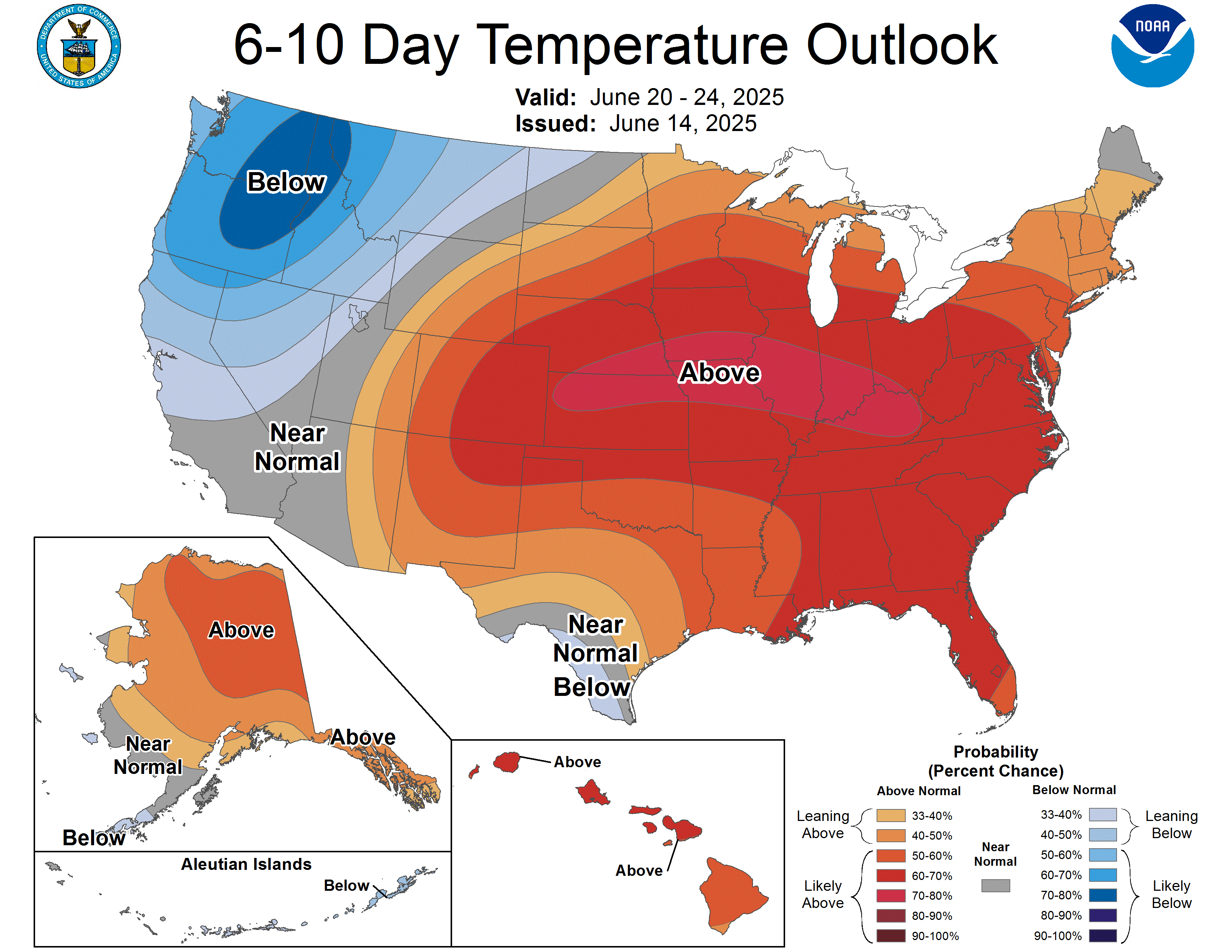
To view the 6-10-day temperature outlook map, click here.
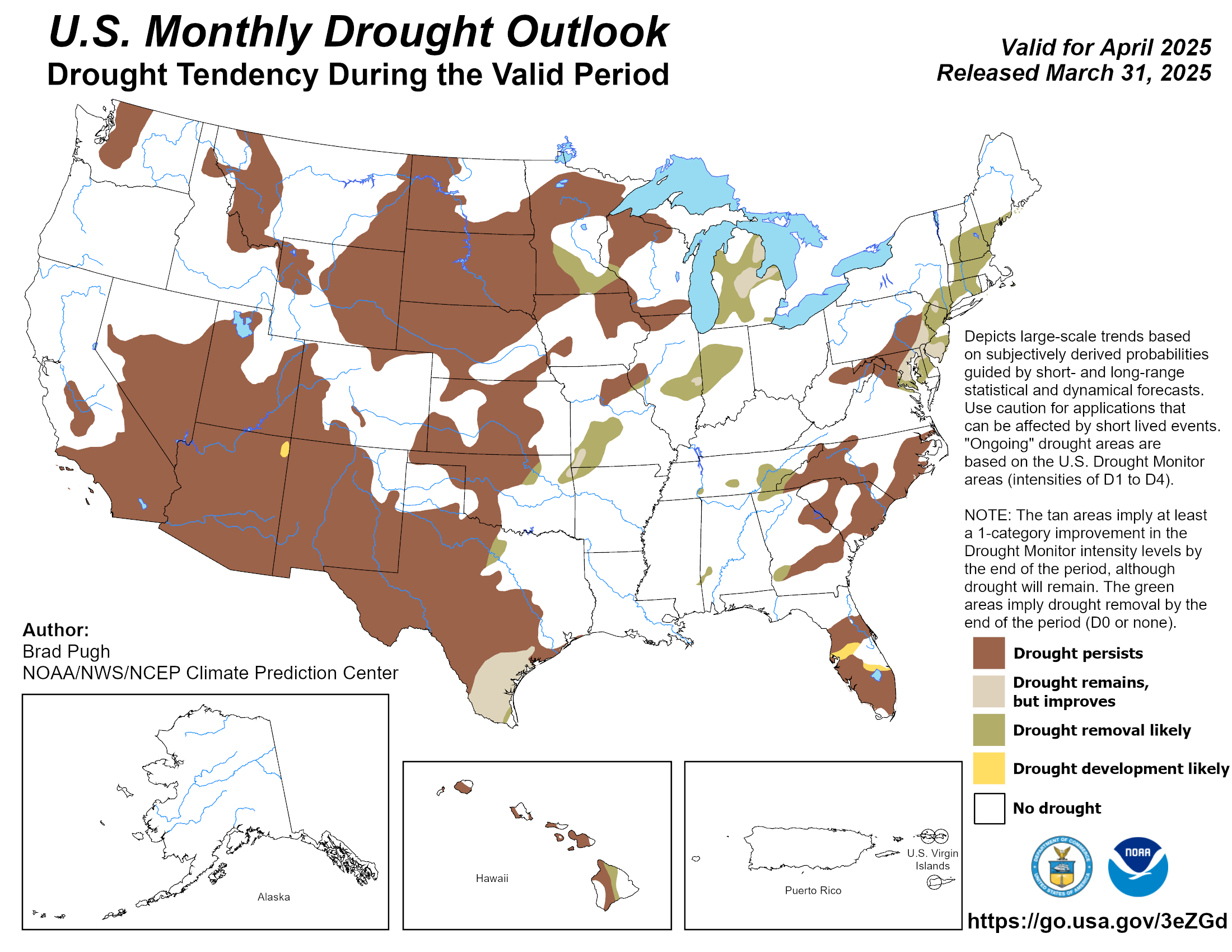
To view the monthly drought outlook map, click here.