
Category: Ag News

Take Caution, Read Labels when Feeding Failed Crops

Tue, 25 Oct 2022 13:07:40 CDT

Take Caution, Read Labels when Feeding Failed Crops

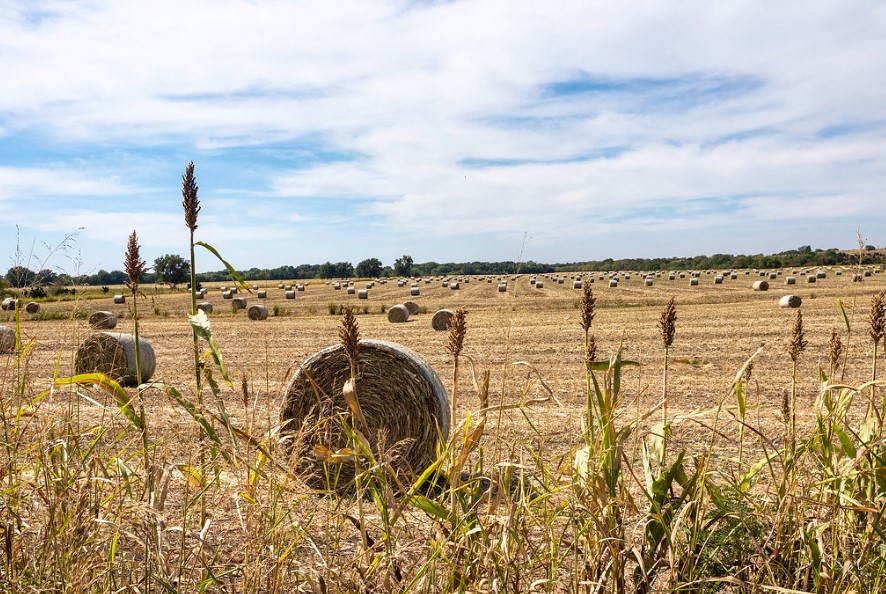
Oklahoma ranchers are getting creative with alternative feedstuffs this fall because the drought has drastically reduced normal hay yields.
“It’s been an unusual year, and all summer crops have potential to be failed out,” said Todd Baughman, Oklahoma State University Extension specialist for row crop weeds. “Producers should make sure they’re clear with their insurance companies and have the ability to turn that crop into a forage or feed value.”

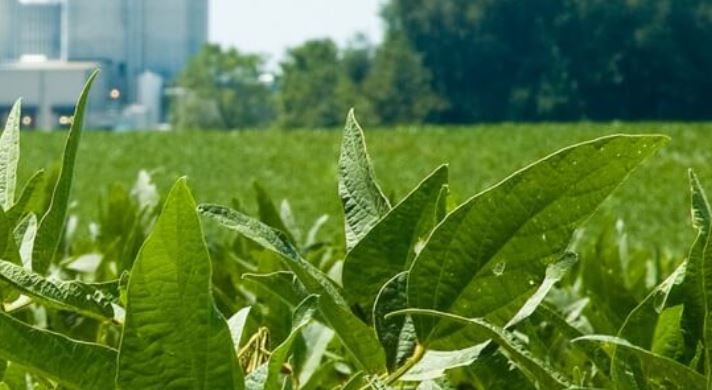
Some producers are choosing to bale up failed summer crops, such as soybeans or cotton. However, not everything that can be swept into windrows and fed as hay is safe for livestock to eat. Individual producers and hay customers should research the chemicals applied to crops before converting a field to feed or forage.

Baughman said most failed crops this year received herbicide treatments but contain lower amounts of fungicides or insecticides.

“The biggest issue is each individual label is different in regard to what you can or can’t do from a feed or forage or hay standpoint,” he said. “Even within that specific label, it may vary between crops. For instance, there may be a seven-day restriction on corn or grain sorghum or a 30-day restriction or you can’t even feed cotton or soybeans.”

Baughman said there are two key things to remember when reading labels:

1) The specific pesticide label of the product applied must be checked and not just a label with a similar active ingredient. For example, if a generic form of glyphosate was applied rather than Roundup®, producers must refer to the label of the specific glyphosate formulation and not the Roundup® label.

2) Products, such as atrazine and 2,4-D, have individual labels, but if a pre-mix of two products was applied, that could change the feeding restrictions. Therefore, the actual premix label should be consulted.

“The most important thing is consulting the label,” Baughman said. “If there is no mention of forage or hay on the label for a particular crop, then it is an off-label use.”

Failed cotton can help extend the grazing season, replace hay and provide additional revenue for an operation. Dave Lalman, OSU Extension beef cattle specialist, and Marty New, west district area livestock specialist, said the seed, lint, boll and leaf components of the cotton plant are a nutritional feed source, but cattle will not consume much of the stalk unless the field is first overgrazed.

“Leaf material will decline rapidly once the bottom leaves begin to yellow,” New said. “Most cotton fields will provide additional grazeable forage in the form of grass or forbs around field edges, fences and waterways.”

The leaf, boll, lint and seed should average around 15 to 20% protein and around 55 to 60% total digestible nutrients, which is the equivalent to energy common in average-quality grass hay, Lalman said.

The OSU Extension specialists said research indicates each acre of a poor cotton crop could provide 20 days of grazing per cow while an acre from a good crop might provide around 41 days of grazing per cow.

“Cattle will graze the more palatable and high-nutritional value plant components first,” New said. “For this reason, the grazing period can be extended by strip grazing or rotational grazing. To make the most efficient use of crop residue, no more than one week’s worth of grazing area should be offered for each grazing period.”

When feeding failed cotton, producers should also consider the possibility of gossypol toxicity. Gossypol is a natural toxin present in the cotton plant that protects it from insects.

“Ruminants with fully functional rumens can detoxify gossypol because the ruminal microorganisms bind the toxin so it can be absorbed,” Lalman said. “Non-ruminants and pre-ruminant calves (less than four months of age) are unable to tolerate gossypol. It is not recommended to graze cotton residue with breeding bulls within 60 to 90 days of the breeding season.”

Labels for pesticides, fungicides and herbicides can be confusing and hard to find on packaging. OSU Extension county educators are available to help explain label restrictions and alleviate concerns.

Watch OSU Extension specialists discuss feeding failed cotton and herbicide concerns with failed crops on SUNUP, OSU Agriculture’s television show.
OSU Extension uses research-based information to help all Oklahomans solve local issues and concerns, promote leadership and manage resources wisely throughout the state’s 77 counties. Most information is available at little to no cost.
   

Latest Cattle on Feed Report from USDA Implies Fewer Pounds of Beef Available in 2023

Tue, 25 Oct 2022 10:17:59 CDT

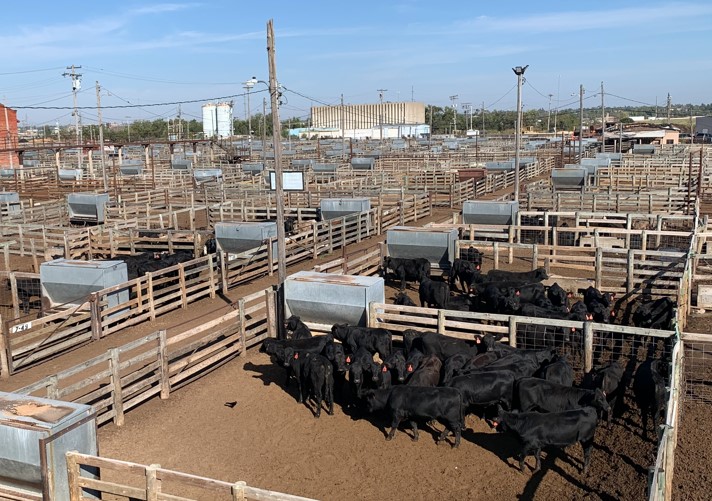
Senior Farm and Ranch Broadcaster, Ron Hays, caught up with Oklahoma State University Extension Livestock Market Economist, Dr. Derrell Peel and talked about the heifer numbers within USDA’s latest Ca…

NCBA Announces Finalists in 10th Annual National Anthem Contest

Tue, 25 Oct 2022 10:14:56 CDT

Public Invited to Vote for Winner

The National Cattlemen’s Beef Association (NCBA) announces the four finalists in the 10th annual National Anthem Singing Contest, sponsored by Norbrook®. Th…

Applications Sought for Renewed Effort to Assist Farmers

Tue, 25 Oct 2022 10:11:12 CDT

American Farmland Trust will begin accepting applications on November 1 to help farmers nationwide improve farm viability, access, transfer or permanently protect farmland or adopt regenerative agricultural …

Senate Review by Senator Roland Pederson

Tue, 25 Oct 2022 10:07:19 CDT

As a farmer and rancher, I have firsthand knowledge of how devastating the current drought conditions have been for our state’s agriculture industry. This is one of the worst droughts we have seen over…

Young Farmers and Ranchers: Future Leaders in Agriculture

Tue, 25 Oct 2022 09:17:18 CDT

By: Kelsea Forward

American Farm Bureau Federation Young Farmers & Ranchers (YF&R) Committee Chair Alisha Schwertner and her family grow cotton, corn, grain, sorghum, wheat, hay and cattle in Texas. She…

OSU’S Dr. Mark Johnson: Seizing Financial and Genetic Opportunity and Culling Bulls

Tue, 25 Oct 2022 08:13:16 CDT

Should I Cull My Bulls? (Is It Time to Seize Financial and Genetic Opportunity?)

Mark Johnson, Oklahoma State University Extension Beef Cattle Breeding Specialist, offers herd health advice as part o…

Feeder Steers and Heifers Higher at Joplin Regional Stockyards on Monday

Mon, 24 Oct 2022 19:01:30 CDT

Joplin Regional Stockyards
Mon Oct 24, 2022


AUCTION
This Week            4,590
Last Reported    &nb…

Feeder Steers and Heifers Higher, Steer Calves Unevenly Steady, Heifer Calves Higher at Oklahoma National Stockyards on Monday

Mon, 24 Oct 2022 18:57:51 CDT


Feeder Steers and Heifers Higher, Steer Calves Unevenly Steady, Heifer Calves Higher at Oklahoma National Stockyards on Monday

Oklahoma National Stockyards
Mon Oct 24, 2022


AUCTION
This Week              8,500
Last Reported         6,579
Last Year                7,966

*** Close ***
Compared to last week: Feeder steers 2.00 -5.00 higher.. Feeder heifers 1.00 – 4.00 higher. Steer calves unevenly steady. Heifers calves 2.00 – 5.00 higher. Demand moderate to good. Last Friday’s Cattle on Feed report bullish with less Placements or more Marketing’s. Cattle futures reflecting that bullishness and trading in the green today. Supply included several loads of thin fleshed feeders off grass. These sold to excellent demand. Quality average to attractive. Most of the region receiving much needed rainfall and cooler temperatures too follow. More moisture in the forecast this coming weekend. Supply included: 100% Feeder Cattle (60% Steers, 38% Heifers, 3% Bulls). Feeder cattle supply over 600 lbs was 41%.

FEEDER CATTLE
STEERS – Medium and Large 1 (Per Cwt / Actual Wt)
Head       Wt Range       Avg Wt       Price Range       Avg Price
6                    333               333              198.00              198.00
23                  318               318              196.00              196.00 Unweaned
89              354-380          367        191.00-199.00       193.62
20                  390               390              215.00              215.00 Thin Fleshed
18                  377               377              189.00               189.00 Unweaned

154           401-444           412        185.00-201.00       193.44
66             400-425           414         205.00-215.00      211.24 Thin Fleshed
322           452-499           482        186.00-198.00       190.41
10                  456               456              211.00               211.00 Thin Fleshed

151           512-543           529         178.00-189.00      184.69
63             510-541           532          192.00-193.00     192.27 Thin Fleshed
197           550-584           565         172.00-186.00      178.31
159           558-571           562         193.00-194.00      193.25 Thin Fleshed

329           604-649           628         172.00-187.00      181.00
196           650-699           668         170.50-180.00      177.13
8                    694               694               160.00              160.00 Fleshy

242           701-749           722         168.00-179.00      174.67
208               727               727               186.50               186.50 Thin Fleshed
64             753-785           772          175.75-178.00      176.59
112               771               771               190.85               190.85 Thin Fleshed

15             803-808           805          176.00-177.00      176.60
390           830-838           834               189.60               189.60 Thin Fleshed
45             861-896           876          171.00-176.50      175.10
26                 874                874               180.25               180.25 Thin Fleshed

56                 939                939               167.00               167.00

4                  1033              1033              154.00               154.00

For the complete report from USDA Market News click on the PDF link below:

Click here: 04698_OklahomaNational10242022.pdf


Oklahoma Grain Elevator Cash Bids as of 2 p.m. October 24, 2022

Mon, 24 Oct 2022 15:27:25 CDT


Oklahoma Grain Elevator Cash Bids as of 2 p.m. October 24, 2022

The U.S. Department of Agriculture and the Oklahoma Department of Agriculture are now putting the Daily Cash Grain Report into a PDF format – we are saving that PDF and archiving them for today’s specific report. To see today’s update, click on the PDF report link at the bottom of this story.

In addition to the PDF of the daily report, you can also listen to the Cash Grain Report by calling 405-621-5533. Push 2 for the grain report.

Click here: 04693_OklaCashGrain10242022.pdf


Verified by MonsterInsights