Category: Top Beef Buzz

NCBA Working to Help Cow-Calf Producers Have the Upper Hand

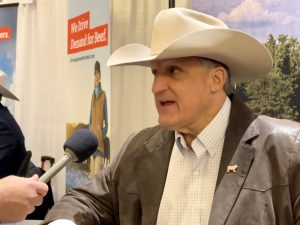
Senior Farm and Ranch Broadcaster, Ron Hays, is visiting with the 2022 President-Elect of the National Cattlemen’s Beef Association, Todd Wilkinson, about the state of the cattle industry and producer morale as 2022 comes to an end. “The ability of that producer to maybe see some dollars coming back into their pocketbook has permeated the …

Continue reading

NCBA and PLC Call ESA Listing Plan of Lesser Prairie Chicken Punitive for Cattle Producers in Southern Plains

Wed, 23 Nov 2022 14:51:08 CST
NCBA and PLC Call ESA Listing Plan of Lesser Prairie Chicken Punitive for Cattle Producers in Southern Plains

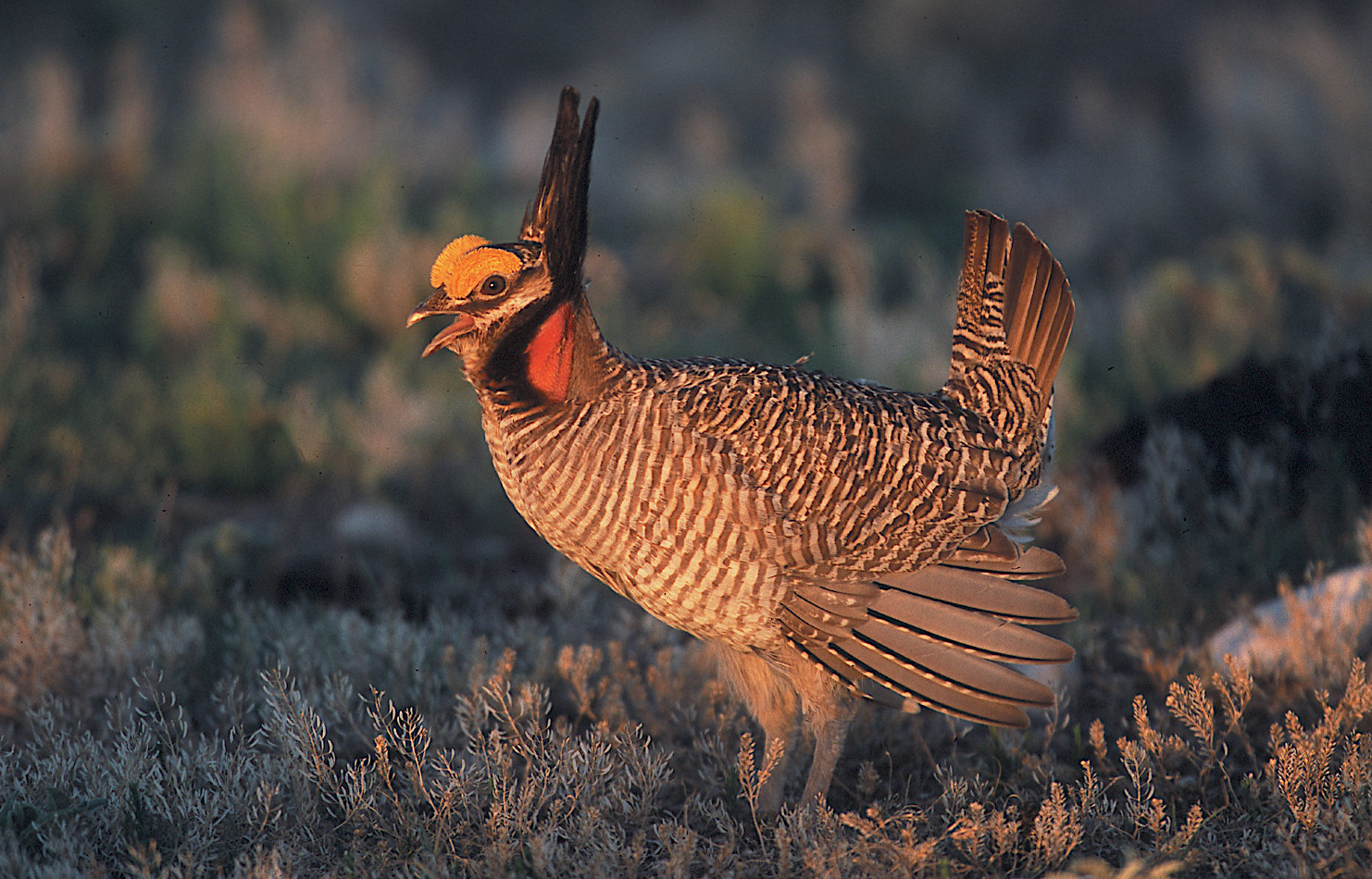
Once again, the US Fish and Wildlife Service has listed the Lesser Prairie Chicken across parts of five states- including western Oklaoma and Kansas, southeastern Colorado, New Mexico and the Texas Panhandle. After the bird was listed as threateneda few years back- the listing here in 2022 is in two parts- the southern population area for the bird in New Mexico and the southern half of the Texas Panhandle is being called endangered- while the areas in Colorado, Kansas, Oklahoma and the northern part of the Texas Panhandle is being called threatened.

According to the Fish and Wildlife release on the final rule- “The lesser prairie-chicken serves as an indicator for healthy grasslands and prairies – needing large, unfragmented parcels of intact native grasslands to maintain self-sustaining populations. This makes them an important measure of the overall health of America’s grasslands, a treasured and storied landscape.

“While historical estimates suggest lesser prairie-chickens once numbered in the hundreds of thousands, or even millions, across nearly 100 million acres, populations have declined drastically due to habitat loss and fragmentation. Lesser prairie-chicken habitat has diminished across its historical range by about 90 percent. Aerial survey results from 2012 through 2022 estimate a five-year average lesser prairie-chicken population of 32,210 across the five-state region. Their decline reflects the larger decline in the vitality and resilience in shinnery oak, sand sagebrush and mixed- and short-grass prairie ecosystems.”

Two groups that have reviewed the final rule and find it lacking is the National Cattlemen’s Beef Association and the Public Lands Council. Oklahoma Farm Report’s Ron Hays talked this week after the release of the rule with Sigrid Johannes, the Associate Director of the groups and she is our guest on this edition of the Beef Buzz.

“We are deeply disappointed by the Fish and Wildlife Service’s decision to impose redundant bureaucracy and punitive restrictions on the very same people that we have to thank for the lesser prairie chicken’s continued existence on the range.”

To make matters worse, the Service is also establishing a 4(d) rule for the Northern DPS that enables them to appoint private third parties – such as environmental activist groups – as the grazing authorities in the range of the LPC. FWS has stipulated that cattle producers in the Northern DPS range will only qualify for legal protection under the 4(d) rule if they are following a grazing management plan that has obtained arbitrary approval from a yet-to-be-named, FWS-approved third party. By contrast, other agricultural practices that are listed as key factors in the Service’s decision are granted far more flexibility. According to Johannes- the FWS has told the groups that they have ruled out using the USDA’s National Resource and Conservation Service as the third party- opening the way for a less qualified and less friendly to the cattle industry group to likely be named by the Biden Administration.

Designing a third-party verification system to empower distant bureaucrats over land managers and ranchers with decades of experience, with parameters that blatantly prioritize political objectives over sound science, effectively ensures that the only use of the 4(d) rule will be to obstruct grazing activities.

The rule establishes two Distinct Population Segments (DPS) for the species: the Southern DPS that covers New Mexico and the southwest Texas panhandle, and the Northern DPS that covers southeastern Colorado, Kansas, Oklahoma, and the northeast Texas panhandle. The Southern DPS will be listed as endangered and the Northern DPS will be listed as threatened. The final rule does not include any critical habitat designation. Cattle grazing provides immense benefit by conserving the very habitat the species needs to thrive. These birds favor diverse rangeland with a variety of plant species rather than uniform grasslands or cropland.

Click on the LISTEN BAR above or on the link below to listen to Ron and Sigrid talk about the ESA listing of the Lesser Prairie Chicken and what that could mean for beef cattle producers across the five state region once the rule goes into effect January 24, 2023.

The Beef Buzz is a regular feature heard on radio stations around the region on the Radio Oklahoma Ag Network and is a regular audio feature found on this website as well. Click on the LISTEN BAR for today’s show and check out our archives for older Beef Buzz shows covering the gamut of the beef cattle industry today.


Ron Hays Beef Buzzes with Sigrid Johannes of NCBA on the Lesser Prairie Chicken ESA Listing

click to play audio or right-click to download

November Cattle on Feed Report Confirms October Pattern of Lower Placements and Tighter Cattle Numbers in Feedlots

Tue, 22 Nov 2022 05:07:06 CST
November Cattle on Feed Report Confirms October Pattern of Lower Placements and Tighter Cattle Numbers in Feedlots

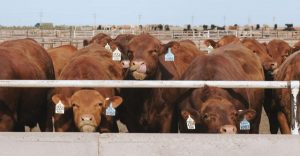
The November USDA Cattle on Feed Report appears to be a confirmation of what finally showed up in the October report thirty days earlier- cattle numbers in our nation’s feedlots have finally peaked and will likely be getting tighter for the foreseeable future- so says Extension Livestock Market Economist Dr. Derrell Peel.

Peel tells Oklahoma Farm Report’s Ron Hays that what we are seeing in the November report is building on what was reported in October. From our story on the October report ” Peel says that this is the first time we have had a lower on feed number compared to a year earlier this year- the last time we had a lower on feed number compared to a year ago came in December 2021. “You know, we have been setting new records on a month by month basis here really all year…now we have reached the point where we have turned the corner.”

“On the four percent fewer placements compared to a year ago, Peel says “I think we have finally reached the end of the rope there- there just aren’t more cattle out there.” Peel adds that the under 600 pound category are still up by two percent – saying there are still some of these lightest cattle coming into feedlots- but the heavier weights were under a year ago and made the overall cattle number down by one percent compared to last October first.

“Peel adds that this is all about the drought- “we have known that the overall feeder supply has been getting tighter- but that the fact that the feedlots have been able to sorta defy gravity this long has been a testament to what the drought has done and has been masking the real situation on cattle numbers- but you can only do that for so long and we have reached the lmits of that.”

Fast forward to the November report released this past Friday. USDA reported the November 1 On Feed 98.0% of last year, October Placements 93.9% and October Marketings 100.6%. The placement number was a record low placement for the month of October since the data series started 1996- and that is two months in a row of a changed placement pattern.

In today’s Part two of our conversation with Derrell Peel, he tells Hays higher prices are already starting to become reality as beef supplies get tighter- and that is just the beginning of the stronger cattle prices, which he says will really trend up when we finally get the drought past us and are able to restock our beef cow herds- “and we don’t know if that will happen in 2023- it depends on the drought conditions- but at some point in time- we are going to take smaller supplies of cattle and smaller beef production and squeeze it even farther because we are going to have to save a lot of heifers for herd rebuilding- we are going to cut cow culling to the bone and we will do the same thing in 2015 when we saw cattle slaughter drop to the lowest levels since 1963 and we will do something similar to that again at some poiint- probably not in 2023 but I think maybe in 2024 or 2025.”

Peel says that we may have liqudated even more of the female population than we did in 2011 and 2012 in this current drought cycle and that means a potentially more explosive upward price move that will come as we rebuild the cow herds in the months/years ahead.

Go back and listen to Part One of Dr. Peel’s comments on the November Cattle on Feed repport by clicking here. Listen to our part two by clicking on the Listen bar below as we do a deeper dive into what these numbers suggest for beef supplies, cattle numbers and price outlook for cattle producers in the short and longer runs.

The Beef Buzz is a regular feature heard on radio stations around the region on the Radio Oklahoma Ag Network and is a regular audio feature found on this website as well. Click on the LISTEN BAR for today’s show and check out our archives for older Beef Buzz shows covering the gamut of the beef cattle industry today.


Ron Hays Beef Buzzes with Dr. Derrell Peel of OSU as they discuss the Nov Cattle on Feed Report

click to play audio or right-click to download

Turning the Corner- OSU’s Derrell Peel Sees Tighter Cattle Inventories into 2023 in Latest Cattle on Feed Report

Mon, 21 Nov 2022 04:36:38 CST
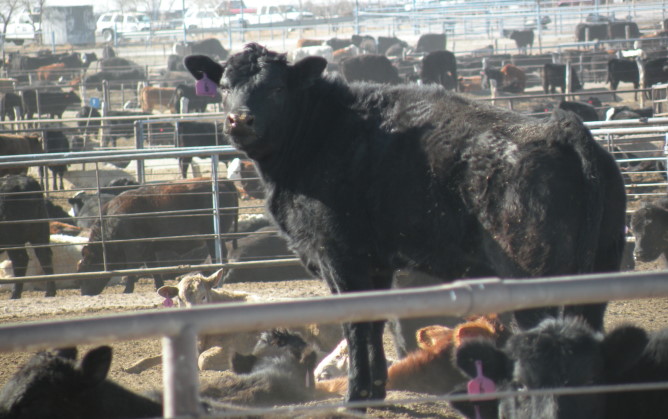
Turning the Corner- OSU's Derrell Peel Sees Tighter Cattle Inventories into 2023 in Latest Cattle on Feed Report

The latest USDA Cattle on Feed Report was released on Friday afternoon and is being called friendly to bullish, depending on who you listen to. Oklahoma Farm Report’s Ron Hays talked after the numbers were released with Oklahoma State University’s Dr. Derrell Peel who described the report as being “very well anticipated- it was actually a little bit friendly in terms of the placements being a little bit smaller but within the range of estimates and so this report is a continuation of what we have seen in the last month- I think we have finally turned the corner, it’s taken several months to get here but we are going to see these inventories continue to tighten as we go forward.”

Peel adds “for several months, because of the drought, we have marketed feeder cattle earlier than usual- they have gone into the feedlot and that has maintained feedlot inventories longer than we would have otherwise seen I think in the absence of the drought impact- but you can only do that for so long.”

You can listen to part one of Dr. Peel’s comments on today’s Beef Buzz by clicking on the Listen link at the bottom of this story.

Meanwhile, according to Rich Nelson with Allendale- “Cattle on Feed bullish. Nov 1 On Feed 98.0% of last year, Oct Placements 93.9% and Oct Marketings 100.6%. Record low placement for the month of October since the data series started 1996. Two months in a row of a changed placement pattern.” (via twitter)

And Brady Sidwell from Enid with Sidwell Strategies writes in Barchart “Friday’s USDA Cattle-on-Feed report leaned bullish with October placements lower than expected and in fact, the lowest on record for that month. November 1st on-feed numbers were as expected as were October marketings.”

From the actual USDA report- one number that really jumps out is the Texas placements, which were only 86% of a year ago- the deficit of available cattle seemingly bigger than in other regions here in the south. As for the summary of the numbers from Friday:

Cattle and calves on feed for the slaughter market in the United States for feedlots with capacity of 1,000 or more head totaled 11.7 million head on November 1, 2022. The inventory was 2 percent below November 1, 2021.

On Feed, by State (1,000 hd – % Nov 1 ’21)
Colorado ……     1,070 – 93
Iowa ………….        620 – 102
Kansas ……….    2,340 – 93
Nebraska ……     2,600 – 102
Texas …………    2,860 – 100

Placements in feedlots during October totaled 2.11 million head, 6 percent below 2021. Placements were the lowest for October since the series began in 1996. Net placements were 2.05 million head. During October, placements of cattle and calves weighing less than 600 pounds were 545,000 head, 600-699 pounds were 465,000 head, 700-799 pounds were 450,000 head, 800-899 pounds were 378,000 head, 900-999 pounds were 190,000 head, and 1,000 pounds and greater were 80,000 head.

Placements (1,000 hd – % Oct ’21)
Colorado ……       175 – 95
Iowa ………….      103 – 90
Kansas ……….     420 – 97
Nebraska ……      590 – 94
Texas …………    440 – 86

Marketings of fed cattle during October totaled 1.80 million head, 1 percent above 2021. Other disappearance totaled 54,000 head during October, 5 percent below 2021.

Marketings   (1,000 hd – % Oct ’21)
Colorado ……    170 – 106
Iowa ………….      81 – 79
Kansas ……….   430 – 97
Nebraska ……    450 – 103
Texas …………   390 – 104

Click here to review the complete report from the USDA’s NASS.

The Beef Buzz is a regular feature heard on radio stations around the region on the Radio Oklahoma Ag Network and is a regular audio feature found on this website as well. Click on the LISTEN BAR for today’s show and check out our archives for older Beef Buzz shows covering the gamut of the beef cattle industry today.


Ron Hays Beef Buzzes with Dr. Derrell Peel on the November 1 USDA Cattle on Feed Report

click to play audio or right-click to download

Farm Bill Negotiations Could Feel Impact from Midterm Election Results

Senior Farm and Ranch Broadcaster, Ron Hays, is talking with National Cattlemen’s Beef Association Vice President of Government Affairs, Ethan Lane, about the midterm elections and what those results mean for the cattle industry. “It feels like we are on day seven of election day, still, you know, we are still looking at some of …

Continue reading

NCBA’s Ethan Lane Pleased to See Congressman Frank Lucas Back on 2023 Farm Bill Committee

At the National Association of Farm Broadcasters’ annual trade talk for 2022, Senior Farm and Ranch Broadcaster, Ron Hays, caught up with National Cattlemen’s Beef Association Vice President of Government Affairs, Ethan Lane, talking about the 2023 Farm Bill and concerns for the cattle industry going forward. Regarding Congressman Frank Lucas being back on the …

Continue reading

Liquidated Cow Herds to Come back with Stronger Genetics

Listen to Ron Hays talk with John Pfeiffer about the Angus industry and his outlook for cattle producers. Senior Farm and Ranch Broadcaster, Ron Hays, is visiting with Oklahoma rancher and former president of the American Angus Association, John Pfeiffer about the Angus business and what Pfeiffer is hearing from producers during this time. Pfeiffer …

Continue reading

NCBA’s Colin Woodall says U.S. Food Production is National Security

Last week, President Biden signed a National Security Memorandum to Strengthen the Security and Resilience of U.S. Food and Agriculture. Ahead of the signing of this memorandum, National Cattlemen’s Beef Association’s CEO, Colin Woodall, participated in a White House pre-briefing with senior federal law enforcement and homeland security officials. In today’s Beef Buzz, Senior Farm …

Continue reading

USMEF Works to Increase the Value of Variety Meats in International Markets

Senior Farm and Ranch Broadcaster Ron Hays is visiting with Vice Chair of the Cattlemen’s Beef Promotion and Research Board, Jimmy Taylor, who is also on the board of directors at the U.S. Meat Export Federation, finishing up his three-year term. Taylor ranches in Roger Mills County near Cheyenne, Oklahoma. “The COVID period was not …

Continue reading

Randy Blach with CattleFax says Markets will Pay Cattle Producers Well in Next Few Years

During the USMEF Strategic Planning Seminar in Oklahoma City, Senior Farm and Ranch Broadcaster, Ron Hays, got the chance to catch up with the President and CEO of CattleFax, Randy Blach, about beef cow liquidation. Compared to January of 2022, Blach said there will be a significant reduction in the cow herd. The dairy herd …

Continue reading

Verified by MonsterInsights