Tue, 11 Oct 2022 08:19:35 CDT
Senior Farm and Ranch Broadcaster, Ron Hays, is visiting with Oklahoma State University Livestock Marketing Economist, Derrell Peel about the value of imports and exports for the U.S. beef market.
Peel …


Oct 11
Tue, 11 Oct 2022 08:19:35 CDT
Senior Farm and Ranch Broadcaster, Ron Hays, is visiting with Oklahoma State University Livestock Marketing Economist, Derrell Peel about the value of imports and exports for the U.S. beef market.
Peel …
Oct 10
Mon, 10 Oct 2022 09:26:22 CDT
On Tuesday, the U.S. Supreme Court will hear oral arguments on the challenge to California’s Proposition 12 by the American Farm Bureau and the National Pork Producers Council. While the Beef Cattle I…
Oct 07
Fri, 07 Oct 2022 09:43:20 CDT
As pasture and range conditions continue to drop in the Southern Plains, Senior Farm and Ranch Broadcaster, Ron Hays, is visiting with Oklahoma State University Agricultural Economist, Amy Hagerman, talking…
Oct 06
Thu, 06 Oct 2022 10:32:10 CDT
Senior Farm and Ranch Broadcaster, Ron Hays, is back with National Cattlemen’s Beef Association’s Executive Director for National Resources and Executive Director of the Public Lands Council, Ka…
Oct 05
Wed, 05 Oct 2022 09:45:37 CDT
Senior Farm and Ranch Broadcaster, Ron Hays, is visiting with National Cattlemen’s Beef Association’s Executive Director for National Resources and Executive Director of the Public Lands Council…
Oct 04
Tue, 04 Oct 2022 09:15:36 CDT
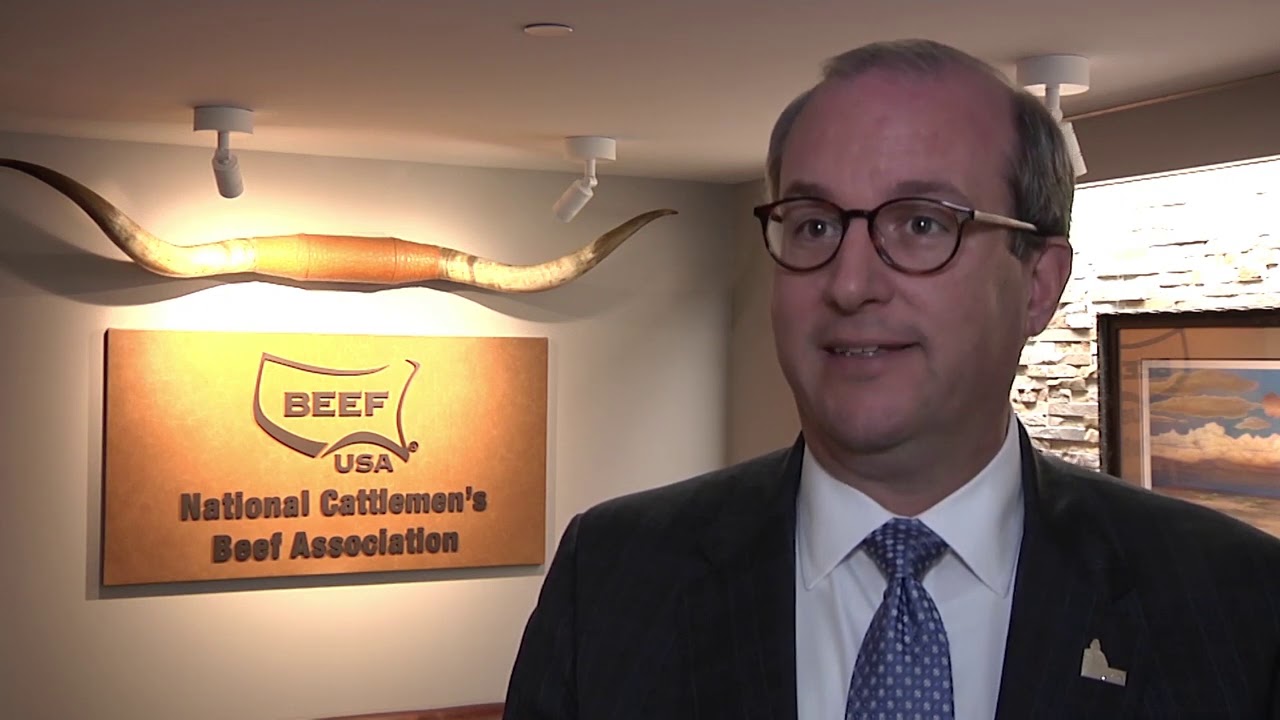
The USDA recently proposed new competition and market integrity rules under the Packers and Stockyards Act. Collectively referred to by the agriculture industry as the GIPSA rules, Senior Farm and Ranch Broadcaster, Ron Hays, is featuring comments from National Cattlemen’s Beef Association CEO Colin Woodall talking about these regulations.
Before he was CEO of NCBA, Woodall was a long-time lobbyist for NCBA in their Washington D.C. office. One of the things he worked on during the Obama years was the GIPSA rules. These rules have resurfaced again from the Biden administration’s most recent ideas of coming up with fairness for livestock markets.
“This, once again, is USDA coming in and trying to tell cattle producers how they can and cannot market cattle,” Woodall said. “What is most concerning is just how broad this seems to be. It is very broad in scope, a little light in details, and anytime you have anything from a federal agency that is so broad in scope and light in details, you have to get worried because it goes back to what we have spent the past two years talking about and that is where is the appropriate role of government in cattle markets.”
While it is ideal for government to stay out of cattle markets, Woodall said when it comes to the Packers and Stockyards Act as it exists today, he believes it does a good job, but it just needs to be fully enforced instead of adding more layers.
“If we do that, then a lot of the issues that are popping up in this proposed rule are going to be ones that just aren’t as important anymore,” Woodall said.
Woodall also talked about the SEC’s (Securities and Exchange Commission) effort to require reporting of greenhouse gas emissions. He said the SEC’s role is not to regulate greenhouse gasses.
“Their role is to regulate those publicly traded companies and the financial transactions between them,” Woodall said. “It is not meant to regulate greenhouse gasses. They don’t have the jurisdiction, and they don’t have the expertise.”
Attempting to regulate greenhouse gasses, Woodall said, is an agenda-driven action to try to enforce more greenhouse gas regulations on all segments of the supply chain.
“With this, especially if it covers scope three, it means that all of our greenhouse gas emissions as cattle producers are going to have to be passed up the chain as we sell our cattle,” Woodall said. “SEC needs to focus on Wall Street, not on Main Street because their jurisdiction, their area of expertise is on financial markets, it’s not on greenhouse gasses.”
NCBA is working hard to make sure that Gary Gensler, the chair of SEC, understands that this does not need to go any further.
“We have quite a few members on Capital Hill who have been very willing to step up and help us fight back,” Woodall said.
One of those helping in the fight is Congressman Frank Lucas, who recently introduced the Protect Farmers from the SEC Act. Over 100 Co-sponsors signed with Lucas to get the SEC to take a step back from cattle producers.
Click the LISTEN BAR below to listen to Colin Woodall talking about the SEC’s attempts to regulate greenhouse gasses on all segments of the supply chain.
The Beef Buzz is a regular feature heard on radio stations around the region on the Radio Oklahoma Network and is a regular audio feature found on this website as well. Click on the LISTEN BAR below for today’s show and check out our archives for older Beef Buzz shows covering the gamut of the beef cattle industry today.
NCBA’s Colin Woodall Talks GIPSA Rules
Oct 03
Mon, 03 Oct 2022 11:53:03 CDT
This past week, the White House held its conference on Hunger, Nutrition, and Health. One of those attending representing U.S. agriculture was the CEO of the National Cattlemen’s Beef Association, Col…
Sep 30
Fri, 30 Sep 2022 08:53:15 CDT
Senior Farm and Ranch Broadcaster, Ron Hays, is featuring comments from Farm Director KC Sheperd’s conversation with Oklahoma State University Agricultural Economist, Amy Hagerman, talking about disas…
Sep 29
Thu, 29 Sep 2022 13:17:35 CDT

In March of 2022, the Securities and Exchange Commission proposed the climate disclosure rule (The Enhancement and Standardization of Climate-Related Disclosures for Investors), which requires registrants to disclose information about direct greenhouse gas emissions, indirect greenhouse gas emissions from purchased electricity, or other forms of energy and those from upstream and downstream activities in its value chain.
Senior Farm and Ranch Broadcaster, Ron Hays, is catching up with Congressman Frank Lucas talking about working on a piece of legislation, the Protect Farmers from the SEC Act, that could offer protection for farmers and ranchers when it comes to reporting individual farm or ranch greenhouse gas emission numbers to the Security and Exchange Commission.
The bill would prohibit the U.S. Securities and Exchange Commission from requiring an issuer of securities to disclose greenhouse gas emissions from upstream and downstream activities in the issuer’s value chain arising from farms and ranches.
“I am in the process of filing to protect farmers from the SEC act,” Lucas said. “It is a bill to exclude agriculture from the Securities and Exchange Commission climate disclosure rulemaking process they are going through right now.”
The Biden administration and their SEC chairman, Gary Gensler are having trouble getting congress to pass the kind of laws they want, Lucas said, so they are wanting to use the rulemaking process to do it by fiat through the bureaucracy of the federal government.
Lucas is wanting to remove the SEC’s authority to make rules as it affects producers.
“The Securities and Exchange Commission, if they want to force people to do business a different way in this country, they can use these disclosure requirements at the SEC where typically businesses file papers to confirm that they are abiding by the Securities Exchange laws, they can use that then to force the change,” Lucas said.
This will be a domino effect and land on the farmer and rancher, Lucas said because a bakery or processing plant will hand the paperwork down to the feedlot or flour mill, who will then dump it onto the farmer or rancher.
“What the bill does is takes away the SEC’s authority to do this,” Lucas said. “Now, I am hopeful we will have great success in getting attention among my colleagues and whether we actually pass the proposal in the law, or we just simply get the Securities and Exchange Commission’s attention, and more directly leave us alone, the net result has to be the same.”
Lucas said farmers and ranchers do not need to feel the negative effects of somebody else’s environmental agenda.
“The two battle cries that you get from speaker Pelosi’s majority in the house and the White House is environmental justice and social justice,” Lucas said. “That says to me from a production agriculture perspective, they want to tell you how to farm. Their definition of environmental justice is denying you resources or making paperwork so complicated that you have to do it their way. And social justice is, they want to define who should farm in addition to how they should farm and that is not the way farm bills have worked since the 1930s, that is not the kind of system that has made our agriculture the most productive and efficient and safest in the world, so I am not going to allow- if I can help it- somebody sitting in an office in D.C., using paperwork to force my folks back home to farm a certain way and be a certain kind of farmer. That is just not right.”
At the very least, Lucas said by filing and gaining support across the country, he will hopefully get the attention of the SEC chairman and the bureaucracy.
“I don’t expect chairman Gensler to back off on anything,” Lucas said.
Because of this, there are a few different methods to make this legislation effective.
“The bottom line is, we can’t allow this to happen,” Lucas said. “The SEC is in a rulemaking process, so it has not taken effect yet, but we want to get ahead of this calamity before it occurs.”
Congressman Lucas was joined by more than 81 original cosponsors (including Oklahoma’s Tom Cole, Markwayne Mullin and Stephanie Bice), and is also supported by American Farm Bureau Federation, National Cattlemen’s Beef Association, National Association of Wheat Growers, National Cotton Council, National Pork Producers Council, USA Rice, American Sugar Alliance, American Soybean Association, National Potato Council, United States Cattlemen’s Association, National Council of Farmer Cooperatives, Agricultural Retailers Association, Oklahoma Farm Bureau, and the Oklahoma Cattlemen’s Association.
Specifically, the Protect Farmers from the SEC Act prohibits the SEC from requiring an issuer of securities to disclose greenhouse gas emissions from upstream and downstream activities in the issuer’s value chain arising from a farm, defines the production, manufacturing, or harvesting of an agricultural product through the Agricultural Marketing Act of 1946, outlines upstream and downstream activities, and defines greenhouse gases and removes the SEC’s exemptive authority in relation to this Act.
Click the LISTEN BAR below to listen to Ron Hays and Congressman Frank Lucas talking about protecting farmers and ranchers from SEC.
The Beef Buzz is a regular feature heard on radio stations around the region on the Radio Oklahoma Network and is a regular audio feature found on this website as well. Click on the LISTEN BAR below for today’s show and check out our archives for older Beef Buzz shows covering the gamut of the beef cattle industry today.
Ron Hays Beef Buzzes with Congressman Frank Lucas on SEC Climate Disclosure Rulemaking
Sep 28
Wed, 28 Sep 2022 09:25:20 CDT
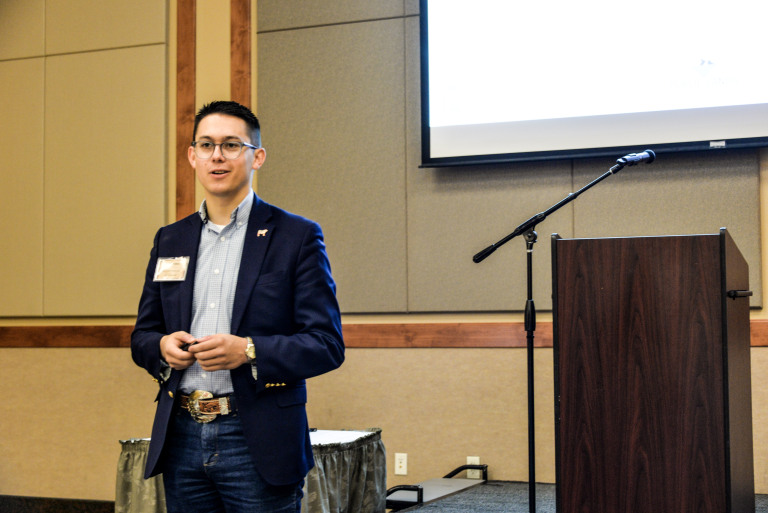
Senior Farm and Ranch Broadcaster, Ron Hays, got the chance to visit with Tanner Beymer, Senior Director of Government Affairs at the National Cattlemen’s Beef Association, talking about the USDA’s new proposed competition and market integrity rules under the Packers and Stockyards Act.
“USDA announced quite a bit,” Beymer said. “The first was that they are going to be publishing very soon at the federal register the second three rulemakings on Packers and Stockyards enforcement. This is the latest iteration of what has become a 14-year debacle and what the industry has collectively referred to as the GIPSA rules.”
This administration has been looking at revamping some of those rules, Beymer said and building off of the work and replacing some of the work from previous administrations.
“We are looking at, in front of us, an undue and unreasonable preferences and advantages rule out of USDA,” Beymer said. “In addition to that, USDA also announced that they are going to be putting together a pot of money to the tune of 15 million dollars to enter into cooperative agreements with state attorney’s general to incentivize them to better enforce anti-trust statutes in the agriculture sector.”
This is very substantial work coming out of USDA, Beymer said, and relatively unprecedented as far as we have heard in respect to some of the parts that they have announced to date.
“Over the last 14 years, we have seen many different proposed rules that if allowed to finalize would have been absolutely detrimental to the way that we do business in this country,” Beymer said. “This rulemaking that USDA announced, is not officially a notice of proposed rulemaking- it is what they are calling a draft rule. It is 180 pages long and I am not exaggerating when I say that we broke our printer in our office and ran out of highlighters trying to analyze the first little bit of this.”
Beymer said NCBA will be examining this draft rule through the lens of the NCBA grassroots policy process to make sure they are advocating for economic independence and freedoms on behalf of members.
“Anyone watching this from the country has got to be experiencing some degree of whiplash because they have really ping-ponged back and forth on what they believe from administration to administration is the proper role for the federal government in the marketplace,” Beymer said. “They are seeking to assert a lot of authority from USDA into the day-to-day marketplace as part of this rulemaking just from what we have seen so far. I think there is probably some stuff in here that producers can feel pretty comfortable with, but there are a lot of things in here that raise more questions than they answer.”
Over the course of the next several weeks and months as this eventually becomes an official notice of proposed rulemaking and opens up a public comment period, Beymer said that NCBA is going to try to figure out what some of those unanswered and concerning questions are.
“The Packers and Stockyards Act of 1921 was a children’s book compared to this novel,” Beyer said. “We are definitely going to be looking at the congressional intent and whether this exceeds it.”
Click the LISTEN BAR below to listen to Ron Hays and Tanner Beymer talking about USDA’s new proposed regulations under the Packers and Stockyards Act.
The Beef Buzz is a regular feature heard on radio stations around the region on the Radio Oklahoma Network and is a regular audio feature found on this website as well. Click on the LISTEN BAR below for today’s show and check out our archives for older Beef Buzz shows covering the gamut of the beef cattle industry today.
Listen to Tanner Beymer Talk Proposed Regulations from USDA Under Packers and Stockyards