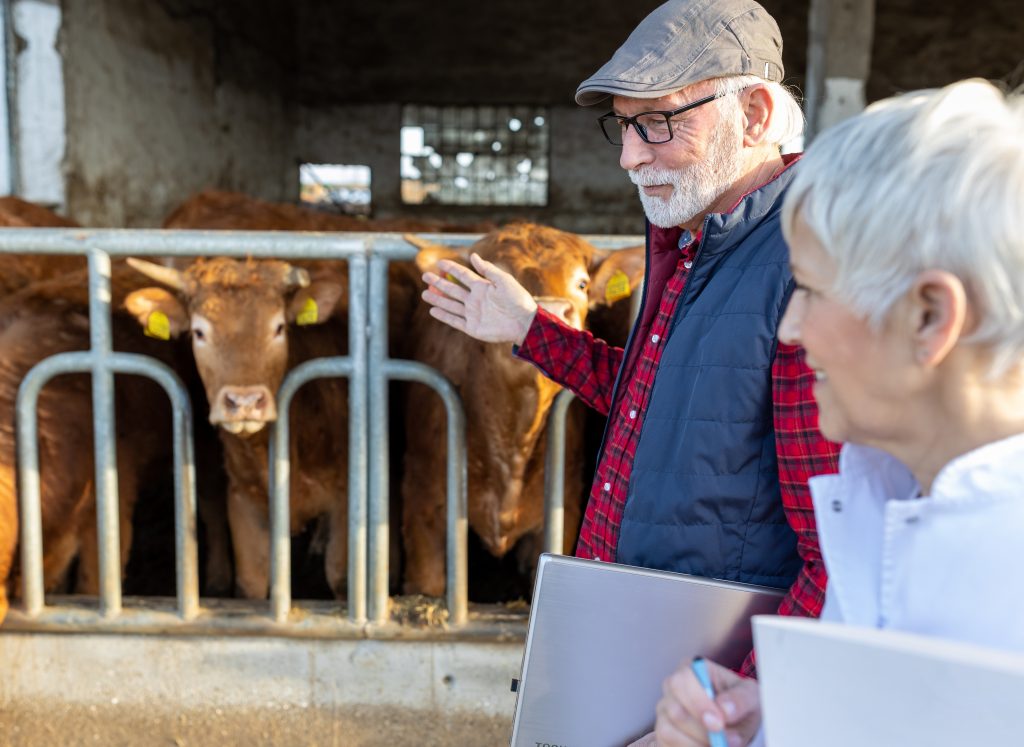
The beginning of a new year allows us to reflect on plans for the future and the individuals needed to achieve these goals. Having an operational veterinarian is as important as ever, especially in areas with a limited number of available veterinarians. Many veterinary practices may only offer emergency services to established clients. Additionally, increased oversight such as the Veterinary-Feed-Directive and judicious pharmaceutical usage make the Veterinary-Client-Patient-Relationship (VCPR) even more critical since a VCPR is legally needed for the veterinarian to diagnose and treat, write a prescription, and complete certificates of veterinary inspection (health certificates).
The definition of a VCPR has not changed in Oklahoma for over 25 years and no legislative changes are pending. According to the Oklahoma Veterinary Practice Act a Veterinarian-Client-Patient-Relationship (VCPR) exists when:
a. the licensed veterinarian has assumed the responsibility for making medical judgments regarding the health of an animal or animals and the need for medical treatment, and the client, owner or other caretaker has agreed to follow the instructions of the licensed veterinarian; and
b. there is sufficient knowledge of the animal or animals by the licensed veterinarian to initiate at least a general or preliminary diagnosis of the medical condition of the animal or animals in that:
1. the licensed veterinarian has recently seen or is personally acquainted with the keeping and care of the animal or animals, or
2. the licensed veterinarian has made medically necessary and timely visits to the premises where the animal or animals are kept or both, and
c. the licensed veterinarian is readily available for follow-up in case of adverse reactions or failure of the regimen of therapy, or has arranged for emergency medical coverage, and
d. the licensed veterinarian’s actions would conform to applicable federal law and regulations.
However, the best approach to a VCPR is not as a statutory or legal requirement. The most effective method emphasizes the relationship aspect of the VCPR. The American Association of Bovine Practitioners identifies the following areas as critical VCPR components in their recommendations titled “Establishing and Maintaining the Veterinarian-Client-Patient-Relationship in Bovine Practice”:
- Maintain written agreements for working relationships
- Have a Veterinarian of Record
- Clarify any and all relationships with consultants and other veterinarians
- Provide written protocols
- Ensure written or electronic treatment records are maintained
- Provide drugs or prescriptions for specific time frames and for specific protocols
Active communication should be the foundation of the partnership between a client and veterinarian as it provides the basis for effective health and welfare of animal patients. Developing this relationship provides the opportunity to strategically evaluate herd health protocols, treatment plans, biosecurity, management strategies, and other operational activities. Profitability and sustainability of both the cattle operation and veterinary practice should be considered in the mutually beneficial relationship. Ideally, the relationship does not begin through a first meeting at a 2 a.m. calving or another emergency. Finding a veterinary practice that fits the needs of your operation is key. Take the time to develop a long-lasting effective relationship, well before crisis strikes. Like cattlemen, veterinarians continue to be faced with multiple challenges. Investing in a solid VCPR creates a strategic alliance that proves mutually beneficial to both producers and veterinarians.