

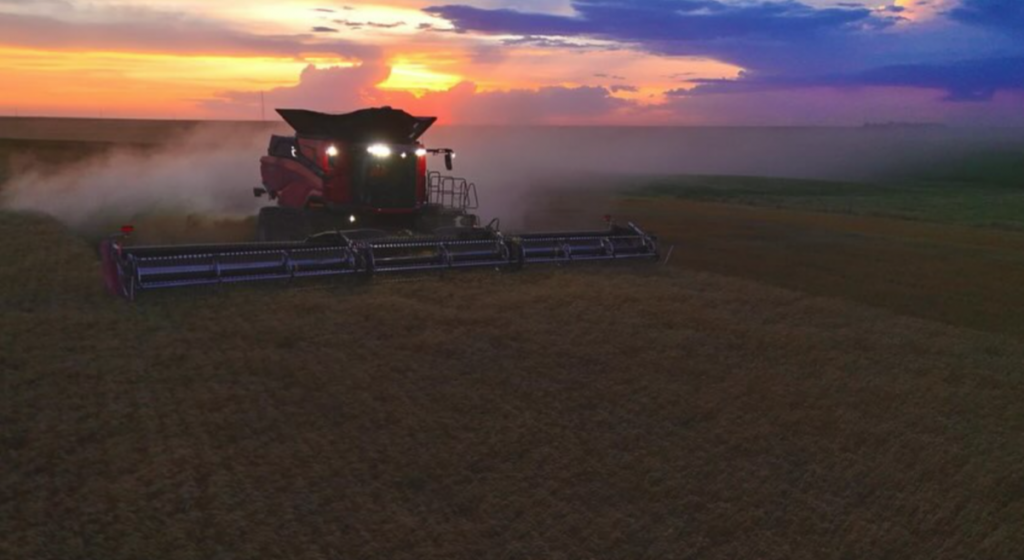
Despite a harvest season characterized by extreme and persistent rainfall, Oklahoma’s wheat producers are celebrating “absolutely astonishing yields,” according to Lance Embree, seed account manager at Bayer WestBred. While the excessive moisture presented significant obstacles, the unexpected bounty is providing a much-needed boost for farmers.
“You definitely hit the nail on the head there with it being challenging,” Embree told Farm Director KC Sheperd, recounting one customer in eastern Oklahoma who received a staggering “37 inches of rain since March.” These widespread “weather delays,” particularly in the southern, south-central, and eastern parts of the state, made for a difficult harvest.
Yet, amidst the wet conditions, a surprising outcome emerged. Embree reported that “for the most part, even with all the rains, test weights are holding up,” often remaining in the “58, 59, 60 pound test weight” range. The true highlight, however, has been the yields. “Just absolutely astonishing yields that I’m hearing,” he exclaimed, with reports of “80s, 90 bushel dryland yield in this central corridor” and many others seeing “50, 60 bushel wheat.”
Embree explained that while early spring was dry, “timely rains later in the season” were crucial for these impressive yields, even as some of the in-season downpours “affected quality and test weight a little bit.”
Top Performing Varieties and Regional Considerations
Looking at specific Bayer WestBred varieties, Embree highlighted strong performers. “WB 4792, an older product, but just a very, very solid, high performing product,” continued to excel, particularly in western Oklahoma. Moving eastward, “WB 4422 just having a really good year,” boasting strong test weights, protein levels in the “11 to 12 range,” and excellent standability, which helped it withstand the heavy rains.
When advising producers on variety selection, Embree underscored the importance of local agronomic issues due to Oklahoma’s diverse landscape. For instance:
- In eastern Oklahoma, where wheat often follows corn, Fusarium head blight is a primary concern.
- In the central corridor, producers should prioritize varieties with good low pH tolerance or herbicide tolerance for continuous wheat cropping systems.
- In western Oklahoma, the focus shifts to forage production and drought tolerance.
Embree also noted that both WB 4792 and WB 4422 demonstrated “strong tolerance to wheat streak mosaic,” an issue that impacted parts of Kansas and the Texas Panhandle this year.
Looking Ahead: Stable Strategies and New Innovations
For future planting seasons, Embree urged producers to “take your time, evaluate what you saw on your farm,” and examine multiple years of test plot data from their specific area rather than focusing on a single year’s “plot winner.” He cautioned that “challenging, as this year was, next year will be different, and we’ll have a different set of challenges,” underscoring the need for a stable variety selection strategy.
Finally, Embree shared news of exciting new product launches from Bayer WestBred, including a new Clearfield herbicide-tolerant wheat, WB 4445 CLP Plus, and a new CoAxium line, WB 4459 AX. These varieties are designed to offer enhanced weed control options for growers in central Oklahoma and south-central Kansas, reflecting the ongoing commitment to innovation in seed technology. To learn more from Bayer Westbred, click here:







