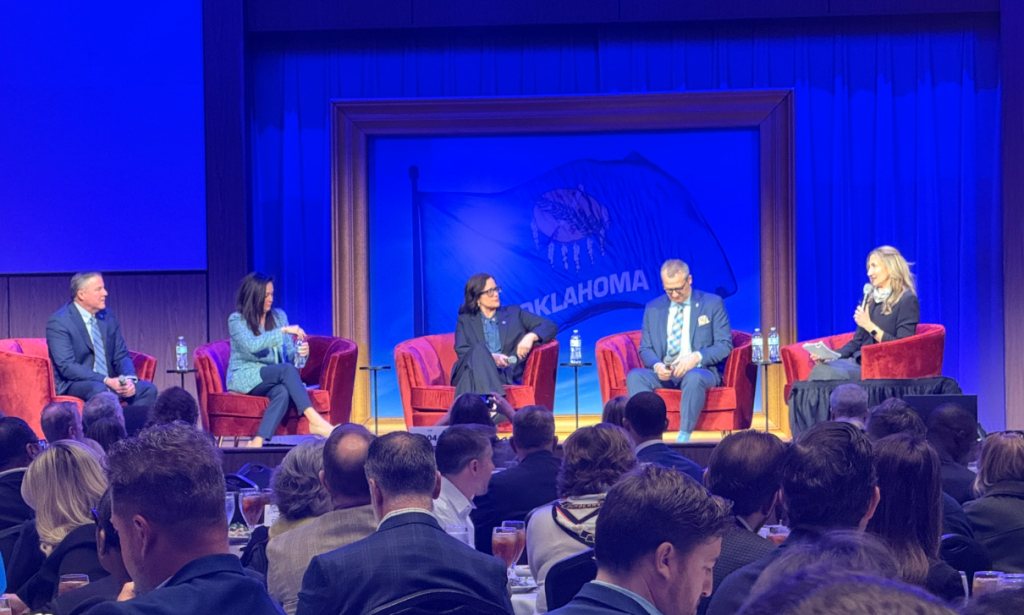
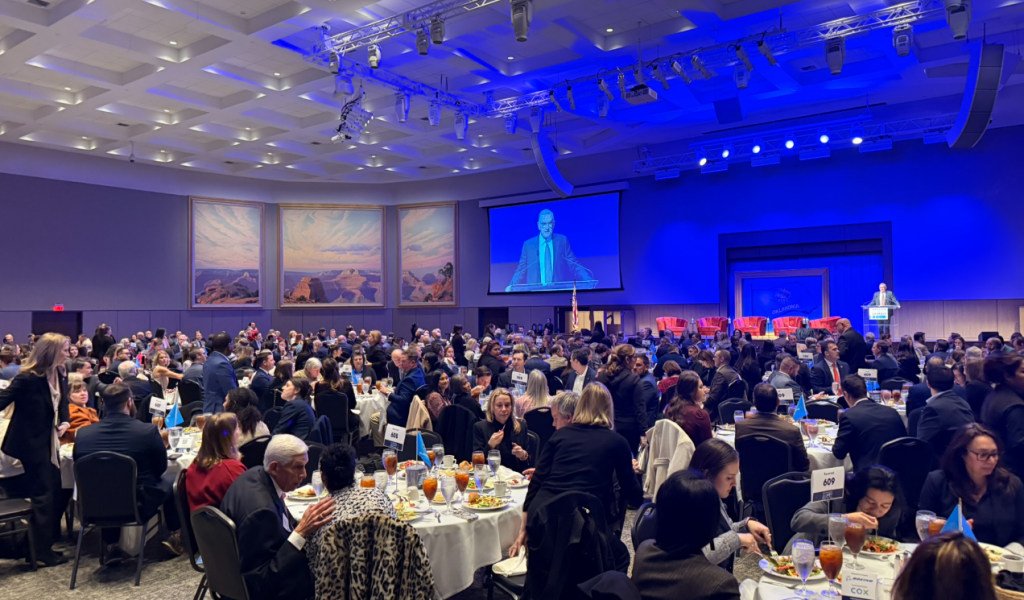
Ahead of the upcoming legislative session, the Greater Oklahoma City Chamber, led by CEO & President Christy Gillenwater, hosted a dynamic round-table discussion featuring Oklahoma’s top legislative leaders. The panel included Senate President Pro Tempore Lonnie Paxton, House Majority Leader Mark Lawson, Senate Minority Leader Julia Kirt, and House Democratic Leader Cindy Munson. Despite differing party affiliations, the leaders struck a surprisingly optimistic and cooperative tone, emphasizing shared goals for the state’s future.
Optimism and Bipartisan Collaboration
The session opened with a shared sentiment of optimism. Senate President Pro Tempore Paxton joked about the chaotic seating arrangements but quickly pivoted to the positive momentum from the previous year. He highlighted the fresh leadership dynamic in both chambers, noting that while disagreements occurred, they were often resolved behind closed doors to present unified solutions. “We came up with the solution so the general public never knew we were arguing,” Paxton explained, emphasizing a commitment to functional governance.
Minority Leader Julia Kirt echoed this sentiment, expressing hope in the power of civic engagement. “The silver lining, the shining light is the people,” she said, noting that Oklahomans are increasingly vocal about their needs. House Democratic Leader Cindy Munson agreed, praising the extensive town halls held by her caucus over the last year, which have grounded their priorities in the “actual struggles and problems” facing constituents. House Majority Leader Lawson rounded out the opening remarks by noting the palpable sense of camaraderie among leadership, stating they are in a “much better place sitting here a week before session than I can ever remember in 10 years”.
Top Legislative Priorities: Education, Housing, and Economic Growth
When asked to identify the single most impactful goal for the session, the leaders converged on several key themes:
- Public Education: Leader Munson was emphatic that education funding is paramount. “We have to just say out loud it’s unacceptable that we’re 50th in the nation for public education,” she declared. She stressed the need for significant financial investment to recruit and retain teachers, arguing that better schools attract businesses and jobs with higher wages.
- Housing: Leader Kirt focused on the state’s housing crisis, noting that low-cost housing is no longer the competitive advantage it once was for Oklahoma. “We’ve got more Oklahoma City region folks who are cost-burdened… and we have young people unable to buy in our community,” Kirt stated. She advocated for improved infrastructure (water and sewer) to support new housing developments and adaptive reuse projects.
- Literacy and Families: Leader Lawson highlighted the fundamental need for literacy, stating, “We’re going to teach kids to read and read well at an early age”. He connected this foundational skill to broader economic success, arguing that if the state prioritizes reading, other successes will follow.
- Economic Strategy: Senator Paxton reflected on the state’s economic evolution, citing the unexpected rise of the aerospace industry as a prime example of a successful public-private partnership. While admitting he doesn’t know exactly what the “next big thing” is, he expressed a commitment to finding and supporting the next major industry that will define Oklahoma’s future.
Tourism as an Economic Engine
The discussion also touched on the growing importance of tourism. Leader Lawson pointed out that tourism is now the state’s third-largest industry, largely unnoticed by many. He advocated for treating it with the same seriousness as oil and gas or aerospace, suggesting that major upcoming events like the Olympics (softball/canoe slalom) and the Route 66 centennial are massive opportunities. Senator Paxton reinforced this, noting that the Oklahoma City Thunder and the city’s unique attractions are drawing national attention and should be leveraged as statewide assets.
The Healthcare Challenge
Healthcare costs and workforce stability were identified as critical issues. Senator Paxton acknowledged the budget will be “very, very tight” this year due to rising expenses, particularly in healthcare and education. Leader Munson raised the alarm about the uninsured, noting that when people lack coverage, costs rise for everyone. “We have to take care of healthcare,” she urged, linking it to workforce stability. The panel agreed that mental health is a crucial component of this puzzle, with Leader Lawson emphasizing that untreated mental health issues often lead to long-term negative outcomes.
Workforce Development and Education
A significant portion of the discussion centered on workforce development. Representative Hill (as referenced by Lawson) was praised for his work on the workforce commission and career-tech advancements. However, Senator Paxton delivered a passionate critique of the impact of virtual learning on workforce readiness. He argued that despite legislative successes in workforce development, fundamental skills are lagging because students aren’t in the classroom enough. “If you want to see the schools that are not participating in our efforts… look at the ones that are still doing virtual or remote learning days,” Paxton argued. He cited statistics showing that Oklahoma students spend significantly fewer days in the classroom than the national average and vowed to push for a return to a 180-day school year to improve literacy and workforce readiness.
Conclusion
The forum concluded with a clear message: while challenges in budget, healthcare, and housing persist, Oklahoma’s legislative leadership is entering the session with a unified focus on practical solutions. By prioritizing education, embracing new economic drivers like tourism, and fostering bipartisan cooperation, they aim to move the state forward.