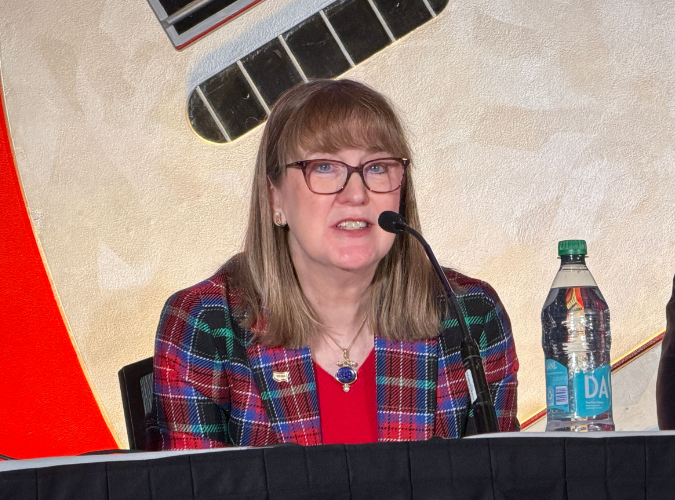
Following reports of a New World screwworm detection in a horse imported from South America to Florida, Chief Veterinarian for the National Cattlemen’s Beef Association, Kathy Simmons, spoke with Ron Hays CattleCon26 to clarify how the case was identified, treated, and contained under existing USDA protocols.
Simmons explained that the case involved a horse imported from South America that was found to have a wound containing New World screwworms. She noted that this type of detection is not unexpected when animals originate from regions where the parasite is endemic. “The South America case is something that isn’t unusual, because with horses, we bring in any of these horses from a New World screwworm area like South America, it is endemic there,” Simmons said.
She emphasized that all horses imported from screwworm-endemic regions are required to undergo a strict quarantine process designed to prevent any risk of escape or spread. “All of these horses have to go through a quarantine process, which means they come in, they have a seven-day quarantine in a quarantine facility,” Simmons explained, adding that these are closed facilities where “this flies or any of these parasites cannot get out.”
During that quarantine period, horses are sedated and subjected to a detailed full-body inspection to look for signs of infestation. “We have to sedate them and do a full body inspection, which means in the stallions, we have to check the prepuce and all that area down there where these flies like to lay these eggs,” Simmons said. It was during this inspection that officials found evidence of a wound affected by screwworms.
Simmons told Hays that the animal was immediately treated and remains under control, minimizing any broader risk. “So this animal was treated by prescribed treatment, a systemic treatment and a topical treatment, [and] will remain in quarantine until this animal is free of disease,” she said. While acknowledging the concern such cases raise, Simmons stressed that the situation is “locked down,” with “very little chance of it getting out in the wild,” underscoring that existing USDA protocols are working as intended.
Coverage of CattleCon 2026 is powered by Farm Data Services of Stillwater, Oklahoma.