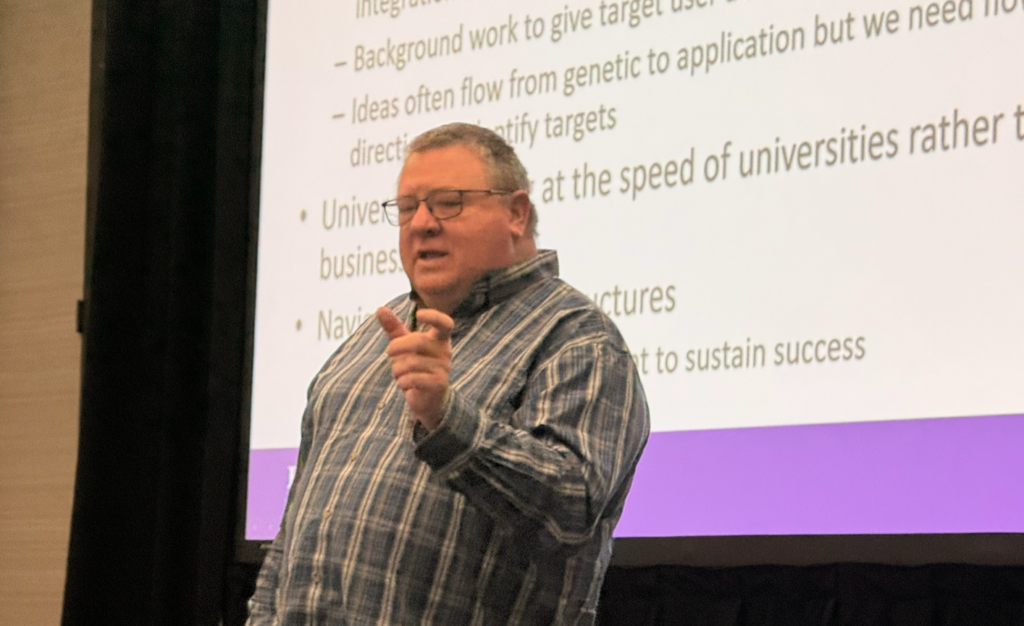
Sowing the Seeds of Change: Dr. Allan Fritz on the Future of Wheat Breeding
In a recent conversation, KC Sheperd met with Dr. Allan Fritz, a professor and wheat breeder at Kansas State University, to discuss the industry’s economic landscape and his upcoming transition to a new field.
Redefining Value for the Grower
A primary focus of the discussion was the urgent need to find new ways to capture value in the wheat industry to support struggling producers. Dr. Fritz noted that while wheat is essential for soil health and the broader commodity mix, the system must evolve to remain viable. “We’re not in a great place economically on wheat… we really need to find ways to make it make more economic sense for our growers,” Fritz said.
He highlighted several promising developments in Kansas that aim to provide this missing value:
- High-Amylose Wheat: This variety contains a specific grain fiber that can improve human health and absorption, which in turn affects product quality.
- Winter Durum: Now in its third year of commercial production, this provides a new opportunity for growers to diversify.
- Collaborative “Ox” Wheats: A partnership with Oklahoma State University focuses on developing “super strong” wheat varieties.
Collaboration Over Competition
Dr. Fritz emphasized the importance of his working relationship with Dr. Brett Carver at OSU, noting that while the two states are natural rivals, their shared goal is the success of the regional producer. Fritz believes this drive for excellence benefits everyone, remarking, “We each want to kick each other’s tail, and that’s okay… it makes you better. It’s just that competition can’t get to the point where you’re refusing to work together.”
He pointed out that wheat varieties do not respect state borders, making this cross-border collaboration essential for innovation.
A New Mission Beyond the Field
After a long and distinguished career in agriculture, Dr. Fritz announced that he will retire on January 2, 2027. His next chapter will take him from the fields to the classroom as he pursues a degree in counseling at Covenant Seminary, beginning in August 2027.
“I’m not necessarily sad, I’m really grateful for a great career that’s really been very meaningful,” Fritz said regarding his retirement. While he acknowledged the significant shift in focus, he expressed deep gratitude for his time in the wheat industry and his desire to continue serving people in a different capacity.