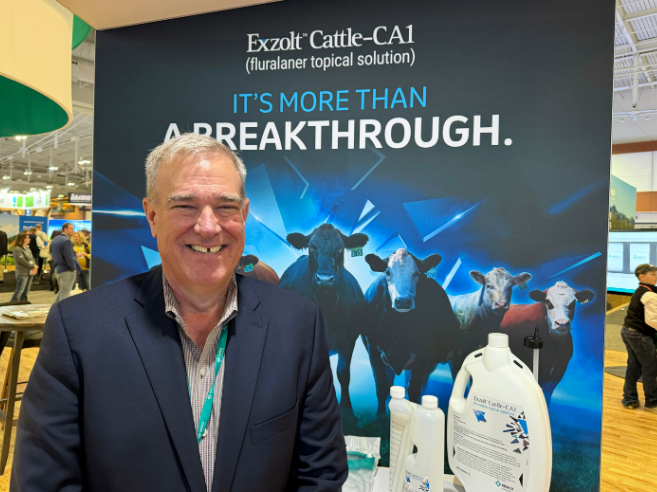
In today’s beef buzz, senior farm and ranch broadcaster Ron Hays speaks with John Hutcheson, director of the beef cattle technical services team with Merck Animal Health, about a newly approved tool to help protect U.S. cattle from the threat of New World screwworm. The conversation took place on the trade show floor, where Hutcheson outlined how Merck is preparing producers for a potential incursion north of the Rio Grande.
Hutcheson emphasized Merck’s commitment to innovation, noting, “I’m proud to work for a company that brings new products and innovation,” as he introduced Exzolt Cattle CA1. He explained the product carries a label claim for both New World screwworm and cattle fever tick and can be used for prevention and treatment, adding that it represents “a new chemical class that has not been introduced into the U.S. cattle herd before.”
That new chemistry is especially important, Hutcheson said, because of long-term resistance concerns. “We’ve been using the same classes for many decades, and we see some things that relate to resistance,” he explained. “So we’re excited about bringing a new chemical class, which comes with some responsibility of producers and how they use it to make sure we have a product that lasts a long time.” He also noted the chemistry has already been used successfully in countries like Mexico, Brazil, Australia, and South Africa.
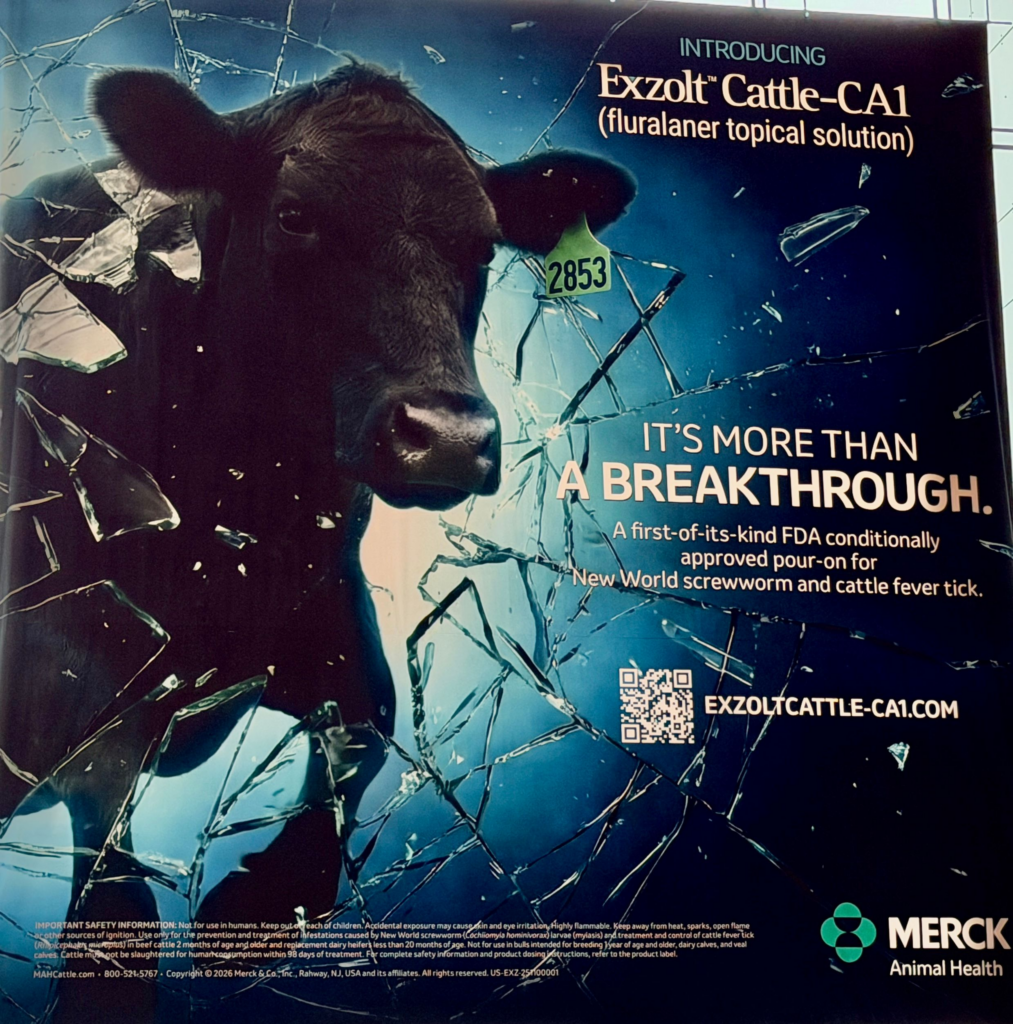
On the practical side, Hutcheson described how Exzolt Cattle CA1 fits into everyday cattle management. “If you find a wound that’s got larvae in it… you could treat them, and it clears that myiasis in 48 to 72 hours,” he said. From a prevention standpoint, he added that applying the pour-on product during routine procedures like castration can protect calves for 14 days, noting, “In our study, we saw no myiasis for the entire 14 days, and the wound healed in that time as well.” The product can be safely used on cattle “two months of age and older.”
Hutcheson stressed that veterinarian involvement is critical since the product requires a prescription. “If you don’t have a veterinarian, you should have that veterinarian on board and a valid vet-client-patient relationship,” he said, adding that vets can help producers decide “when to treat, when to prevent, and how to best use it.” He concluded by pointing to Merck’s broader cattle health portfolio and reaffirming the company’s role as “a science-driven company… continuing to invest in the cattle industry with new products that are useful to producers.”
Coverage of CattleCon26 is powered by Farm Data Services of Stillwater, Oklahoma.
The Beef Buzz is a regular feature heard on radio stations around the region on the Radio Oklahoma Ag Network and is a regular audio feature found on this website as well. Click on the LISTEN BAR for today’s show and check out our archives for older Beef Buzz shows covering the gamut of the beef cattle industry today.