

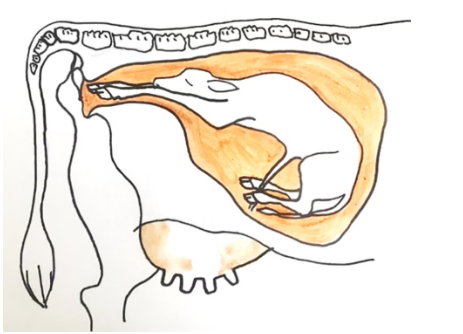
Dystocia is calving difficulty. The term applies to an abnormal or difficult birth. Dystocia can be a major cause of calf loss and a serious issue for the beef industry, especially when calving first calf heifers. What are the causes of dystocia? Most common is relative fetal oversize, which could be defined as a calf too big, pelvis too small, or both. As for calving difficulty, an ounce of prevention is worth a pound of cure. Proper sire selection is vital to preventing calving difficulty. Underdeveloped heifers and heifers bred to bulls with large birth weights are both factors that cause increased incidence of calving difficulty. The second most prevalent cause of dystocia is an abnormal presentation of the fetus. The normal presentation in cattle is an anterior presentation with front legs and head extended into the pelvic canal as shown below.
Any position that is different from the above illustration such as forelegs or head turned back, breech, rear end position, sideways or rotated, etc., is an abnormal presentation of the fetus. A normal delivery cannot be achieved unless the head and both front limbs are presented into the pelvic canal and on through the vulva. If the calf is normally presented and the pelvic area is large enough, the vast majority of animals will give birth without assistance.
On average, about 5% of all calves are in abnormal positions at birth. When this occurs, correcting the problem will require an experienced herdsman (or assistance of a veterinarian) to position the fetus correctly prior to delivery. If fetal position cannot be corrected, it may be necessary to perform a caesarean section. Abnormal presentations during calving are considered extremely low heritability and are considered random events. Unlike Birth Weight, with a heritability of 46%, and Calving Ease Direct, with a heritability of 19%, abnormal presentations are rarely inherited. Thereby genetic selection to avoid abnormal presentations in beef cattle is ineffective.
Bottomline
Even when selection pressure has effectively been applied to traits influencing calving ease in sire selection, abnormal presentations can still occur during calving. It is advised to observe the cowherd closely during calving season, especially first-calf heifers because they will require the most assistance. Observation permits cattlemen to detect abnormal fetal presentations in the early stages of delivery and increases the likelihood of calf survival.
References:
Mark Johnson discusses the typical gestation period in beef cows, factors that influence variation, and what producers should consider when planning for calving season on SunUPTV Cow-Calf Corner from February 26, 2026 at https://www.youtube.com/watch?v=qoc0Rsj4iBs







