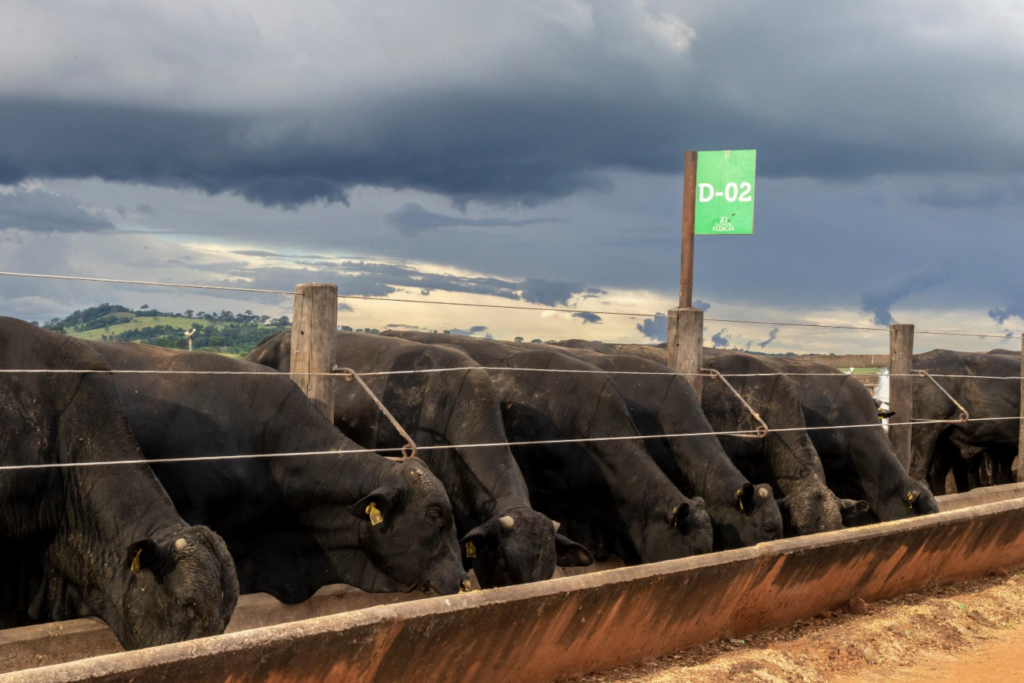
In today’s Beef Buzz, senior farm and ranch broadcaster Ron Hays speaks with Dr. Derrell Peel, who breaks down the latest Cattle on Feed report and what it signals for the cattle market moving forward.
A Report Shaped by Weather Disruptions
Peel says the latest numbers came in mostly steady, but not without some unusual month-to-month shifts. “The cattle on feed inventory for March… was down point 2%, so almost even with a year ago. Placements in February were up 3.7%, marketings down 6.8%.”
He explains that those swings were largely driven by winter weather that disrupted normal movement patterns. “Most of what’s going on in this report you can explain with the winter storm… There was a lot of disruption there from one month to the next.”
“When you take it in the context of smoothing it out over the two months, I don’t think it’s really a big surprise we just got some month-to-month variation going on here.”
No Change to the Bigger Trend
Despite the variability in recent reports, Peel says the overall market direction remains unchanged. “If you look at January and February together, placements are still down somewhat. I don’t think we really changed the trend in this market at all.”
He adds that the industry anticipated some of this fluctuation. “We could sort of see that there was going to be some movement between the two months. Once you put it in that context, it sort of makes sense.”
Tight Supplies Continue to Dominate
Looking ahead, Peel emphasizes that supply fundamentals remain tight and will likely remain so.
“The January one cattle inventory report, we calculate the estimated feeder supplies out of that from various categories; And that number was actually bigger, but it was bigger because the cattle on feed total that we subtract from that was smaller, what it said was there was less cattle, less feeder cattle, out in the country, but more of the ones that were out there were still out there on January one. And so all of that adds up to the fact that going forward, we’ve still got tight feeder cattle supplies. We’re going to continue to see these numbers tighten up”
That reality could eventually push the industry toward rebuilding. “We could be beginning to retain some heifers if we’re able.”
Demand Holds Strong—But Risks Remain
Peel points to strong consumer demand as a major driver supporting current price levels.
“Beef demand has been an incredible key to where we’re at; consumers have been incredibly resilient even at these record high prices.”
However, he cautions that external pressures could challenge that strength. “The one thing that could tear that up would be something macroeconomic… that would impact consumers’ ability.” “If this situation persists, I do think we have reason to be somewhat concerned.”
Bottom Line
While recent reports show some short-term variability, Peel makes it clear the fundamentals haven’t changed—tight cattle supplies continue, but outside economic forces will be key to watch in the months ahead.
The Beef Buzz is a regular feature heard on radio stations around the region on the Radio Oklahoma Ag Network and is a regular audio feature found on this website as well. Click on the LISTEN BAR above for today’s show and check out our archives for older Beef Buzz shows covering the gamut of the beef cattle industry today.