

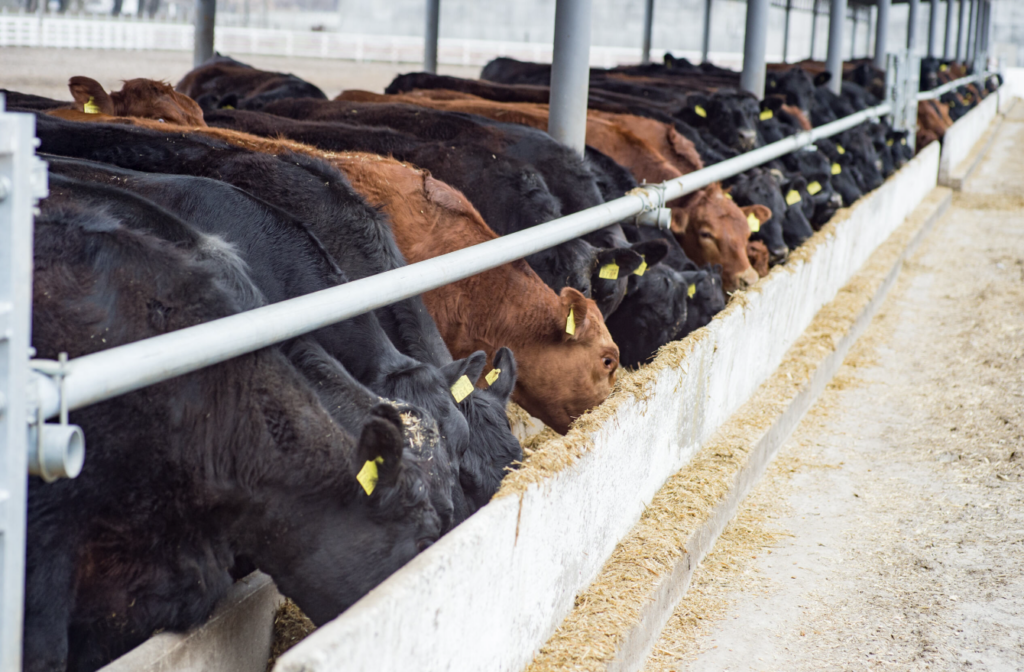
The segmented nature of the beef industry naturally leads to production and economic inefficiencies. Management and nutrition prior to feedlot entry have long-lasting implications on performance during the finishing phase. In the past few weeks, I have discussed observations on the increase in cow mature body weight and its impact on the carcass weights of their offspring. This week I will look at how finishing performance is affected by post-weaning performance during backgrounding of cattle in dry-lot or on pasture.
We have long been aware that previous genetic, nutrition, and health management has large impact on feedlot performance and profitability, carcass traits and ultimately consumer acceptability of beef. To determine the impacts backgrounding system and the level of performance during backgrounding on finishing performance and efficiency, we collected treatment means from multiple studies that tracked cattle from backgrounding through finishing.
Cattle entered the feedyard from pasture were 78 pounds heavier than calves from dry-lot backgrounding systems (824 for calves coming off from grass vs 746 pounds for calves coming out of dry-lot), and final finished body weight was greater for calves backgrounded on pasture. Increasing average daily gains on pasture increased final body weight at harvest and hot carcass weights to a greater degree than increasing gains in dry-lot based growing systems. Increasing average daily gain in dry-lot backgrounding systems decreased finishing performance to a much greater extent than increasing average daily gain in pasture-based stocker backgrounding systems. Where for each pound increase in daily gain during backgrounding in dry-lot systems decreased finishing average daily gain by 0.22 pounds, a pound increase in backgrounding average daily gain on pasture only decreased finishing performance by 0.13 pounds per day.
Cattle backgrounded on pasture had higher feed intake and reduced feed efficiency, which is related to the greater bodyweight entering the feedyard but also potentially indicating that the high roughage diets on pasture resulted in increased GI capacity. But feed efficiency is impacted to a greater extent as gains of cattle backgrounded in dry-lot increase than for cattle backgrounded in pasture-based stocker systems. Even with the heavier body weight entering the finishing phase, cattle from pasture backgrounding systems were on feed longer but increasing gains on pasture reduced finishing days on feed by 16 days for each additional pound in backgrounding average daily gain, while increased gains during feedlot backgrounding did not influence days on feed during finishing.
Additional gain in pasture based backgrounding systems increased ribeye area where additional gain in feedlot backgrounding systems reduced ribeye area. In contrast, increasing backgrounding ADG in feedlot systems increased marbling score, while marbling score was not increased by additional ADG on pasture.
Calves entering the finishing phase after feedlot based backgrounding programs appear to be fatter than calves backgrounded on pasture this improves marbling and ultimately carcass quality reducing weight when slaughtered at the same degree of finish. We relate these backgrounding systems differences on the impact of activity and thus expected differences in body composition of gain of calves grown on pasture vs feedlot pens.
Pre-finishing management has lasting effects on feedyard performance, carcass weight, and whole-system efficiency. In past articles we discussed how increasing cow sizes increases the weight of calves at harvest and carcass weights but reduces efficiency of the entire beef industry. Backgrounding strategy also plays an important role. Pasture-based stocker programs generally produce heavier finished cattle, larger ribeye areas, and improved efficiency compared with dry-lot backgrounding. Across segments of the beef industry, optimizing pre-finishing management, rather than simply increasing cow size, offers greater opportunity to enhance carcass output and overall profitability across the entire beef production system.







