

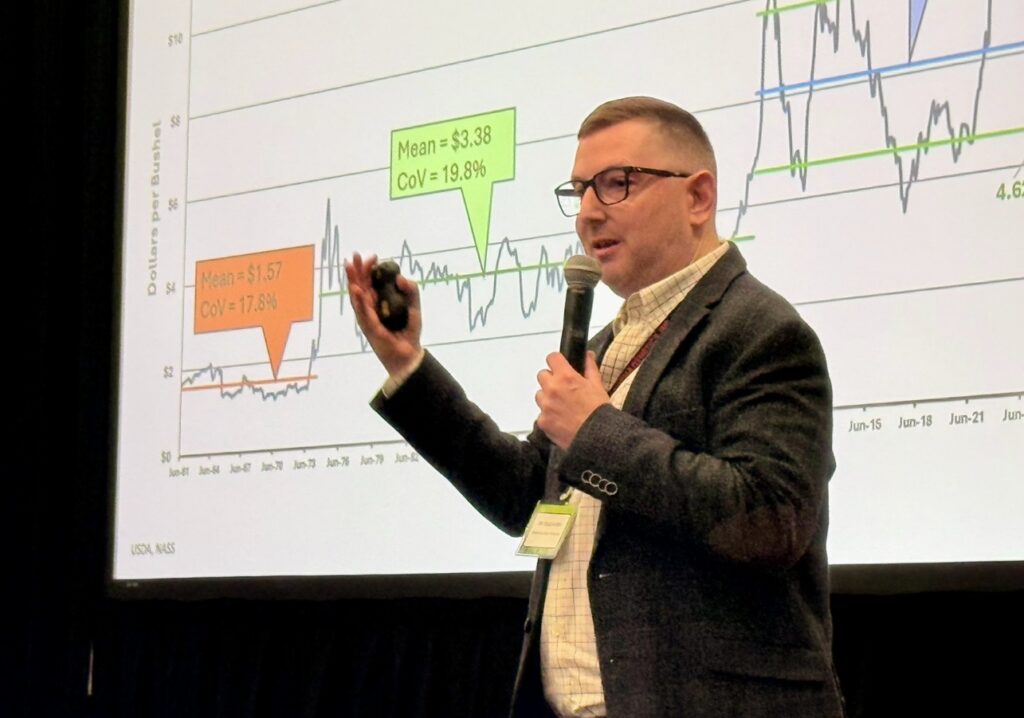
The current wheat market rally is gaining significant momentum, with prices surging to their highest levels since early 2025. Farm Director KC Sheperd sat down with Todd Hubbs, OSU crop marketing specialist, to discuss how this rally is being fueled by poor crop conditions and persistent weather challenges across the Southern Plains. Hubbs notes that the market is finally adjusting to the reality of the domestic crop, providing a much-needed boost for Oklahoma producers.
Weather Impacts on Wheat Prices
The primary driver behind the current market strength is the adverse weather that has plagued the wheat crop. Hubbs noted that the July contract recently topped out in the mid-$6.60 range, a level not seen in months.
“I think, you know, the market’s starting to reflect the poor crop conditions that we’ve seen come out of USDA and just in general everything those of us who live in the South Plains have been experiencing over the last few months.”
Hubbs described the current state of the Oklahoma wheat crop as “spotty,” with significant variability depending on local rainfall. While some fields look promising, others just a few miles away have suffered.
“If you took winter wheat yield sub-50 bushels an acre nationally, you know, you’re taking a bit of a wheat—a good chunk of the wheat crop down. So I think that’s what we’re seeing right now.”
Advice for Producers: Pricing Strategies
With prices at these levels, Hubbs suggests that producers consider pricing some of their crop, especially those with crop insurance or a clear understanding of their production potential.
“The last time we got up here, it retreated… now is the time I’d think, you know, price something. If you’ve got crop insurance 85%… you could price some at this.”
He also emphasized the importance of staying current with market bids, as volatility can lead to rapid price swings.
“Keep your bids current. You know, we see these big rallies, sometimes they’re overnight. If you had a speculative bid you want to put in… maybe not put them on the rounds… maybe like $6.28 instead of $6.30. People tend to always bid on the evens, right? The zeros and fives.”
Impact on Corn and Soybeans
While wheat is leading the charge, other commodities like corn and soybeans are also seeing some upward movement, though it remains more muted. Hubbs pointed out that geopolitical tensions and fluctuations in the oil market are playing a role in the broader commodity space.
“I think wheat’s dragging everything a bit higher; we’re seeing a little bit of strength today across everything… right now, it’s wheat that’s moving strong and I like that a lot for us here in Oklahoma.”
Looking Ahead to Spring Planting
As the spring planting season approaches, there is often speculation about acreage shifts between crops. However, Hubbs remains skeptical of major changes in Oklahoma.
“These people are professionals and they’re going to plant the crop. You know, you have to have something in the ground to be in the game… I expect people to plant. There’s going to be a lot of speculation on fading 95.3 million acres of corn; I’ll take it with a grain of salt until I see it.”
Fertilizer costs continue to be a significant factor in planting decisions. Nitrogen prices have risen substantially, but Hubbs believes many producers may have already locked in a portion of their needs.
“Nitrogen, I think on a per-pound basis we’ve seen it run up… some places over 25 cents a pound… I think a lot of folks already had some bought. Now maybe not everything they needed… Farmers aren’t—I don’t want to say it, but yeah, there’s probably a little bit more locked in than what we’re seeing in the media.”







