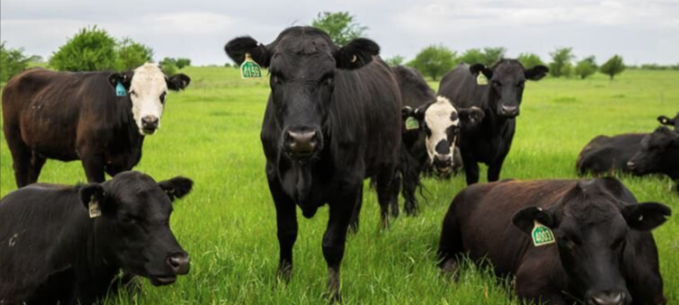
Bermudagrass, an introduced forage, is very important to Oklahoma cow-calf operations. Bermudagrass has some highly beneficial characteristics. Yield, persistence, nutritional value, timing of growth and production, tolerance to heavy grazing, responsiveness to fertilization and resistance to herbicides. A key benefit of Bermudagrass is the potential to support higher stocking rates than native range. When properly managed (for weed control and fertilization) and in response to adequate rain, Bermudagrass has the potential to be highly productive. On the downside, Bermudagrass requires these inputs on an annual basis in order to achieve maximum productivity. The chart below shows the linear response of bermudagrass production relative to Nitrogen applied.
Relationship of Bermudagrass Yield to Nitrogen Fertilization
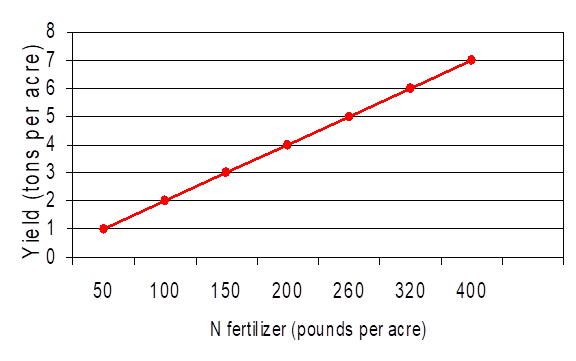
This chart can be used to manage fertilizer inputs in order to meet target goals for production. With a recent spike in the cost of fertilizer, use the chart to budget and plan for your grazing or hay needs this summer. Timely application of fertilizer is critical to capitalize on the production potential of Bermudagrass pastures to achieve the production levels needed. Getting fertilizer applied ahead of spring rains and summer heat will increase the impact of Nitrogen fertilizer on Bermudagrass productivity.
Reference: Chapter 11, OSU Beef Cattle Manual. Seventh Edition. E-913. Oklahoma Cooperative Extension Service.