Today, the House of Representatives passed the Farm, Food, and National Security Act of 2026, with a final vote of 224-200. Now the bill moves to the U.S. Senate for consideration.
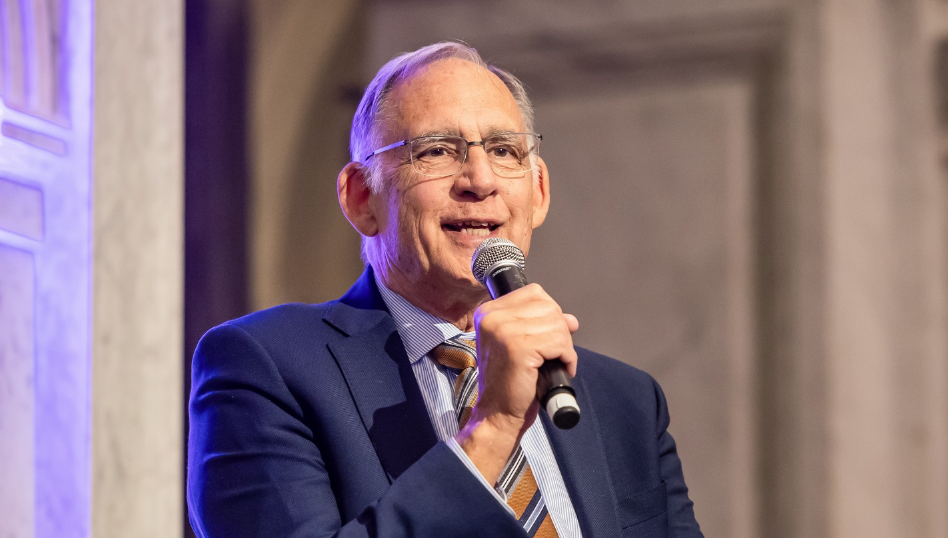
The National Association of Farm Broadcasters recently convened in Washington, D.C., for its annual Washington Watch event, where Senator John Boozman addressed the farm broadcasters during a critical window for agricultural policy. In an extensive 17-minute address, Boozman detailed the complex legislative maneuvers required to secure a bipartisan Farm Bill, emphasizing that the current economic climate for producers is “deteriorating” at a rate that demands immediate action rather than further delays.
Boozman, serving as the Chairman of the Senate Agriculture Committee, framed the upcoming months as a “weeks rather than months” timeline for committee markups. He noted that while the House Agriculture Committee advanced an 802-page version of the bill in early March, the Senate’s path depends entirely on achieving bipartisan consensus. He was candid about the financial headwinds facing the industry, pointing out that interest expenses alone have surged by more than 70 percent over the last four years, creating a “cost-of-production crisis” that the outdated 2018 safety net is no longer equipped to handle. The path forward involves several critical steps to ensure the bill reaches the President’s desk before the September 30 deadline.
A significant portion of the Senator’s remarks focused on the “patchwork of regulations” threatening the stability of the interstate commerce system. Boozman expressed deep concern about California’s Proposition 12 and similar state-level mandates that impose production standards on farmers outside their own borders. While he acknowledged the difficulty of finding a compromise—mentioning a potential “grandfathering” clause for existing state laws to prevent future disruptions—he admitted that reaching an agreement with Senate Democrats on this issue remains one of the most significant hurdles to a final package.
The Senator also touched on the broader rural infrastructure components of the bill, moving beyond traditional commodity programs. He highlighted the need to adjust federal loan limits to reflect the realities of inflation and the massive capital requirements of contemporary farming. Boozman argued that without these adjustments, young and beginning farmers would be priced out of the industry entirely. He also underscored the role of rural broadband and healthcare access, stating that these are not “bonuses” but essential tools for reversing the population decline in rural America.
Trade and market access were also high on the Senator’s priority list. He discussed a recent bipartisan letter sent to the U.S. Trade Representative regarding the upcoming six-year review of the USMCA. Boozman emphasized that Mexico and Canada remain the top markets for American corn, wheat, and soy, and that any modern Farm Bill must protect the science-based, rules-based commitments of these agreements. He warned that trade volatility, combined with rising input costs, could lead to a credit crunch for producers if a stable, long-term policy isn’t enacted by the end of the year.
The Senator’s transparency with the NAFB is vital for keeping rural communities informed as these high-stakes negotiations continue. Boozman concluded by urging the broadcasters to continue sharing the “real-world stories” of farmers who are struggling with high fertilizer costs and predatory interest rates, noting that these personal narratives are often more persuasive to his colleagues than raw economic data. The Senator remains optimistic that a “win-win” solution can be found, provided both parties prioritize the safety and security of the American food supply over partisan disagreements.