

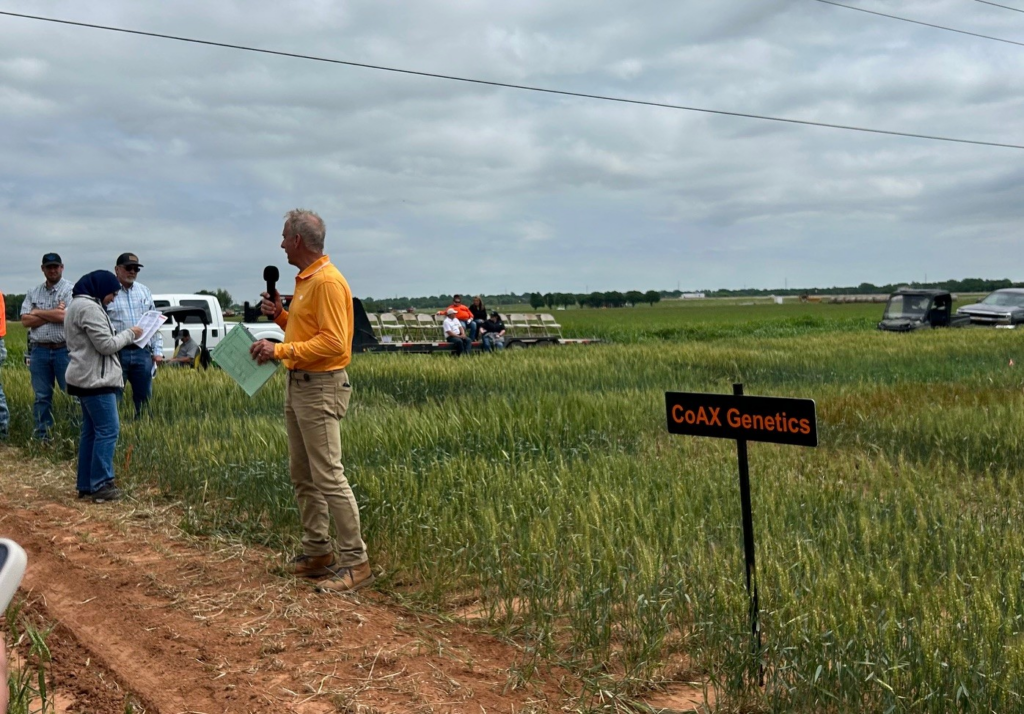
Brett Carver, Regents Professor and Wheat Breeding Chair at Oklahoma State University (OSU), recently sat down with Associate Farm Reporter Carli Davenport to discuss the current state of the Oklahoma wheat crop and the future of the university’s breeding program. The discussion centered on environmental challenges, the development of specialty varieties, and a significant capital investment in research facilities.
Current Crop Conditions and Drought Stress
The Oklahoma wheat crop is currently facing substantial pressure from persistent drought conditions. While disease pressure remains a secondary concern this year, Carver noted that the focus has shifted toward how modern genetics are responding to limited moisture.
“I think the genetics is getting better at handling these droughts that we seem to be having more frequently. So yeah, drought stress is a big one this year… disease pressure has had to take a back seat to the drought conditions, because diseases like moist conditions too.”
Specialized Varieties: OSU P92 Purple Wheat
One area of significant interest in the OSU breeding program is the development of OSU P92, a purple wheat variety. Carver clarified that while the exterior color is distinct, the agronomic performance remains consistent with established high-performing varieties like Big Country. The focus for this variety is human nutrition and market branding opportunities for food producers.
“This purple wheat is called OSU P92… I wanted to use a numbered name that’s kind of generic to allow those who license that variety and make some food out of it for them to put their own stamp, their own branding on that.”
Beyond color, the program is investigating other value-added traits to increase producer profitability, including the “Ox” trait system for gluten strength and modifications to wheat fiber content.
“We continue to look at ways we can allow the wheat producer to be more profitable… we did that and continue to do that through what we call the ox trait system, where it’s a really strong, super, super strong gluten that is not characteristic of a hard red winter wheat.”
Agronomy Center Infrastructure and Funding
A major development for the Oklahoma agricultural community is the $40 million secured for the OSU Agronomy Center. This investment is intended to upgrade aging facilities that support wheat breeding and other agronomic research. The project requires a $10 million match, an effort currently being managed by the OSU Foundation.
“We’re at a crucial point in the wheat breeding program and other programs that share those facilities that are being looked at for upgrading… It’s about ensuring our future in terms of our food supply, and wheat is a big part of our food supply, and really across the world.”
Carver emphasized that this funding represents a shift from discussing past needs to actively building future research capacity, which remains vital for global food security and the long-term viability of the Oklahoma wheat industry.







