

U.S. Soy Strategy: High-Oleic Expansion and Nutritional Innovation
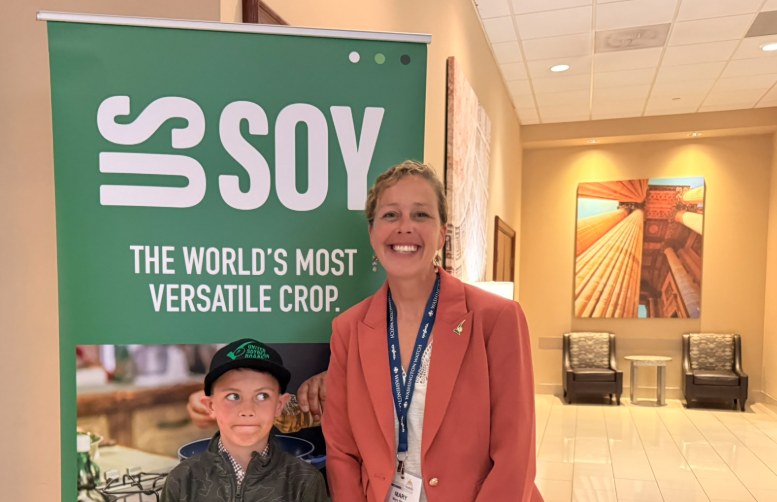
The United Soybean Board (USB) is aggressively pursuing new market segments by focusing on high-oleic soybean varieties and emerging nutritional trends to build long-term value for American producers. Mary Stewart, a Maryland soybean farmer and USB director, recently sat down with Farm Director KC Sheperd to discuss how these targeted checkoff investments are securing a foothold in the global food and feed industries.
Targeting the Health and Wellness Demographic
A major priority for the USB is aligning soybean products with current health trends, specifically the rise of GLP-1 weight-loss medications. Stewart noted that soy is uniquely positioned to serve this growing population as a nutrient-dense, lean protein source.
“About 15% of our population right now is on GLP-1. That’s just going to skyrocket from here. So we want to make sure soy has a really great spot to fill there because obviously we have heard that we need more protein… especially those on that weight loss supplement because they need that lean protein.”
Beyond protein, Stewart emphasized that soy provides essential fiber, a component often lacking in American diets. To increase consumer awareness, the USB is collaborating with the Soy Nutrition Institute (SNI) and the Center for Food Integrity to educate the public through professional chefs and social media influencers.
The High-Oleic Surge in Dairy and Retail
The adoption of high-oleic soybeans is accelerating rapidly, driven largely by the dairy industry’s demand for high-quality, domestic feed. Stewart highlighted several key developments:
- Dairy Sector Adoption: Approximately 65% of dairy farmers in New York have integrated high-oleic soy into their rations.
- Producer Benefits: Farmers are seeing increased protein levels in milk, leading to higher premiums in their milk checks.
- Supply Chain Pressure: Demand is so strong that some states are now coordinating with neighbors to secure sufficient high-oleic supply.
The USB is also working to move high-oleic soybean oil into the retail space. Stewart’s group is exploring ways to bottle and label the oil for grocery stores, touting its stability, neutral flavor, and extended shelf life as a premium, American-made product.
Defending Market Share Through Diversification
The soybean checkoff program serves as a critical defense for the industry. Stewart credited the USB’s proactive research for ensuring soy remained a part of federal dietary guidelines during recent reviews.
“We had to play a little bit of defense, I think about a year and a half ago when the guidelines first rolled out… but I am grateful for the checkoff already having all that information and science and research that kept it on there.”
Stewart concluded by emphasizing that diversification is the key to resilience. By expanding into food-grade soy, high-oleic oils, and specialized livestock feed, the USB aims to protect farmers from market volatility. As she told Farm Director KC Sheperd, a diverse portfolio is essential for the long-term success of any farm business.
“We don’t want all our eggs in one basket. Everything changes. So we’ve got to be innovative and creative and have a diversity in our portfolio.”







