
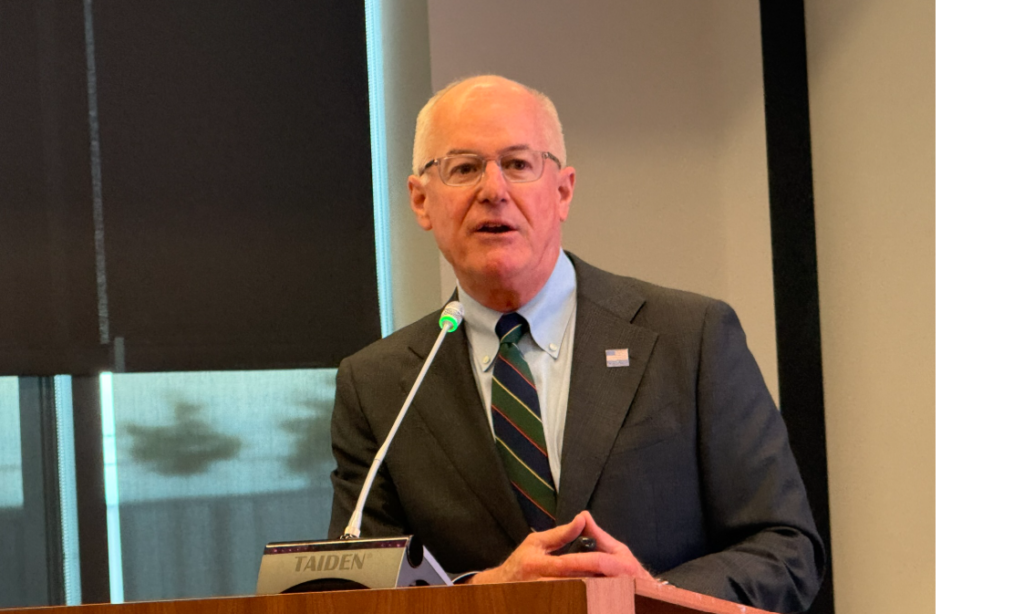
At the recent NAFB Washington Watch event in Washington, D.C., Val Dolcini, Head of Public Affairs for Syngenta Crop Protection North America, provided attendees with a deep dive into the current political and economic pressures facing the agriculture industry. With nearly three decades of experience in agricultural policy, Dolcini highlighted the transactional nature of the current administration and its profound impact on farmers and ranchers nationwide.
The Shift in Executive Leadership
Dolcini noted a significant shift in Washington’s landscape, characterized by a move away from traditional ideological stances toward a more transactional, unilateral approach. He pointed out that the current executive branch has increasingly utilized executive orders—surpassing 230 by recent counts—to implement policy without waiting for congressional action. This shift, he explained, has upended long-standing norms and placed the President as the singular focus of political attention.
Economic and Trade Pressures
A primary concern raised during the session was the historically high tariffs, which have not been this high since the McKinley administration over 120 years ago. Dolcini emphasized that these trade barriers, while intended as leverage, directly impact the bottom line for American producers who rely on export markets. He specifically pointed to the complex relationship with China, which remains the largest buyer of American farm goods despite increasing geopolitical tensions.
Legislative Hurdles and Public Sentiment
The presentation also touched on the difficulty of passing a traditional, bipartisan Farm Bill. Dolcini noted:
There once was a time when urban and rural members got together on things like farm policy because the urban members supported commodity programs and the rural members supported the nutrition programs. That coalition doesn’t exist anymore.
This lack of coalition-building has led to a “skinny” Farm Bill approach and reliance on reconciliation processes, which often leaves specialized policy needs on the cutting room floor. Meanwhile, public sentiment continues to be driven by domestic economic concerns such as:
- The rising cost of living and housing
- Increased input prices for fertilizer and fuel
- Ongoing concerns regarding interest rates
Moving Agriculture Forward
Despite the hurdles, Dolcini remained optimistic about the nation’s future, citing moments of national unity, such as the Artemis moon missions, as proof that common goals can still bridge divides. For the agricultural community, he suggested focusing on smaller, achievable victories—such as ensuring AM radio remains standard in vehicles to protect rural communication—as a way to build momentum.
While the audio session provided a broad overview of the political landscape, here are several more specific insights and quotes from Val Dolcini regarding the intersection of policy, the “Make America Healthy Again” (MAHA) movement, and international relations.
On the MAHA Movement and RFK Jr.
Dolcini highlighted the significant role of Secretary Robert F. Kennedy Jr. within the current administration and his influence on agricultural standards:
- A Lasting Shift: “For the industry that I work in, crop protection, it’s had a major impact on us. There’s been a lot more public debate and discussion around pesticide use and labeling issues. That’s been sort of a central theme of the MAHA movement.”
- Political Alliance: “The President was endorsed by RFK in August of 2024 and really firmly believes that RFK’s support… was able to get him over the top in November of 2024. So he’s an important part of the cabinet.”
- State-Level Impact: Dolcini noted that while federal action is visible, the movement is highly active locally: “In 2025 we saw over 800 bills on MAHA-related issues, including food dyes and nutrition bills and pesticide bills… from California to New England and everywhere in between.”
On the $66 Billion “One Big Beautiful Bill”
Dolcini discussed the massive piece of legislation passed in the summer of 2025, which served as a de facto Farm Bill:
- Replacing Tradition: “This $66 billion… really took the place of a farm bill. We’ve not passed a farm bill in the traditional sense in over seven years now. The reconciliation process really contained a lot of the policies that I think you would normally find in a farm bill.”
- Impact on Producers: He noted that this funding, along with a subsequent $12 billion aid package, is critical as farmers face “low prices, higher input prices… [and] fertilizer prices are higher.”
On the Relationship with China
As the President prepares for an upcoming trip to Beijing to meet with President Xi, Dolcini analyzed the administration’s internal dynamics:
- The President as a Moderate: “He’s probably the most moderate voice on China issues in his administration… There are lots of members of the cabinet… who are quite more hawkish on China, like the Vice President.”
- The Goal of the Visit: “The President really wants to be able to come home with some deliverables for farmers and American consumers and then he wants to be able to host President Xi here in Washington likely in October or November of this year.”
On the “Disconnected” Public
Dolcini addressed the growing gap between the general population and the source of their food:
- Loss of Connection: “It becomes increasingly challenging when so many millions of Americans—the vast majority really—don’t have any connection to the farm anymore… Less than 2% of our population really has a connection to the farm.”
- A Call for Small Victories: “I wouldn’t look for the big global victories. I would look for areas that… may be smaller in their policy impacts but represent an opportunity to get a win.”