

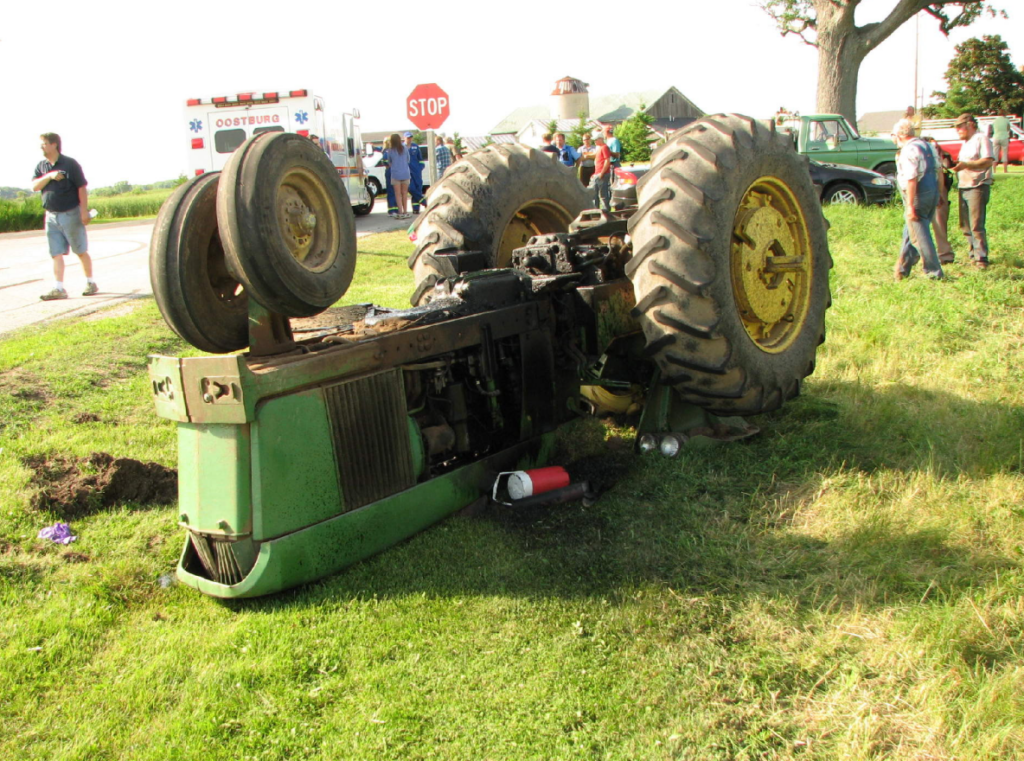
A new article detailing the tragic death of 14‑year‑old Taylor VanderWeele underscores the urgent need for increased adoption and funding of rollover protective structures (ROPS) on older farm tractors.
The article, part of the Telling the Story Project, recounts the VanderWeele family’s experience following a fatal tractor rollover on June 24, 2009, when Taylor was hauling chopped hay in Sheboygan County, Wis. The tractor Taylor operated, a 1965 John Deere Model 4020, was not equipped with a ROPS, a safety feature that did not become standard on U.S. tractors until 1985.
The article emphasizes that safety training alone is not enough. Taylor had completed the Wisconsin Tractor Safety Course and was described by those who knew him as conscientious and careful. His death illustrates that even skilled, trained operators are vulnerable when essential safety equipment is missing.
A ROPS would almost certainly have saved Taylor’s life.
“We’re sharing Taylor’s story to give it a purpose, to prevent other rollovers and injury events,” said Cindy VanderWeele, Taylor’s mom.
The tractor is the most common and essential vehicle on American farms, and also the most dangerous. Tractor incidents are the leading cause of traumatic death to farmers, according to the National Institute for Occupational Safety and Health (NIOSH). Rollovers account for the majority of those fatalities. An estimated 100 tractor rollover fatalities occur per year. Due to underreporting, the true number is likely higher.
When combined with a seatbelt, ROPS systems are 99 percent effective at preventing serious injury or death in the event of a rollover. Despite this, an estimated half of all tractors in use nationwide lack this life‑saving protection.
Retrofitting an older tractor with ROPS can cost between $1,500 and $2,500, a significant expense for farm operations that often rely on multiple aging machines. While programs such as the National ROPS Rebate Program have helped offset these costs, funding is limited and availability varies by state.
Cindy and Jay VanderWeele, Taylor’s parents, are sharing their son’s story to advocate for renewed and expanded investment in agricultural injury prevention.
“We’re asking state legislatures to support and prioritize adequate funding for ROPS rebate programs so that other parents, siblings, spouses and farm owners do not have to live our experience,” Cindy said. “This is a simple, proven prevention effort that can eliminate the leading cause of death for agricultural workers.”
Taylor’s Story is part of the Telling the Story Project website, a collaboration of three agricultural safety centers funded by NIOSH. The project’s stories weave injury prevention messages into first-hand accounts of farmers and others impacted by agricultural trauma incidents.
Participating centers include: Central States Center for Agricultural Safety and Health (Nebraska); National Children’s Center for Rural and Agricultural Health and Safety; and the Upper Midwest Agricultural Safety and Health Center (Minnesota).







