

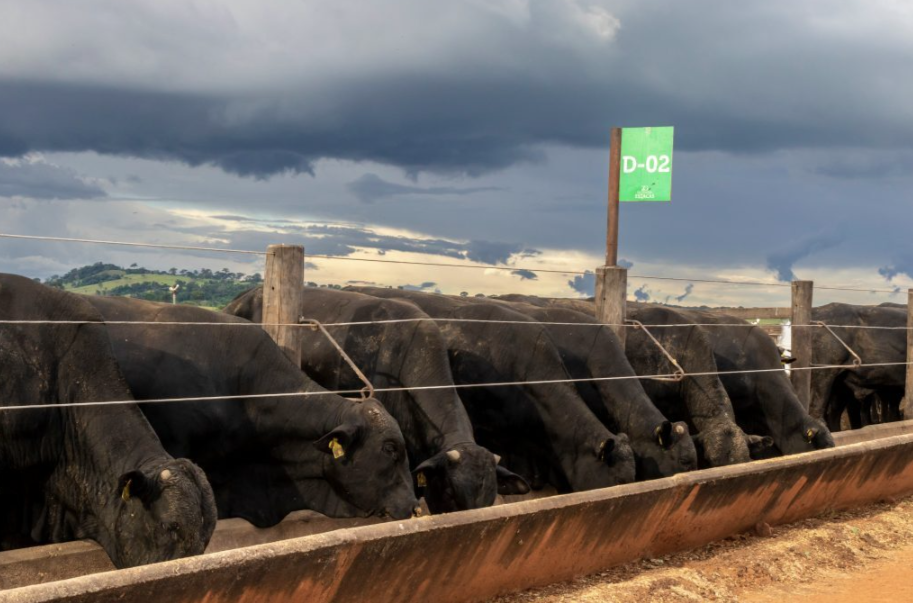
Carcass weights have been steadily increasing at about 5 pounds per year for the last 60-years, but in the last few years they have increased by over 20 pounds per year. We evaluated the impact of extended days on feed on carcass composition from 5,656 cattle to model either a historically typical marketing endpoint of 10% of the pen graded Yield Grade 4 or 5 or a longer-fed endpoint more common to the beef industry currently, where approximately 30% of the pen grade hit Yield Grades of 4 or 5.
The extended-feeding scenario increased average hot carcass weight from 889 to 918 pounds, a 29-pound increase per head. Increased marbling score increased the percentage of carcasses grading Choice or greater from 77.8% to 90.7%.
Backfat thickness increased from approximately 0.54 to 0.64 inches. Estimated total body fat increased from approximately 262 to 287pounds, or about 25 pounds more fat per head, making up 87% of the extra 29 pounds of carcass weight.
Extended feeding can increase carcass weight and improve quality grade, which increases gross carcass value when Choice and Prime premiums are strong and heavy carcass discounts are limited.
Extended days on feed are a marketing and management decision. Longer feeding can be profitable when the value of added carcass weight and improved quality grade exceeds the added feed cost, yardage, death loss risk, interest cost, and yield grade discounts, but can be costly if market conditions change to increase discounts for heavyweight or over-finished carcasses or if feed costs increase.







