

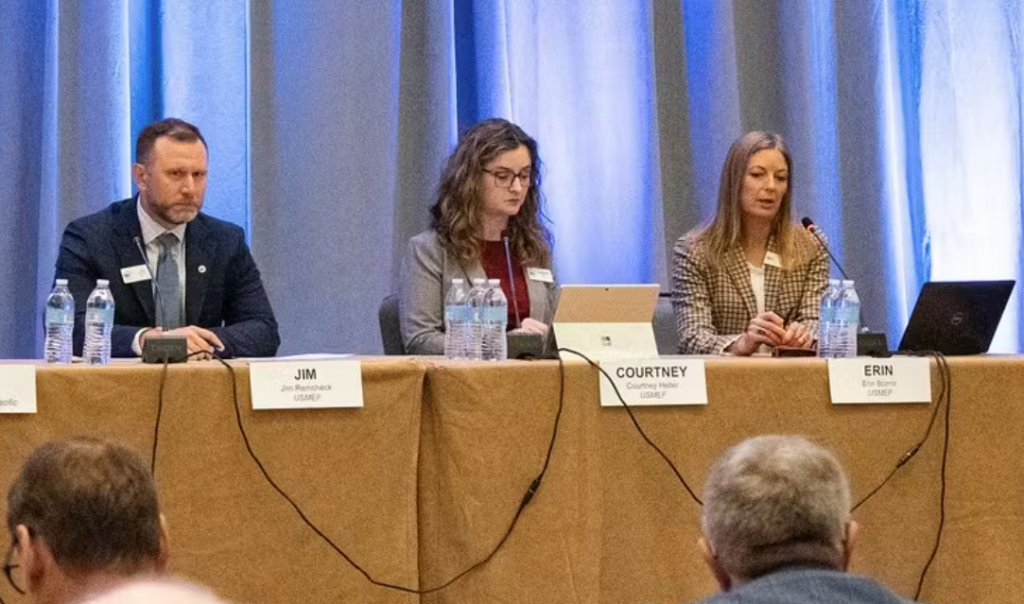
The U.S. Meat Export Federation (USMEF) is formally requesting that the U.S. Trade Representative (USTR) investigate how several African nations are restricting imports of U.S. beef and pork. USMEF Director of Export Services Jim Remcheck explained that while trade agreements are designed to foster mutual growth, certain countries are utilizing unscientific barriers to block American red meat products from entering their markets.
The core of the discussion revolves around the African Growth and Opportunity Act (AGOA), which Remcheck notes “is intended to incentivize two-way trade and authorizes the president to designate sub-Saharan African countries for duty-free treatment.” The USTR is currently seeking public commentary regarding how the act has been implemented thus far, analyzing its successes and identifying areas for improvement or adjustments.
“We see tremendous opportunity on the African continent for red meat exports,” Remcheck said. “And AGOA benefits in the past have mainly been suspended in an effort to advance human rights or worker rights or political reforms. However, AGOA has not generally been utilized to leverage improved market access for U.S. agricultural products, even though it was intended for as a tool for that purpose, to facilitate that two-way trade.”
In official comments submitted to the USTR, the USMEF highlighted specific trade challenges in key African markets, most notably South Africa and Nigeria.
South Africa agreed over a decade ago to lift a ban on U.S. pork. However, Remcheck pointed out that the nation has continued to impose trade barriers that lack scientific backing.
“South Africa has continued to impose unscientific trade barriers due to Porcine Reproductive and Respiratory Syndrome (PRRS),” Remcheck said. “So, we are encouraging South Africa to adopt a science- and risk-based approach in requirements in line with other WTO commitments.”
The restrictions are even more severe in Nigeria, where the market remains entirely closed to fresh American red meat.
“For the Nigerian market, all fresh or non-processed U.S. red meat is currently ineligible,” Remcheck stated. “It’s an unscientific ban, but we do see it as a tremendous growth area. And again, we think that pulling the strings on the AGOA angle could possibly give us some leverage.”
To resolve the ongoing restrictions in Nigeria, the USMEF is urging a firmer diplomatic stance.
“We’re encouraging USTR to consider sanctioning or suspending Nigeria’s AGOA benefits until this ban is lifted,” Remcheck said.
For more information on global meat trade policies, please visit usmef.org.







