Agriculture officials are intensifying cross-border monitoring and response preparations after the confirmation of a New World screwworm detection dangerously close to the United States.
U.S. Secretary of Agriculture Brooke Rollins announced a significant shift in the government’s communication strategy during a briefing with over 150 media members. Moving forward, the joint response team will conduct update briefings every other day at 4:00 p.m. Eastern Time to combat online misinformation and provide full, transparent progress reports.
“We’re in upstate New York today visiting our dairy farmers up here, but wanted to take a moment… there’s been a lot of misinformation spreading online,” Secretary Rollins said. “I want to talk a little bit about that today, also though want to just give a full, level-set update on where we are with the New World screwworm.”
The 25-Mile Breach
The shift in urgency follows late-week data from Mexico detailing eight new detections of the New World screwworm. Most notable among those cases is an infested five-year-old goat in Coahuila, located approximately 25 miles from the U.S.-Mexico border.
“Just recently, Mexico reported eight new detections of New World screwworm late last week… One of those that was detected was a five-year-old goat in Coahuila, approximately 25 miles from the U.S.-Mexico border,” Secretary Rollins stated. “So this is the closest we’ve seen it.”
This marks the closest confirmed detection to the American border to date. While a previous case last fall was discovered about 60 miles from the border, aggressive containment efforts successfully pushed the pest back. Agriculture officials view this 25-mile breach as a critical trigger point to elevate defensive measures.
“There is no doubt that this is a very, very serious threat to our livestock,” Rollins emphasized. “And I also want to talk about, before we finish today, the action plan if it were to breach our border. We’ve been preparing for that scenario for about a year and four months.”
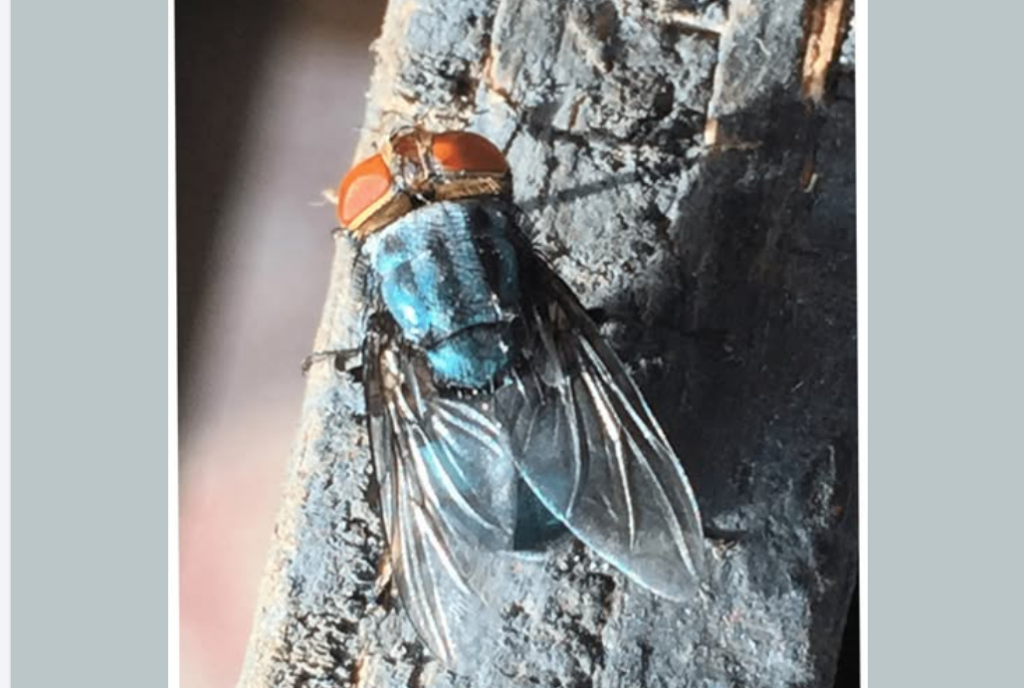
The New World screwworm is a parasitic fly larva that burrows into the living flesh of warm-blooded animals. If left untreated, infestations can lead to severe systemic damage or death. While the risk to human public health remains extremely low, the parasite poses a devastating threat to livestock industries and wildlife populations. Every statistical model run by the USDA indicated that without intervention, the pest would have breached the U.S. border by late last summer.
“The New World screwworm is actually a parasitic fly larva… that can burrow into the flesh of a living animal and can cause serious complications, which can lead to death of that animal if it is untreated,” Rollins explained. “They can infest livestock, pets, wildlife, and in very, very, very rare cases, humans.”
“The real risk, and obviously why I’m running this call and not Secretary Kennedy or someone else, the real risk is obviously to our livestock and our wildlife population,” Rollins added.
Implementation of the Five-Pronged Strategy
Following the border normalization under President Trump on January 20, 2025, the USDA overhauled and tightened southern port inspection protocols, briefly resuming live animal imports in February 2025 to support domestic herd growth. However, by May 2025, the USDA suspended all live animal entries through southern ports in Arizona, New Mexico, and Texas. This suspension was driven by Mexico’s inability to enforce internal animal movement protocols and frequent complications that prevented sterile fly dispersal aircraft from consistently operating.
To address the regional crisis, the USDA launched a five-pronged strategy focused on detection, containment, eradication, preparedness, and sterile fly production. On August 14, 2025, the U.S. signed a $20 million bilateral action plan with Mexico’s agricultural authority, Senasica, deploying field teams, funding emergency trapping, and expanding sterile fly drops in northern Mexico.
Simultaneously, the administration initiated a structural overhaul of domestic defenses. On May 27, 2025, the USDA announced a $21 million investment to convert an existing facility in Matape, Mexico, into a sterile fly dispersal hub. This reduced sole reliance on the world’s only active production plant in Panama.
Furthermore, groundbreaking began on a new $750 million sterile fly production plant at Moore Air Base in South Texas. Developed alongside the Secretary of War Pete Hegseth and the U.S. Army Corps of Engineers, this facility will provide the biological volume necessary to push the pest back into South America.
“This president and our administration did not hesitate when we explained to them the absolute threat that if we don’t get our own facility up that we have control over, even though it’s $750 million, that we will continue to battle this for years to come and our livestock producers, our ranchers, will struggle as their grandfathers and great-grandfathers did in the ’50s and ’60s,” Rollins said.
“1960s America, the last time this devastated our industry, 1960s America did not have the resources we have today,” Rollins continued. “The New World screwworm crisis farmers and ranchers experienced back then will not repeat itself today.”
Current Surveillance and the Domestic Playbook
While construction on the Texas production plant continues, the USDA opened a transitional dispersal facility at Moore Air Base to handle fly shipments flown in from Panama. Ground containment efforts have scaled significantly across the southern frontier. By the end of May, the USDA deployed more than 8,000 traps along the border, evaluated over 58,000 fly samples, and inspected more than 19,000 wildlife specimens. Every single domestic sample tested negative for the New World screwworm.
Producers, media entities, and members of the public can track updated daily case maps via screwworm.gov. Inquiries, sample reporting, or requests to join the scheduled briefings can be directed to the newly established round-the-clock monitoring portal at screwworm@usda.gov.
To read facts about the New World Screwworm, click here: