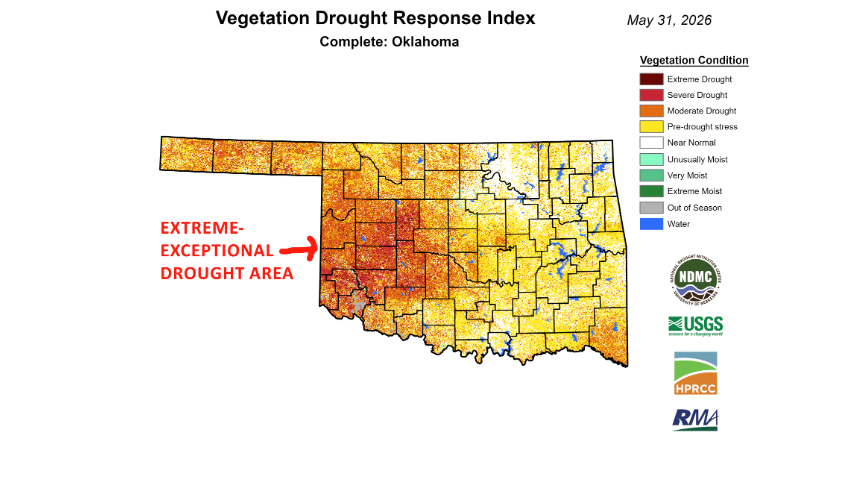
The lack of vibrant green across western Oklahoma is becoming more apparent as the season progresses, leaving the landscape looking far less robust than it should for this time of year. State Climatologist Gary McManus noted the persistent struggle of the local plant life, highlighting that the vegetation remains pitiful across the western regions and even into surrounding areas.
To truly understand how deep the stress goes, experts look beyond traditional rain gauges and weather tracking. Tools like the Vegetation Drought Response Index (VegDRI) offer a satellite-informed perspective on exactly how plants are reacting to the prolonged lack of moisture. Rather than simply analyzing the total amount of rainfall or measuring the exact soil moisture levels, VegDRI evaluates how the current appearance of the plants compares to standard seasonal expectations. On these maps, yellow, orange, and red areas signify varying levels of plant stress, with darker reds signaling severe drought impacts. White indicates normal conditions, and greens highlight unusually lush areas.
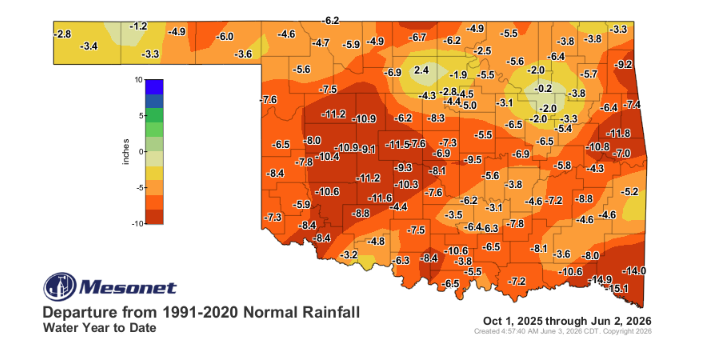
According to McManus, the index acts as a useful “eyes from space” verification tool to determine if the dry weather is actively altering the landscape.
“Think of VegDRI as a drought stress detector for plants,” McManus explained. “Rainfall maps tell us what fell from the sky. Soil moisture maps tell us what’s in the ground. VegDRI helps show whether the vegetation is actually feeling it. And right now, a lot of western Oklahoma vegetation appears to be saying, ‘Hey pal, how about a drink?'”
This satellite data is backed up by additional tracking tools, including QuickDRI, which monitors areas experiencing rapid-onset or “flash” drought.
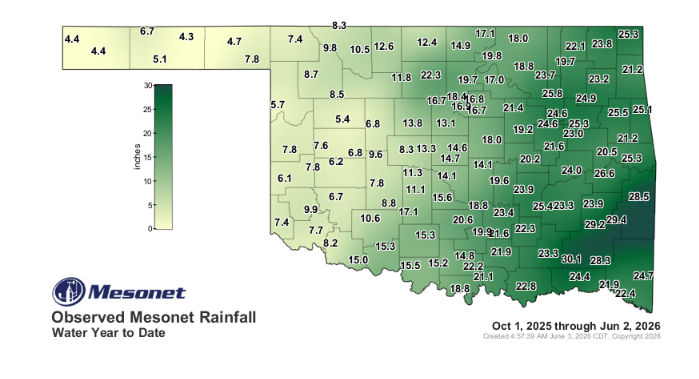
“Flash drought on top of longer-term drought is never a good thing,” McManus said, drawing a vivid comparison to mixing incompatible elements, like putting a Strawberry Pop-Tart on a Taco Bell Quesarito.
The immediate reality on the ground is also reflected in the OK-FIRE relative greenness map. The data currently shows that parts of western Oklahoma are still dealing with vegetation conditions reminiscent of January rather than late spring or early summer.
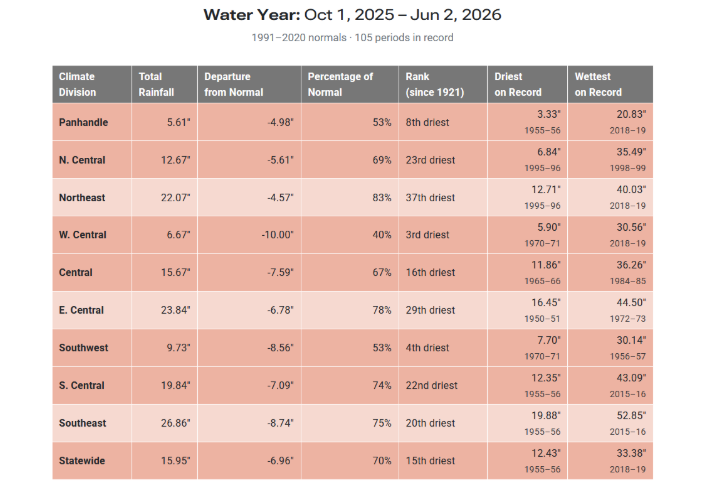
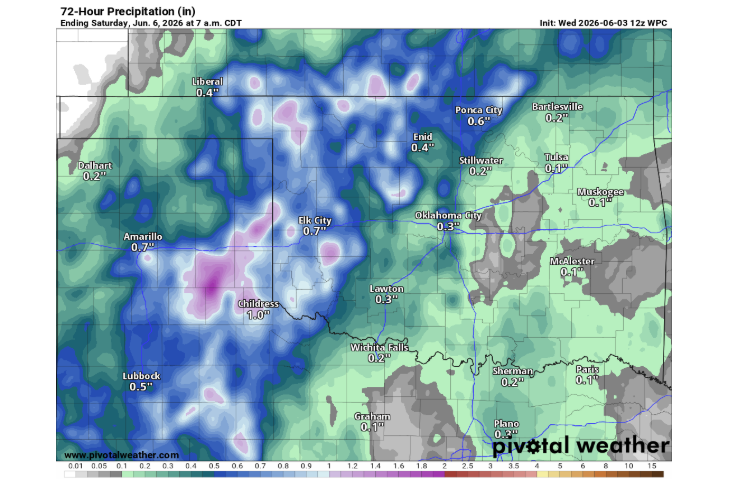
Despite the bleak indicators, there is a glimmer of hope on the radar. Weather models suggest that the region could see some precipitation over the coming days, offering potential relief before the intense heat of mid-summer sets in.
While a few days of rain will not completely erase months of deficit, it represents a necessary turn in the right direction. McManus cautioned that this upcoming moisture is not a complete fix for the long-term drought, but noted that drought relief has to start somewhere.