

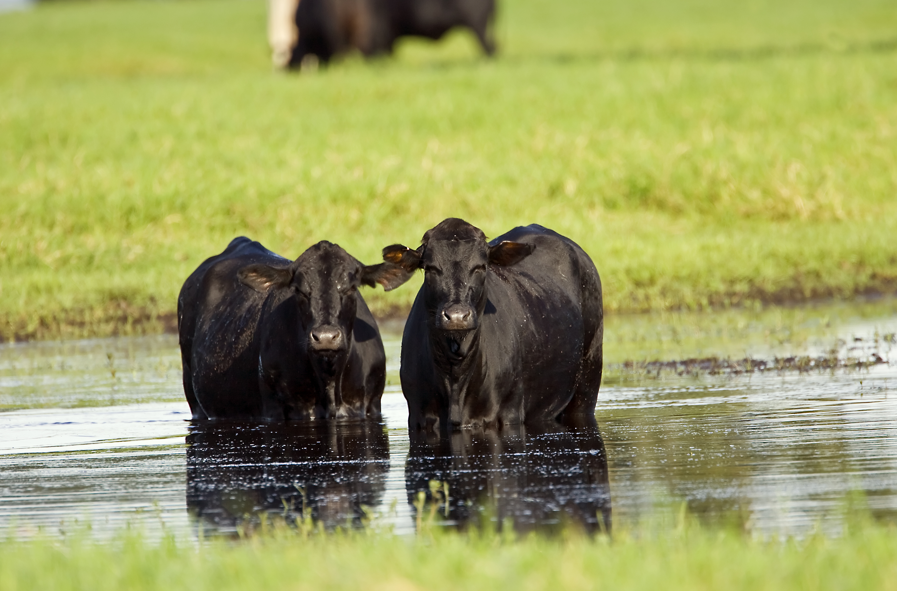
Recent moisture and wet ground has led to some producer questions about the cause, prevention and treatment of foot rot. Foot rot is a sub-acute or acute necrotic (decaying) infectious disease of cattle, causing swelling and lameness in at least one foot. This disease can cause severe lameness and decreased weight gain or milk production. Lame bulls and females will be reluctant to breed. If treatment is delayed, deeper structures of the foot may become affected, leading to chronic disease and a poor recovery prognosis. Severely affected animals may need to be culled from the herd. The incidence of foot rot varies according to the weather, season of the year, grazing periods and housing system. Foot rot occurs in all ages of cattle, it is usually random in occurrence but does increase during wet, humid conditions.
Cause
Fusobacterium necrophorum is the bacterium most often isolated from infected feet. This organism is present on healthy skin, but it needs injury or wet skin to enter the deeper tissue. Normal healthy skin will not allow the bacteria to enter the deeper tissues. Moisture, nutrient deficiency, injury or disease can result in compromised skin or hoof wall integrity, increasing the likelihood of the bacteria invading the skin. Deficiencies of zinc, selenium and copper can lead to higher frequency of foot rot infections due to the important role these trace minerals play in skin and hoof integrity as well as immune function. Injury is often caused by walking on abrasive or rough surfaces such as stony ground, sharp gravel and grazing stubble on recently mowed pasture, which may irritate the interdigital skin. Standing in pens or lots heavily contaminated with feces and urine softens the skin and provides high exposure to the causative bacteria. High temperatures and humidity will also cause the skin to chap and crack, leaving it susceptible to bacterial invasion.
Clinical Signs
When case incidence increases in hot and dry conditions, attention must be directed to loafing areas, which are often crowded and extremely wet from urine and feces deposited in small shaded areas. The first signs of foot rot include:
- Extreme pain leading to sudden onset of lameness, which increases in severity as the disease progresses.
- Acute swelling and redness of interdigital tissues and adjacent coronary band.
- Lesions in the interdigital space are often necrotic along its edges and have a characteristic foul odor.
- Evenly distributed swelling around both digits and the hairline of the hoof, leading to separation of the claws.
- Loss of appetite.
Diagnosis
Diagnosis of foot rot can be made by a thorough examination of the foot, looking at the characteristic signs of sudden onset of lameness (usually in one limb), elevated body temperature, interdigital swelling and separation of the interdigital skin. There are several other foot conditions causing lameness that may be confused with foot rot. That being said, early treatment of lameness is key to quick recovery.
Treatment
Treatment of foot rot is usually successful, especially when instituted early in the disease course. When possible, treatment should always begin with cleaning and examining the foot to establish that lameness is actually due to foot rot. A veterinarian may recommend antibiotics and dosages for each situation. Use of a non-steroidal anti-inflammatory product may be indicted for pain relief. There are multiple antimicrobial products labeled for the treatment of foot rot. When possible, treated cattle should be kept in dry areas until healed. If improvement is not evident within three to four days, it may be an indication that the infection has invaded the deeper tissues. Infections not responding to initial treatments need to be re-evaluated by a veterinarian in a timely manner. A veterinarian will determine if re-cleaning, removing all infected tissue, application of a topical antimicrobial and bandaging are appropriate, along with a change in the antimicrobial regimen. In severe cases, options may be limited to harvesting the animal (following drug withdrawal times), claw amputation or claw-salvaging surgical procedures. A veterinarian will be able to provide information needed in making this decision.
Summary
Foot rot is a major cause of lameness in cattle and can have a severe economic impact on animal health, animal performance and enterprise profitability. Skin and hoof lesions allow bacteria to invade live tissue. Therefore, the most important preventive measures are centered on the protection of interdigital skin health. Important preventative measures include a well-balanced mineral nutrition program and minimizing exposure to conditions that may cause skin or hoof injury. Treatment is frequently successful if the disease is diagnosed and treated soon after symptoms develop.
Reference: https://extension.okstate.edu/fact-sheets/foot-rot-in-cattle, id: AFS-3355







