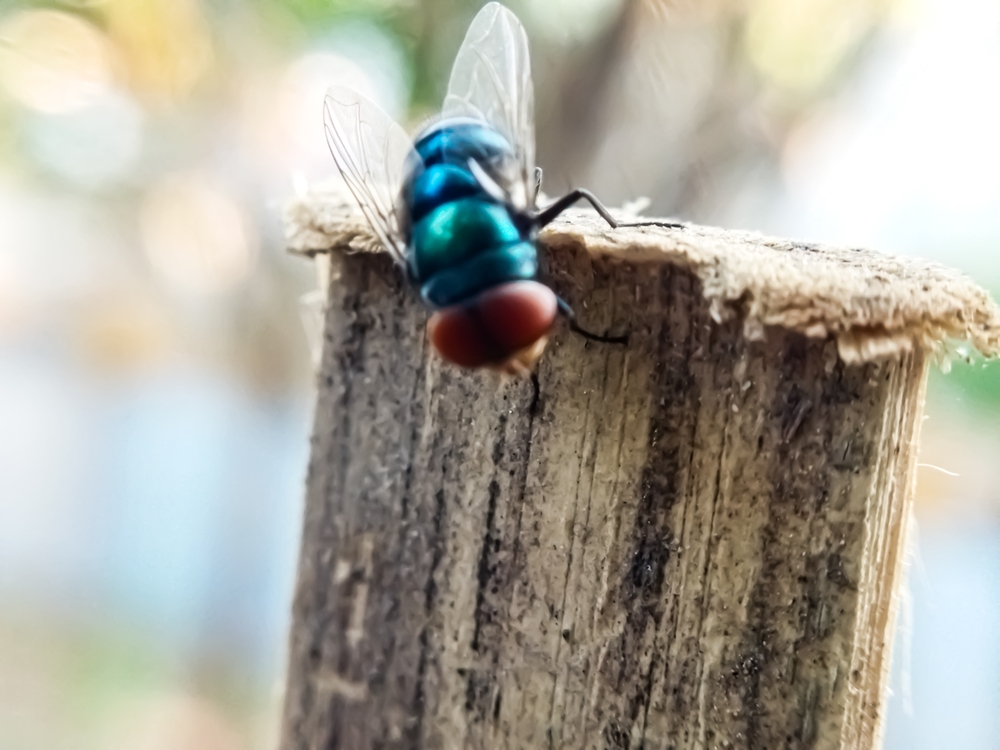
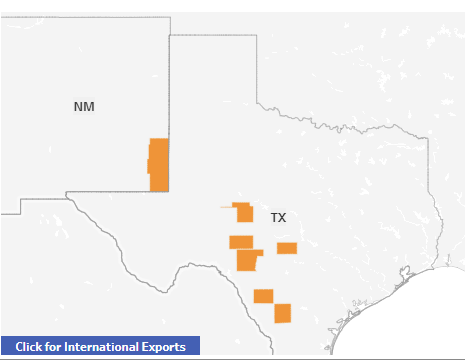
In today’s Beef Buzz, senior farm and ranch broadcaster Ron Hays features comments from Secretary of Agriculture Brooke Rollins and Rear Admiral Michael Schmoyer about concerns over the rapid northward spread of the New World screwworm. With confirmed U.S. cases now reaching a dozen since June 3, the latest involving a sheep in Sutton County, Texas, reported June 12, USDA officials are working to understand how the pest has moved so quickly from the border region deeper into Texas.
USDA Searching for Answers on Rapid Spread
Secretary Rollins acknowledged that USDA still does not have a clear explanation for how the screwworm advanced so rapidly from Mexico into Texas. The first U.S. detection occurred in Zavala County, roughly 35 miles from the Rio Grande, but additional detections have now appeared much farther north, including in Tom Green County near San Angelo.
“I simply don’t know how the cases have moved so quickly into the United States,” Rollins said. “We’re still looking at it. There’s some wind that we’re looking at, we’re looking at the weather patterns, trying to understand how it was that it jumped this far up.”
Rollins also pointed to illegal livestock movement as a major concern. “100%, the illicit movement of cattle alongside the open border policies of the last administration—no question—is the reason that we’re standing here today,” Rollins said.
Despite the uncertainty, Rollins emphasized USDA’s rapid response. “Within about eight hours, we had flies redirected, moved to this part of the state, dropped by that evening,” she said, referring to sterile fly releases used to interrupt screwworm reproduction.
USDA Says There’s a Playbook—But No Clear Cause
Rear Admiral Schmoyer said USDA has prepared for this scenario for months, but he admitted there are still no definitive answers about why the pest has appeared in these specific locations. “I don’t know,” Schmoyer said. “As far as why it had come to this particular county.”
He said USDA must continue gathering data to better understand transmission routes. “We’re going to need to keep gathering data and keep needing to understand a variety of different factors,” Schmoyer said. “That could be cases that we have known about, cases that we didn’t know about.”
Schmoyer noted USDA already had thousands of traps deployed well before the first confirmed U.S. case. “The reason is, as the secretary said, models suggested that it was going to be here last summer, so we had plenty of time to prepare,” he said. “Consequently, we actually have a playbook on how to do this.”
Stakes Are High for U.S. Livestock Industry
One of the biggest concerns is the speed of movement. USDA still cannot explain how the screwworm fly traveled from south of the Rio Grande to Zavala County and then roughly another 177 miles north near San Angelo in Tom Green County.
When asked what happens if containment efforts fail, Rollins pointed to the devastating historical impact screwworm had on American livestock in the 1950s and 1960s. “We look back at the 1950s and 1960s and… the destruction of our livestock industry and the decades it took to recover from that,” Rollins said. “That’s what we are working to prevent.”
She stressed that today’s tools give USDA better odds of stopping the pest. “It’s an entirely new day. We have more technology, we have more treatment,” Rollins said. “The baby calf from a couple of weeks ago is happy and fine and completely healed.”
Rollins framed the screwworm threat as bigger than animal health alone, tying it directly to food security and national security. “The importance of farm security, ranch security to national security—the importance of making sure that in America we can feed and fuel ourselves,” Rollins said. “These are fundamental, perhaps existential, issues to the future of our country.”
She ended with a stark warning about what is at stake. “If we can’t protect these ranchers, and ensure that we can protect our food supply and protect this way of life, then we will lose freedom in this country,” Rollins said. “That’s how important this is.”
The Beef Buzz is a regular feature heard on radio stations around the region on the Radio Oklahoma Ag Network and is a regular audio feature found on this website as well. Click on the LISTEN BAR above for today’s show and check out our archives for older Beef Buzz shows covering the gamut of the beef cattle industry today.