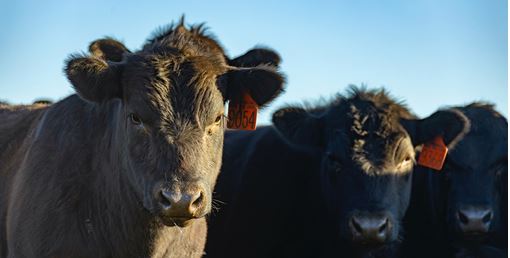
The July heat in Oklahoma has resulted in some questions leading to this topic. Some operations in Oklahoma (and around the country) routinely clip cows each spring to peel off the winter haircoat. Shearing off the winter haircoat has many advantages but comes at a cost in the form of labor, time, facilities, clippers, clipper blades, risk of injuries, etc. Those operators who can afford the effort do so because slick-coated cattle have improved tolerance to heat, better reproductive rates and wean heavier calves. There is evidence indicating slick-coated cows carry fewer flies. If you have a fescue forage base, slick coated cows suffer less fescue toxicosis.
The Genetic Component of Hair Shedding
Can slick hair coats be achieved through selection? Yes! Hair shedding is moderate in heritability indicating selection pressure applied will lead to cattle that slick-off winter haircoats earlier each spring. Hair shedding scores can be taken monthly from March to July. In most regions of the U.S. it is recommended that the herd be evaluated during the month of May. This time period seems to correlate when most cattle have initiated the process of shedding and when most variation occurs within the herd. This could vary in different regions of the U.S.
Hair shedding scores are based on a scale of 1 to 5 with a 1 being completely slick in appearance. Percentage shedding is relative to the approximate amount of winter hair loss. While there is variability between shedding patterns among animals, cattle tend to shed from front to back and top to bottom. Hair shedding scores can be taken on both sexes and animals of all ages. It is recommended to take scores on yearlings during their first spring. The following table lists the scores, definitions, and descriptions. Pictures of cows of each hair shed score can be viewed at the reference link shown at the bottom of this article.
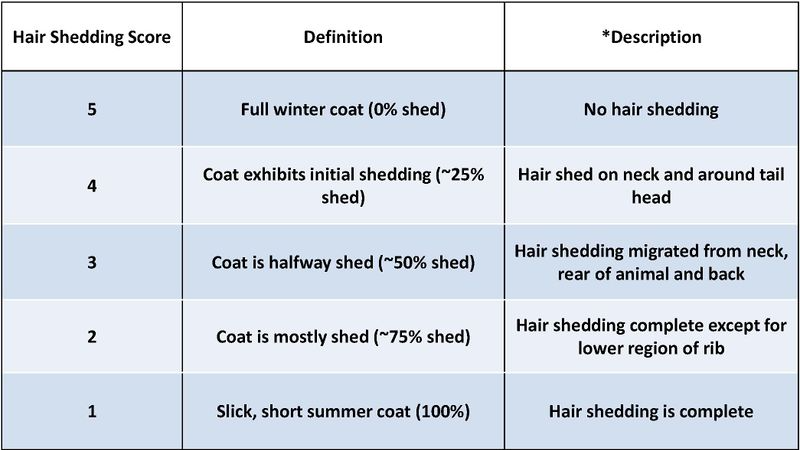
Producers can use hair coat shedding scores as a culling tool to reduce heat stress in their herds. Hair coat shedding is repeatable from year to year. Cattle that have a shedding score of 4 to 5 in May should be considered for culling in the southeastern U.S.
Data collected by seedstock breeders should be reported to their respective breed association for possible use in genetic evaluations. Angus Genetics International has implemented a Hair Shedding EPD. A lower numerical value for Hair Shed (HS) EPD in the Angus breed indicates earlier shedding of the winter hair coat each spring.
Reference: https://guidelines.beefimprovement.org/index.php/Hair_Shedding
Mark Johnson discusses key takeaways from the 2026 Beef Improvement Federation Conference. Learn about the latest developments in beef cattle genetics, breeding strategies, and industry trends that can help producers improve herd performance and profitability on SunUpTV from June 6, 2026. https://www.youtube.com/watch?v=CgOavIIyV1U&t=18s