

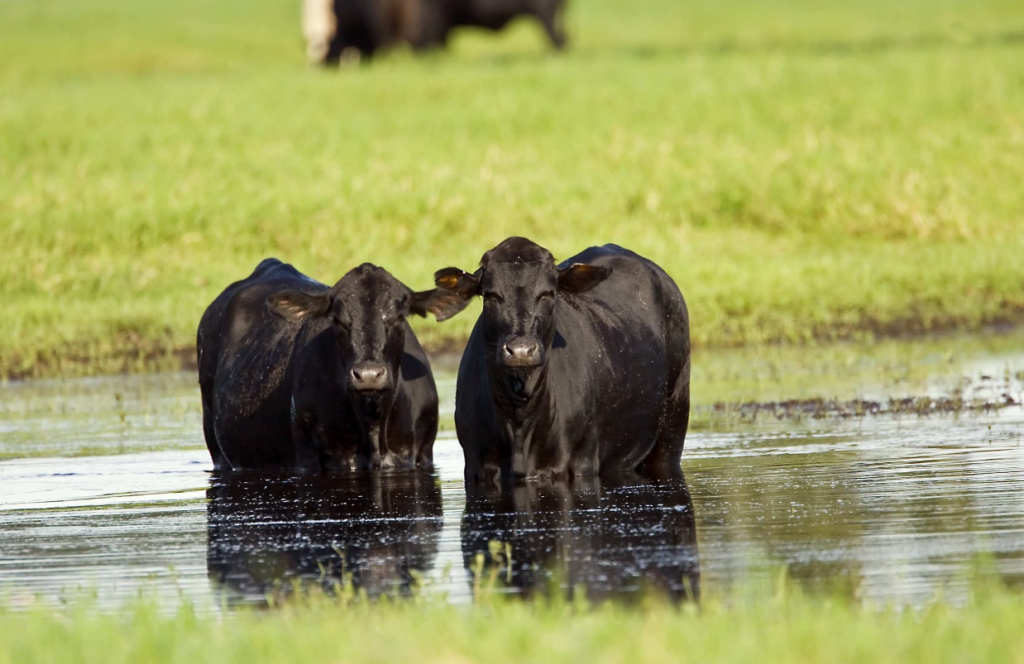
Summer heat stress reduces cattle performance, reproductive efficiency and animal welfare. Extreme heat stress may result in death. Heat stress is not determined by temperature alone. Humidity, direct sunlight, wind speed and the amount of nighttime cooling all influence the heat load cattle must manage.
Cattle accumulate heat during the day and normally release much of it overnight. Consecutive hot days become especially dangerous when nighttime temperatures remain above 70°F, limiting the amount of night cooling. Producers should monitor the Oklahoma Mesonet Cattle Comfort Advisor (https://www.mesonet.org/agriculture/livestock/cattle-comfort-advisor) and begin preparations before cattle show severe stress.
Early warning signs include reduced grazing or feed intake, restlessness, increased standing and crowding around water. As heat stress progresses, breathing rate increases and cattle may begin drooling or foaming at the mouth. Open-mouth breathing, an extended tongue, labored breathing or isolation from the herd indicate severe heat stress and require immediate action.
Water and shade are the first priorities. Water consumption may approach 2 gallons per 100 pounds of body weight when temperatures exceed 80°F. A 1,200-pound cow could therefore require approximately 24 gallons daily. Check water supplies, flow rates and storage capacity before a heat wave. Keep troughs clean and, when practical, shaded because cattle drink less as water temperatures rise above 80°F. Crowding can limit access, so provide additional tanks before extreme heat arrives rather than waiting until cattle are already stressed.
Shade reduces the solar heat load and can lower respiration rates and body temperature and can increase feed intake and improve performance during the summer. Provide approximately 15 to 20 square feet of shade for calves and 30 to 40 square feet for mature cows. Structures should be high enough to allow airflow and large enough that cattle are not forced to bunch tightly underneath them.
Avoid working cattle, hauling or moving cattle during dangerous conditions. Work cattle early in the morning—not during the evening, when their internal heat load may still be near its daily peak. Use small groups, minimize time in holding pens and move cattle quietly. When nights provide little cooling, postpone nonessential cattle work. Flies cause cattle to bunch, increasing activity and heat load, so maintaining fly-control programs is important.
The best heat-stress strategy is preparation. Clean water, adequate shade, airflow and timely cattle handling can prevent a hot day from becoming an animal-health crisis.
OSU Extension beef cattle specialist Paul Beck discusses heat stress in cattle on SunUpTV. https://www.youtube.com/watch?v=prvTx0_VpYM







