

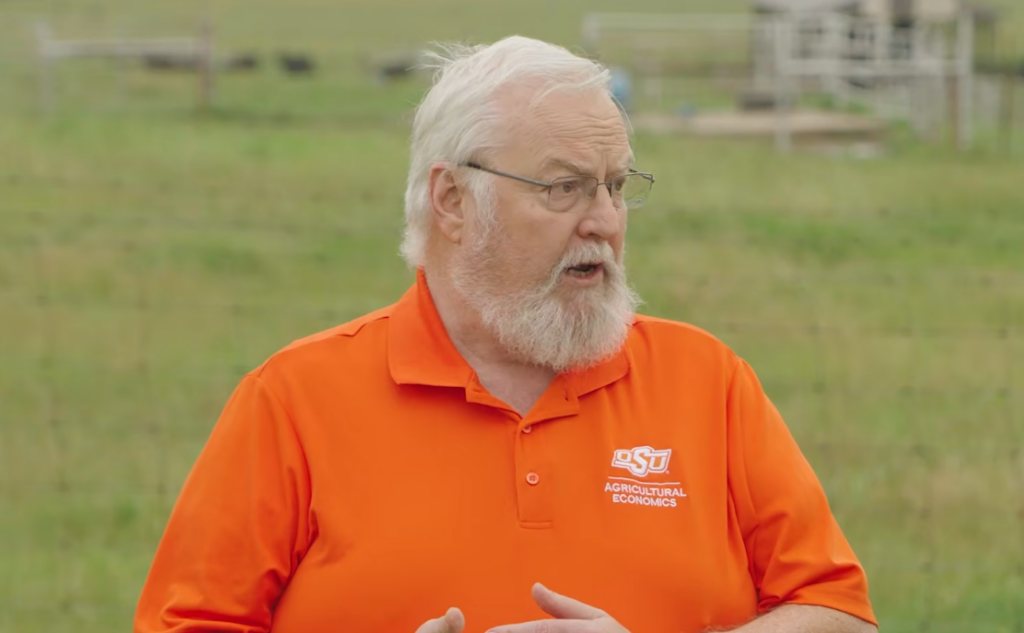
The cattle and beef markets have softened in recent weeks, but Oklahoma State University Extension Livestock Marketing Specialist Dr. Derrell Peel says producers should not mistake the seasonal downturn for the end of the cattle market’s historic run.
Summer Weakness Follows Strong First Half
“We’re here in July, and since the Fourth of July, we have seen cattle and beef markets pull back a little bit, pretty much across the board,” Peel said. “Box beef prices have dropped pretty sharply here in the last week or so. Fed cattle prices and feeder cattle prices have also pulled back a little bit, and there’s been a lot of action in the futures markets as well.”
While the correction has raised questions about whether the market has peaked, Peel believes the outlook remains positive. “You know, there’s some folks that kind of think that, but I really don’t think we have at this point, largely because the fundamentals haven’t changed,” he said. “We haven’t done anything to increase cattle inventories or beef production at this point. Those things are still tightening.”
Instead, Peel attributes the recent weakness to typical midsummer market conditions. “I think this is just kind of the midsummer doldrums,” he said. “It’s been the heat of the summer. We’ve had a lot of hot weather, unusually hot weather in parts of the country. I think that’s probably stifled beef demand a little bit. That’s what’s causing the box beef markets to weaken a little bit.”
Peel emphasized that the current correction does not signal a major change in the cattle cycle. “I don’t think it represents any major change in the overall tendencies of these markets,” he said.
Rain Helps, But Pastures Are Still Playing Catch-Up
Although much-needed rainfall has improved drought conditions across much of Oklahoma and other parts of the country, Peel said pasture conditions have not rebounded as quickly as many producers had hoped. “We’ve seen quite a bit of improvement in the drought conditions in Oklahoma and generally around the country in many places,” Peel said. “One of the things that we notice, though, in Oklahoma is that we haven’t seen a lot of increase yet in our forage ratings.”
According to Peel, that reflects just how difficult it is to recover after a dry start to the growing season. “I think that really just illustrates how hard it is to catch up once you start behind,” he explained. “Once you get behind and get into the heat of the summer, even with the rain we’ve had, we’re growing some pasture. We’re probably making some hay, but the ratings are really not catching up to where we would have been because we just got off to a slow start.”
He added that hay production may also finish slightly below normal this year despite recent improvements in moisture. “I suspect it’s down a little bit, and I know some parts of the country are still struggling as far as that goes,” Peel said.
Markets Expected to Resume Their Upward Trend
Even with the recent decline, cattle prices remain stronger than they were one year ago. “Cattle markets are still above where they were this time last year,” Peel said. “Even with the sort of recent summer weakness we’ve had, we’re still generally on the long-term uphill that we’ve been on for quite a long time.”
Looking ahead to the second half of 2026, Peel expects the market to regain momentum as long as demand remains steady. “I think these markets will pick back up,” he said. “I don’t see any fundamental weakness in beef demand.”
Peel noted that improving economic indicators could also support consumer demand. “We’ve actually seen a little bit of improvement in inflation. Gas prices kind of came down. There’s a lot of uncertainty in the geopolitical world right now, but broadly speaking, we’re not seeing any additional weakness really at this point.”
As a result, he expects cattle markets to continue their longer-term climb. “I really expect these markets to pick back up and continue to move higher generally with some seasonality as we go into the second half of the year,” Peel said.
Advice for Producers
For cattle producers making marketing or herd management decisions, Peel encouraged staying focused on long-term plans rather than reacting to short-term price swings.
“I think we just want to stick with your plan at this point,” he said. “If you were in some sort of rebuilding mode, I don’t think anything has changed to suggest any modifications to that plan. Otherwise, you’re just trying to manage costs and take advantage of these markets.”
This week on SUNUP:
- Ashleigh Faris, OSU Extension cropping systems entomologist, says sorghum headworm has been detected in summer crop fields and producers need to be scouting.
- In the Mesonet Weather Report, state climatologist Gary McManus shows why much of the state is still in drought regardless of the recent rains.
- Derrell Peel, OSU Extension livestock marketing specialist, discusses whether the cattle markets have peaked. Dr. Peel also discusses the recent rains and the impact that will have on prices.
- Kris Hiney, OSU Extension equine specialist, has summer feeding tips for horse owners.
- In Cow-Calf Corner, Mark Johnson, OSU Extension beef cattle breeding specialist, discusses hair shedding and heat tolerance in cattle.
- Finally, Paul Beck, OSU Extension beef cattle specialist, explains the difference between the Oklahoma Gold and Super Gold Programs and has tips for how to determine which program is right for your operation.
Additional highlights:







