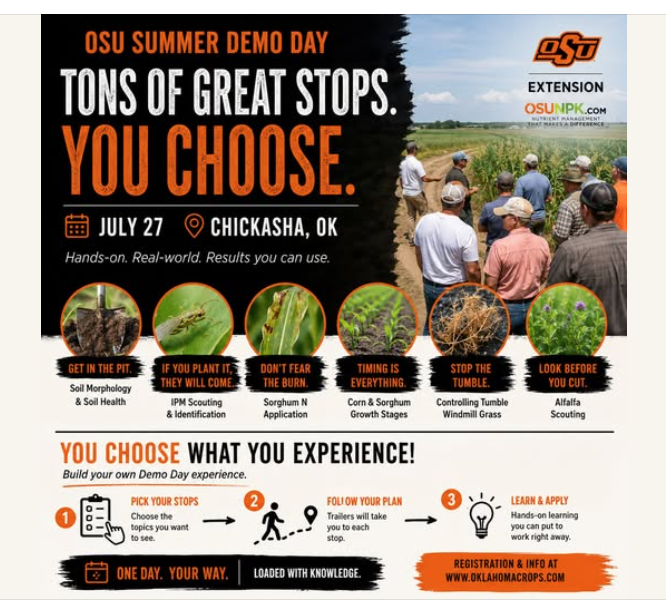
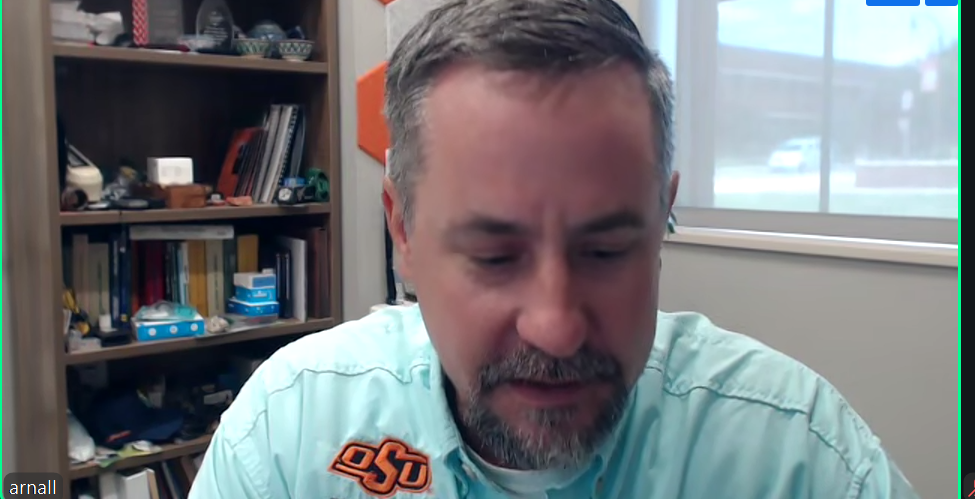
Oklahoma State University (OSU) is bringing back a personalized, tactile learning experience for producers and consultants with its upcoming Demo Day in Chickasha on July 27th. Farm Director KC Sheperd recently spoke with OSU’s Brian Arnall to discuss how this event departs from traditional field days by focusing on interactive, extension-centric learning. The focus of the upcoming Oklahoma State University (OSU) Demo Day is to deliver an interactive, hands-on learning experience that provides producers and consultants with practical agronomic tools they can apply immediately to their operations. Moving away from traditional field days where participants passively listen to lectures from a trailer, this revamped extension event prioritizes small-group, one-on-one engagement. By limiting trailer groups to 20 or 30 people and requiring every specialist to provide an interactive demonstration, OSU ensures that attendees actively participate in everything from soil morphology to machinery testing.
The layout for the event is explicitly designed to maximize interaction. Instead of large crowds following a single trailer, the demo day will feature 10 different stops, but participants will choose four specific sessions to build their own schedule. To ensure one-on-one engagement, trailer groups will be strictly limited to 20 to 30 people.
“I made sure that if you were a speaker at this day, that you had something for the audience to do, see, or interact with,” Arnall said. “It’s going to be a ‘choose your day’ kind of situation.”
Interactive Stops and Specialty Demos
The specialized stops cover a wide variety of crop, soil, and machinery technologies, including:
- Soil Morphology and Health: Participants can jump directly into a dug soil pit where Dr. Jason Haggard and Dr. Rachel Almsom will demonstrate soil horizons and structural health at the pit level.
- Sprayer Technology: Dr. John Long from biosystems engineering will bring a spray table to demonstrate nozzle tips and how different pressures impact chemical application.
- Irrigation Techniques: Dr. Sumit Sharma will host a pivot nozzle demonstration. While irrigation is less common immediately around Chickasha, the demonstration offers a precise look at how different pivot components operate.
- Corn Ear Flex: Southwest Area Agronomist Dr. Roden Cherry will lead a walkthrough of corn plots to examine ear flex. The session focuses on whether producers can plant fewer crops while maximizing yields through ear flex when environmental opportunities allow.
- Growth Stage Determination: Dr. Lofton will assist attendees in properly identifying growth stages in sorghum, corn, and other regional crops. Because chemical applications such as herbicides and fungicides are highly growth-stage-specific, mastering this skill is essential for precise input management.
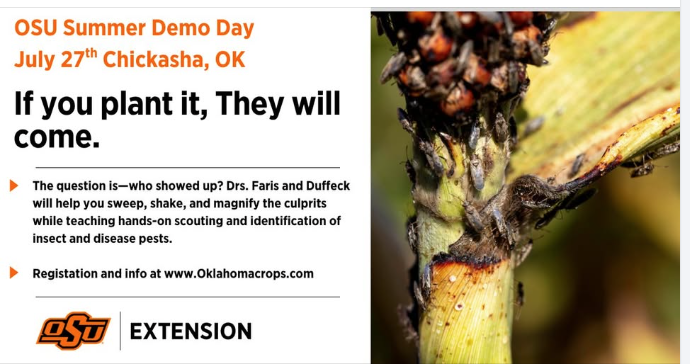
- Insect and Disease Scouting: Integrated Pest Management (IPM) specialists Dr. Ferris and Dr. Dufek will demonstrate proper row-crop scouting, including hands-on sweep-net and plant-shaking techniques.
- Specialized Weed Control: Additional scouting and management stops include alfalfa scouting with Kelly Seuhs, as well as tumbleweed and old world bluestem grass control methods led by Roden Cherry.
In-Field Nitrate Testing and Forage Management
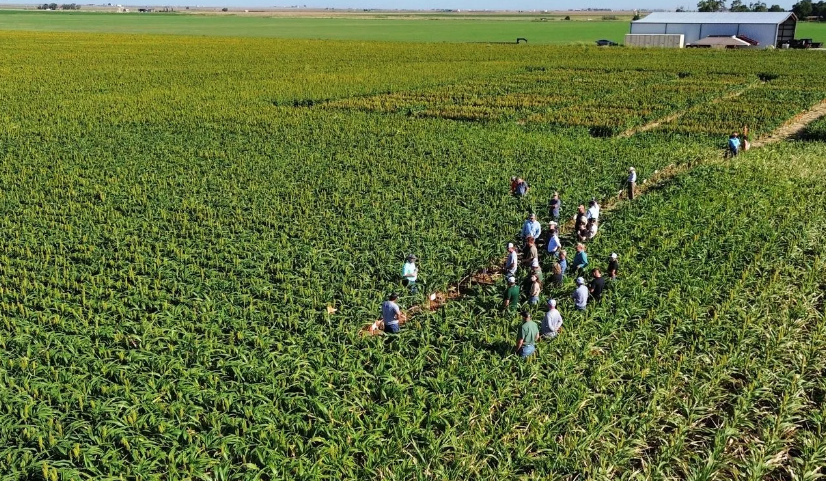
Given current seasonal challenges, nitrogen accumulation and forage toxicity are highly critical topics for regional livestock and forage managers. The event features a dedicated 4-H nitrate stop utilizing sorghum-sudan plots grown specifically at the Chickasha station.
Josie Rice, a PhD student working with Dr. Lofton, will cover the science of nitrate accumulation. Following the technical overview, Grady County Extension Educator Kelly Barrows will guide attendees through physical sampling methods. Participants will cut plants and conduct the actual drop tests used in county extension offices to monitor color development and observe how different nitrogen application rates and cutting heights affect overall toxicity levels.
Registration and Event Schedule
The Chickasha Demo Day is entirely free of charge, though online registration is required to ensure an accurate headcount for the sponsored lunch. Producers and industry consultants can register by visiting Oklahoma Crops.
The event will take place at the Chickasha Research Station, located just off the interstate.
- 8:30 AM: Welcome remarks and sponsor recognitions.
- Morning Sessions: Four consecutive, 30-minute interactive station rotations with 10 to 15 minutes of travel time built in between stops.
- 11:30 AM – 12:00 PM: Conclusion of field stops, followed by a complimentary indoor lunch and sponsor exhibits.
The morning-heavy schedule ensures that all field-based learning is completed before peak afternoon temperatures set in. Long-term, OSU Extension aims to replicate this hands-on model for summer, fall, and spring events across the state, eventually integrating future partnerships with the NRCS and the Oklahoma Conservation Commission.

To get signed up, click here: