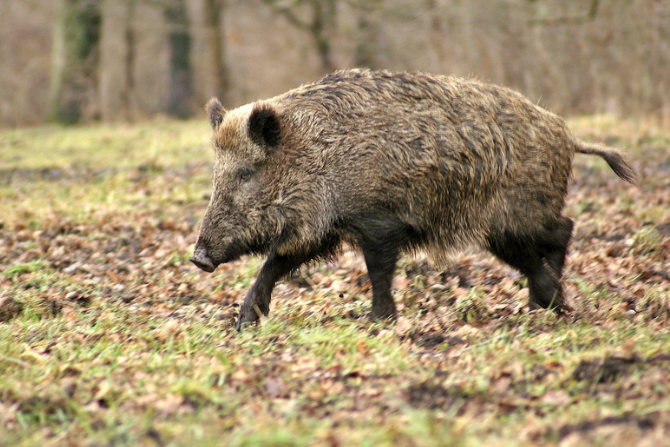
The U.S. Department of Agriculture (USDA) is making available $35 million for partnerships to respond to the threat feral swine pose to American agriculture, landscapes and human and livestock health. This partnership opportunity is part of a broader $105 million investment for the Feral Swine Eradication and Control Pilot Program, where USDA’s Natural Resources Conservation Service (NRCS) and USDA’s Animal and Plant Health Inspection Service (APHIS) are working together to target feral swine.
“We are collaborating with our partners at USDA and across the country to help combat feral swine and keep our farms, ranches and landscapes safe,” said NRCS Chief Colton L. Buckley. “These invasive species cause more than $3.4 billion in damage each year, including damage to agricultural landscapes. Thanks to the Working Families Tax Cuts Act, NRCS is able to expand this effort, giving producers and partners more resources to protect working lands and strengthen the long-term resilience of agricultural operations.”
The Working Families Tax Cuts Act delivers the largest long-term investment in NRCS conservation programs in decades, including support for this program. It continued the program for another five years with the $105 million total investment split between NRCS and APHIS, including the $35 million made available through this announcement.
Partners are invited to apply for feral swine eradication and control projects in the following states: Alabama, Arkansas, California, Florida, Georgia, Hawaii, Louisiana, Mississippi, Missouri, North Carolina, Oklahoma, South Carolina, Tennessee, and Texas.
About the Pilot Program
Feral swine can have significant negative impacts on plant and wildlife habitats, soils, water quality, as well as other natural resources. Livestock and humans are also susceptible to diseases carried by feral swine.
Partners selected to participate in the Feral Swine Eradication and Control Pilot Program will provide landowner assistance for restoration and on-farm trapping efforts and provide related services, like training. Funding for these services will be provided through grant agreements between partners and NRCS.
All projects will be a collaborative and coordinated effort among the selected partner, NRCS, and APHIS.
Applications will be accepted until 11:59 ET on September 21, 2026. For more information about this funding opportunity and to apply, visit the notice of funding on Grants.gov.
More Information
From 2020 through 2024, NRCS invested $41 million in 34 projects across 12 states. During that time, Feral Swine Eradication and Control Pilot Program projects provided assistance to more than 6,700 landowners on almost 9 million acres to help reduce feral swine damage. More than 800 events related to teaching trapping techniques to landowners were conducted.
For more information on the program and to find proposed pilot projects, visit the NRCS website.
For more than 90 years, NRCS has helped farmers, ranchers and forestland owners make investments in their operations and local communities to improve the quality of our air, water, soil, and wildlife habitat. NRCS uses the latest science and technology to help keep working lands working, boost agricultural economies, and increase the competitiveness of American agriculture. NRCS provides one-on-one, technical advice and financial assistance and works with producers to help them reach their goals through voluntary, incentive-based conservation programs. For more information, visit nrcs.usda.gov.