

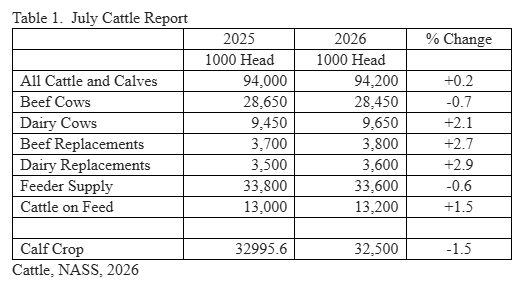
The July Cattle report pegged the total U.S. cattle inventory as essentially unchanged from last year, up a scant 0.2 percent (Table 1). The beef cow herd was down 0.7 percent, indicating that the herd inventory has not yet stabilized. However, the beef replacement heifer inventory was up 2.7 percent, following the slight increase in the January 1 estimate. The January and July estimates of beef heifer inventories suggest a very slow process of heifer retention.
The 2026 calf crop is estimated at 32.5 million head, down 1.5 percent from 2025. The estimated feeder supply calculated from the July report is down 0.6 percent from last year. The smaller 2026 calf crop means that feeder supplies will continue to decrease through 2027; even more if heifer retention accelerates.
Cattle on Feed
Also released last Friday was the July monthly Cattle on Feed (COF) report. Placements in June were down 2.9 percent year over year and marketings were down 2.7 percent from last year. The July 1 on-feed total was 11.37 million head, up 2.2 percent year over year. The COF inventory has been higher year over year since March. This increase is due to the fact that feedlot marketings have decreased 8.4 percent over the last six months while placements have only decreased by 2.9 percent. Slow feedlot turnover is contributing to increased days on feed; increased carcass weights and increased yield grade 4/5 percentage. On average for the past 12 months, 28 percent of fed cattle have been yield grade 4/5, a new record high level.
Mexican Border Reopening
Last week USDA announced that a phased reopening of the Mexican border for livestock imports would begin on August 24. The initial opening will only include the Douglas, Arizona port. If all goes well, the New Mexico ports of Columbus and Santa Teresa may open some weeks later, but no date has been announced.
The emotional response to the border reopening is difficult to anticipate, but the market impact of the USDA announcement should be minimal, other than, perhaps, an initial futures response. The flow of Mexican cattle will be very small for many weeks with a relatively small number of cattle likely to be imported in the remainder of the year. It is uncertain if a return to historic levels of Mexican cattle imports will happen, but if it does, it will likely take many months.







