

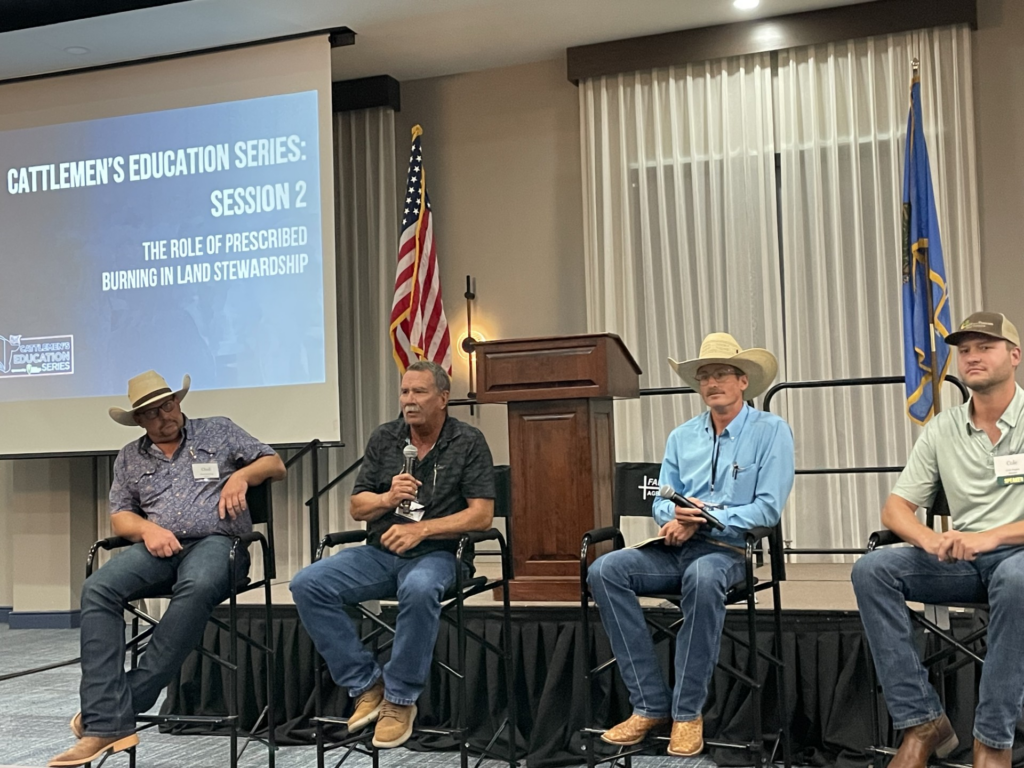
Oklahoma Farm Report intern Haden Snelson sat down with John Weir, Oklahoma State University Senior Extension specialist for fire ecology, at the Oklahoma Cattlemen’s Association Convention and Trade Show to discuss how prescribed fire can improve grazing land, wildlife habitat and wildfire preparedness.
“A prescribed burn is fire that is applied to the ground intentionally on a specific piece of ground for specific goals and objectives under conditions that are prescribed,” Weir said.
While many Oklahoma landowners associate burning with late winter and early spring, Weir said prescribed fire can be used throughout the year.
“Burns can be year-round,” Weir said. “We see a lot of times the traditional burn season is typically late winter or early spring here in Oklahoma.”
That traditional timing is often used to encourage earlier green-up for livestock grazing, but Weir said burning during other seasons may offer different benefits.
The first step in planning a prescribed burn is determining what the landowner wants the fire to accomplish.
“What do I want to do with this fire? What am I trying to do?” Weir said. “Am I trying to control cedars, control woody plant growth? Am I trying to improve wildlife habitat in some way? Am I trying to improve cattle grazing?”
After establishing those objectives, landowners can begin determining the weather conditions, equipment, manpower and firebreaks needed to conduct the burn safely.
Firebreaks can include existing features such as county roads, creeks, drainages and cultivated fields. Landowners may also create firebreaks by mowing, disking or using a bulldozer or road grader to clear vegetation.
“We’re going to figure out how I can achieve it,” Weir said. “What kind of weather conditions do I want to burn under so this fire is going to meet my goals, but it’s also going to be safe?”
For cattle producers, Weir said prescribed fire can improve forage quality and animal performance.
“With stocker cattle, we can see a 10% to 15% increase in gains by using fire,” Weir said. “What it does is increase crude protein and increase nutrient content.”
Weir said prescribed burning may also increase weaning weights and improve body condition scores in cows. Fire can also reduce some livestock pests, including ticks and horn flies.
Prescribed fire can provide additional benefits by reducing accumulated vegetation that can fuel wildfires.
“We can use fire to reduce fuels and create blackened areas to make safety zones for wildfire prevention and mitigation,” Weir said.
Fire can also improve wildlife habitat by increasing the quality and accessibility of forage and changing vegetation structure. While many native plants are adapted to fire and will not be completely killed, burning can temporarily reduce dense blackberry or briar patches and make the areas easier for livestock and wildlife to use.
“We can top-kill them and change them, and then things become browseable,” Weir said.
Prescribed fire may also help manage some nonnative invasive plants and maintain native grasslands, although Weir said the results depend on the plant species, season and land-management objective.
Landowners should notify neighboring property owners and their local fire department before conducting a prescribed burn, Weir said.
“That’s within the state law, but that’s also just good common courtesy and good neighbor policy,” Weir said. “Notify your neighbors, notify the local fire department, and provide adequate firebreaks, manpower and equipment to watch over that fire.”
Whether a local fire department will help conduct the burn depends on the department. Some may assist, while others may be unable to participate because of staffing, policy or insurance restrictions.
Weir said Oklahoma does not require landowners to obtain a prescribed burning certification before using fire on their property. However, inexperienced landowners should not attempt a burn without first seeking training and assistance.
“If you’ve never been around fire and never done anything, don’t just go out there and do that,” Weir said. “Seek some help.”
Landowners can contact their county OSU Extension office, conservation district, Natural Resources Conservation Service office, Oklahoma Department of Wildlife Conservation or a local prescribed burn association for assistance.
“There are a lot of people out there and a lot of resources that can help folks get an idea of what to do about burning,” Weir said.
Weir emphasized that successful prescribed fire begins with a clear objective and a detailed plan that accounts for weather, smoke, firebreaks, equipment and available personnel.
“Why do I want to do this? What am I trying to achieve?” Weir said. “Then we’re going to figure out how we can achieve it.”







