


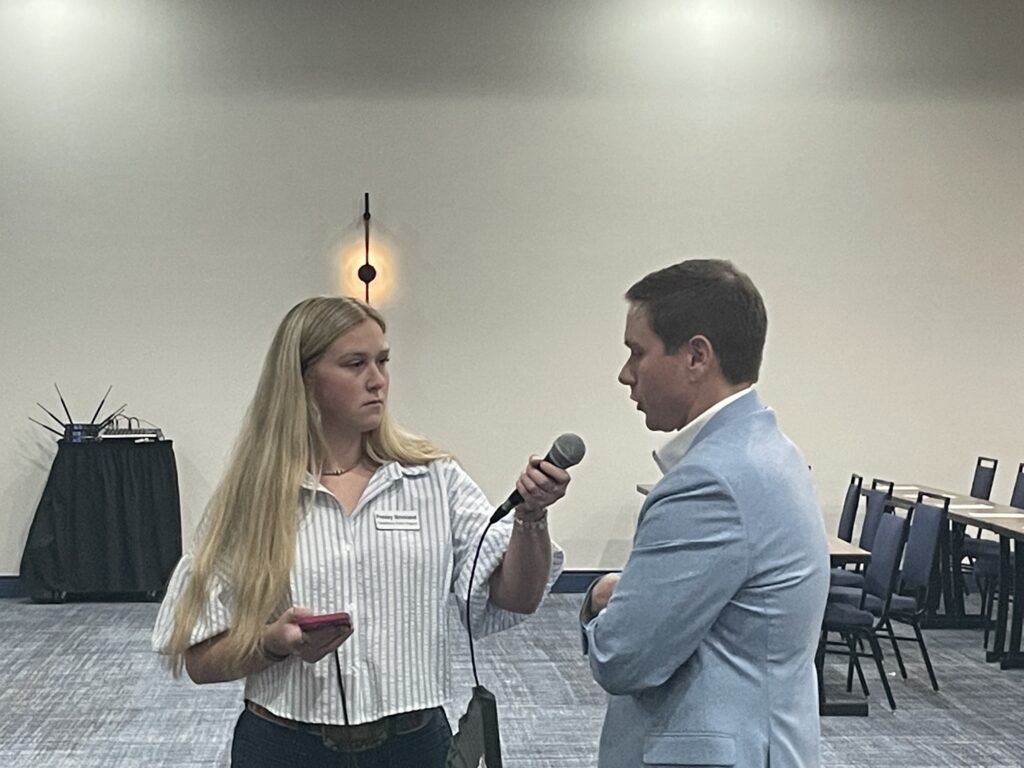
Securing dependable access to groundwater has become one of the most critical legal and operational priorities for modern agricultural producers. Farm Report Intern Presley Strickland caught up with Garret Reed, trial lawyer at McAfee & Taft, during the Oklahoma Cattlemen’s Association (OCA) Convention to discuss groundwater rights, legal distinctions, and what farmers and ranchers need to know to protect their operations.
Why Water Rights Demand Closer Attention
While technology in agriculture continues to advance, the foundation of every farm and ranch still relies on the top six inches of topsoil—and the water required to sustain it.
Reed emphasized that water is essential not only for crop irrigation and livestock grazing, but also for producing the food, fuel, and fiber that consumers depend on daily. As demand and environmental pressures grow, producers must pay closer attention to securing their legal rights and maintaining uninterrupted access to groundwater supplies.
Addressing Common Misconceptions and Legal Distinctions
A major challenge for agricultural landowners is navigating the nuanced legal boundaries surrounding water ownership and usage.
Key legal insights highlighted by Reed include:
- Domestic vs. Non-Domestic Usage: Distinguishing between household or basic farm use and larger-scale commercial or irrigation usage dictates when specific permits are legally required.
- Permitted Access: Securing official groundwater permits is essential for long-term operational certainty, ensuring producers can legally irrigate crops and water livestock without legal interruption.
- Surface Ownership and Lease Rights: Landowners typically hold rights to the groundwater beneath their surface acreage, but tenants and lessees can also develop and use groundwater when explicitly granted permission by the surface owner.
Because groundwater law is highly detailed, Reed recommends that producers consult with legal counsel or reach out directly to the Oklahoma Water Resources Board (OWRB) when questions arise regarding their specific rights.
State Law vs. Federal Oversight
While federal agencies like the USDA and EPA manage various environmental regulations, Reed noted that most groundwater rights issues facing Oklahoma producers are governed primarily by state law. Understanding state-level statutory requirements and state regulatory agencies is key for producers seeking to secure or expand their water allocations.
Staying Informed and Proactive
To stay ahead of changing regulations, Reed encourages producers to take an active role in industry groups. Attending organization meetings like the OCA Convention, participating in local policy discussions, and maintaining open lines of communication with state legislators help ensure agricultural operators remain informed and well-prepared to protect their water access.







