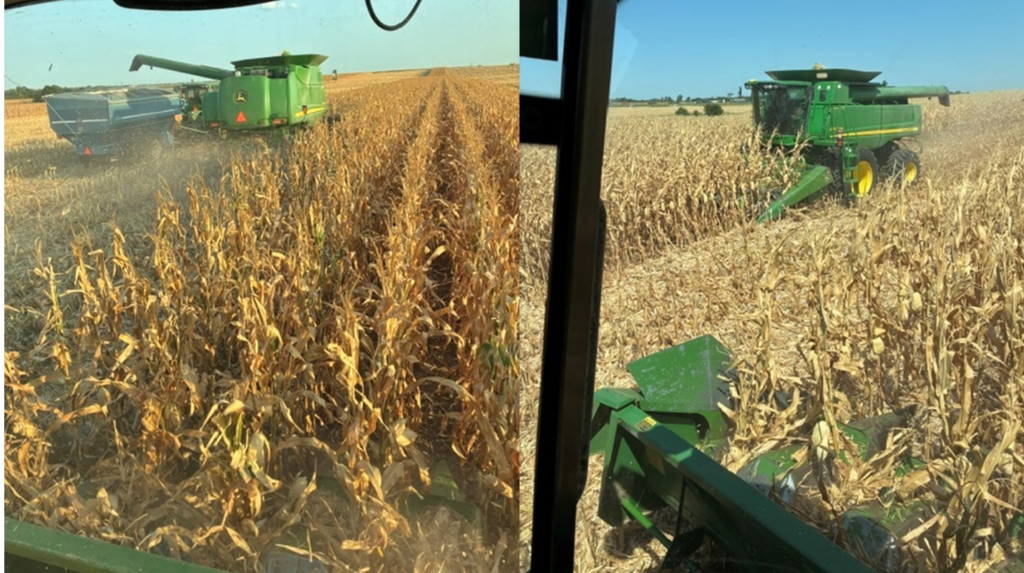
The August World Agricultural Supply and Demand Estimates (WASDE) report delivered significant market-moving data for agricultural producers, with corn emerging as the undisputed superstar winner across the balance sheets. Farm Director KC Sheperd spoke with Allendale Chief Strategist Rich Nelson to dive into the details of the USDA report, analyzing how shifting yields, acreage additions, Black Sea export bottlenecks, and livestock production cuts are reshaping market expectations for the 2026 crop year.
Corn Takes Center Stage: The WASDE Superstar
Corn posted the strongest performance across the board in the August release. In his analysis with Sheperd, Nelson emphasized that corn’s “superstar” status comes down to a perfect convergence of tightening domestic ending stocks, aggressive export adjustments, and a yield cut that outweighed acreage gains.
Yield Cut Counteracts Acreage Expansion
Although the USDA expanded 2026–27 corn planted area by 1.4 million acres to 96.7 million acres (with harvested area moving up to 88.6 million acres), the agency trimmed national yield projections by 2.3 bushels per acre down to 180.7 bpa. That puts overall new-crop production at 16.013 billion bushels—a minor increase that leaves the crop as the second largest on record, but well below initial trade expectations for yield potential.
Record Export Pace Drives Inventory Drawdown
The demand side provided the real catalyst for corn’s bullish momentum. For “old-crop” (2025–26) corn, ending stocks were slashed from 2.02 billion bushels down to 1.945 billion bushels, fueled primarily by a 75-million-bushel boost in exports, which reached a record 3.4 billion bushels.
Looking ahead to the 2026–27 “new-crop” marketing year, the USDA bumped exports up another 75 million bushels to 3.275 billion bushels. Combined with domestic usage forecast at 13.055 billion bushels (including 6.1 billion for feed/residual and 5.6 billion for ethanol), total new-crop usage reached 16.33 billion bushels.
Tightest Carryout in Two Years
As a result of robust usage and a lower beginning stock balance (1.945 billion bushels), USDA projected 2026–27 U.S. corn ending stocks at 1.653 billion bushels—down substantially from 1.79 billion bushels in July.
“Net bottom line for corn, we actually move back to the tightest ending stocks in two years,” Nelson explained. This supply tightening prompted the USDA to raise its season-average farmgate price forecast by 10 cents to $4.50 per bushel.
Wheat Market Weighs Black Sea Disruptions and Sluggish Exports
The wheat balance sheet presented a more mixed outlook. USDA trimmed new-crop wheat production slightly to 1.531 billion bushels (down 5 million bushels from July), which failed to act as a major catalyst for futures. A major focus remains the Black Sea region, where ongoing conflict and logistical friction have constrained shipments.
“Russia and Ukraine are only exporting maybe a third of what they normally would be out of those Black Sea locations,” Nelson noted.
Despite these supply disruptions abroad, USDA reduced combined exports from Russia and Ukraine by only 2.5 million tons, taking a conservative approach. Crucially, USDA opted not to raise U.S. export forecasts, as domestic wheat sales continue to run about 30% below five-year average paces. Without official confirmation of international buyers shifting orders toward U.S. grain, wheat markets face seasonal headwind pressures that traditionally linger into mid-to-late September.
Soybean Crush and Biofuel Expectations Point to Growth
USDA projected a record new-crop soybean harvest of 4.519 billion bushels based on an added 1.4 million acres (86.8 million planted) and a 52.7 bpa yield. While keeping export projections flat at 1.66 billion bushels, strength in domestic crush demand provides a supportive counterweight.
“This crush story, especially with the soybean oil tightness which we don’t feel USDA really addressed either on this report, really has room to advance and be a very positive issue for us in the coming years,” Nelson said.
USDA raised domestic crush by 30 million bushels to 2.78 billion bushels, but Allendale internal estimates suggest further upward revisions remain likely. While USDA kept its biofuel soybean oil usage estimate at 17.8 billion pounds, Allendale forecasts that number could rise closer to 19 billion pounds in future updates. Total soybean ending stocks were pegged slightly higher at 320 million bushels.
Cotton Yield Cuts Offset Acreage Expansion
For cotton, USDA increased planted acreage by roughly 600,000 acres, raising estimates from 9.9 million to 10.5 million acres. However, this expansion was largely countered by a significant drop in yield projections. National yields were trimmed from 872 pounds per acre down to 798 pounds per acre, marking a yield below the prior two crop years.
With additional acres balancing out lower per-acre yields, U.S. cotton ending stocks saw minimal net change, shifting slightly from 4.1 million bales to 4.0 million bales. Export projections were left unchanged from last month.
Livestock Balance Sheets Reflect Tightening Beef Supplies
The livestock sector experienced notable adjustments in the August estimates:
- Beef Market: USDA aggressively trimmed 2026 beef production estimates by 321 million pounds, while also reducing 2027 production forecasts by more than 200 million pounds. These cuts more than offset increases in cattle imports (up 73 million pounds with the Mexican border reopening), creating tighter beef balance sheets for both 2026 and 2027.
- Pork Market: Pork production saw a minor reduction of 79 million pounds, but accompanying adjustments in pork exports kept overall 2026 and 2027 pork balance sheets virtually unchanged month-over-month.
Looking Ahead to September Weather and USDA Reports
Weather dynamics remain a key variable across growing regions. While severe dryness continues to challenge producers in parts of Oklahoma and the Northern Plains, timely August precipitation across the central Midwest could support crop finishing conditions and yield slight improvements in upcoming crop updates.
As harvest approaches, traders and producers are looking ahead to late September, which will feature both the Small Grains Summary and the Quarterly Grain Stocks report. The Quarterly Grain Stocks release will establish final old-crop inventories for corn and soybeans, while also incorporating a highly anticipated revision to 2025 harvest totals.
Rich Nelson Contact Information
For additional research, market analysis, or strategy consultations with Rich Nelson and the team at Allendale, Inc., call 1-800-262-7538 (1-800-2-MARKET) or visit allendalehub.com.
You can also view the full reports here: