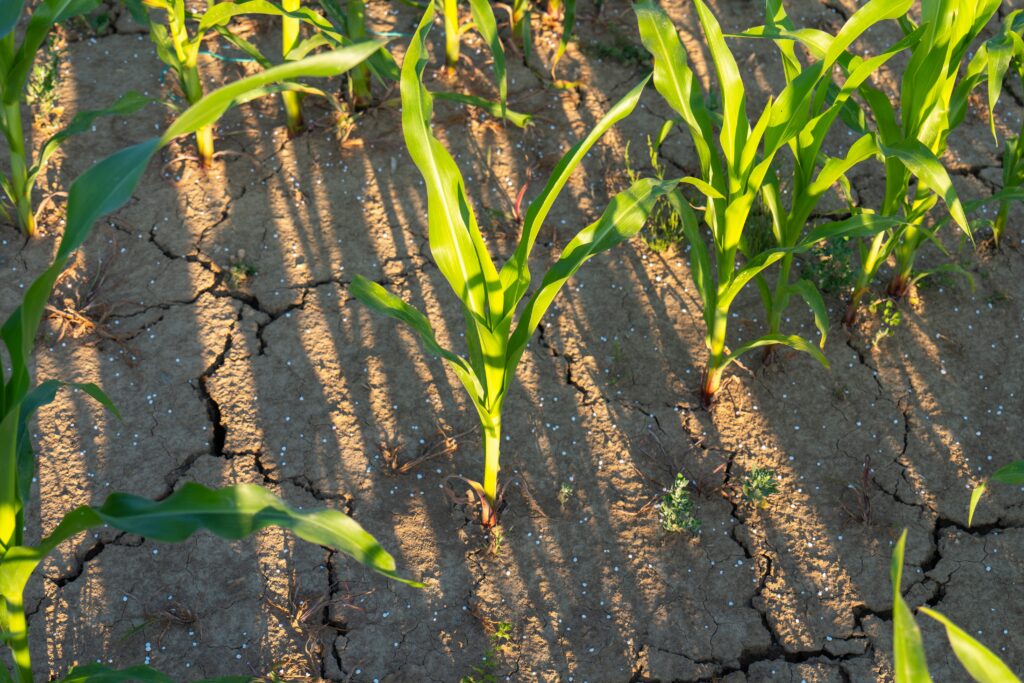
The U.S. Department of Agriculture’s National Agricultural Statistics Service (NASS) released its August Crop Production report, updating forecasts for major U.S. crops following a review of acreage and conditions as of August 1. The report projects the second-highest U.S. corn production on record, a larger cotton crop and a continued decline in all wheat and winter wheat production. Hotter and drier-than-normal weather across much of the Plains also contributed to increased crop stress heading into August.
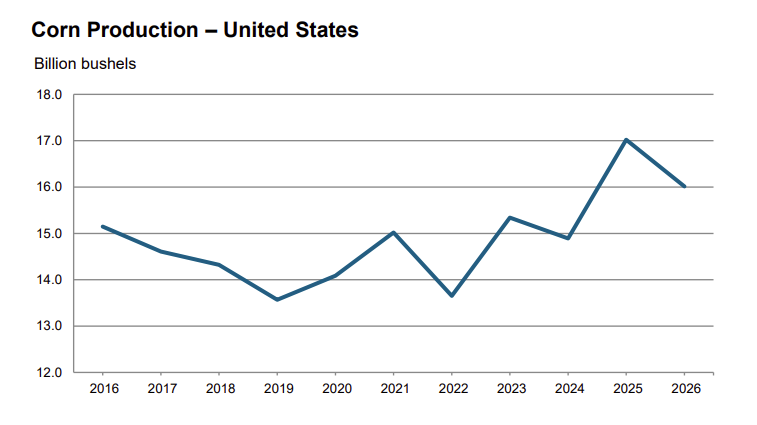
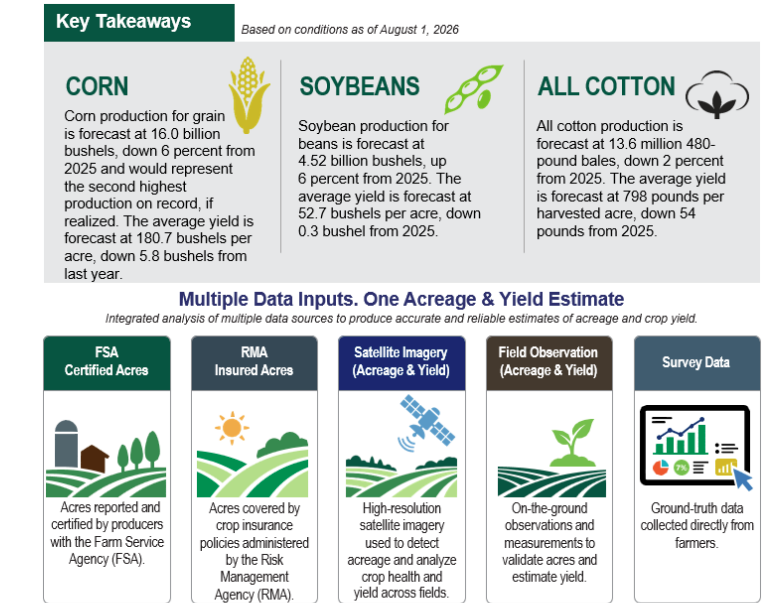
Corn: Acreage updates were made based on a thorough review of all available data. Total planted area, at 96.7 million acres, is up 1 percent from the previous estimate but down 2 percent from 2025. Area harvested for grain is forecast at 88.6 million acres, up 1 percent from the previous forecast but down 3 percent from last year. Production for grain is forecast at 16.0 billion bushels, which if realized would be the second highest production for grain on record for the United States. Based on conditions as of August 1, the yield is forecast at 180.7 bushels per acre, down 5.8 bushels from last year’s record high 186.5 bushels per acre. Record high yields are forecast in Delaware, Indiana, Iowa, Kentucky, Mississippi, and Virginia.
Oklahoma corn stats:
- Production: 46.6 million bushels
- Down 22.9% from 60.4 million bushels in 2025
- Yield: 95 bushels/acre
- Down 22.1% from 122 bushels/acre last year
- Harvested Area: 490,000 acres
- Down 1.0% from 495,000 acres in 2025
Kansas corn stats:
- Production:831.6 million bushels
- Down 11.8% from 942.5 million bushels in 2025
- Yield:126 bushels/acre
- Down 13.1% from 145 bushels/acre last year
- Harvested Area:6.6 million acres
- Up 1.5% from 6.5 million acres in 2025
Texas corn stats:
- Production:226.8 million bushels
- Down 21.5% from 288.9 million bushels in 2025
- Yield:107 bushels/acre
- Down 20.7% from 135 bushels/acre last year
- Harvested Area:2.12 million acres
- Down 0.9% from 2.14 million acres in 2025
Cotton: Acreage updates were made based on a thorough review of all available data. Area planted to Upland cotton is estimated at 10.3 million acres, up 6 percent from the previous estimate and up 13 percent from 2025. Upland harvested area for the Nation is expected to total 8.04 million acres, up 5 percent from last year. Pima cotton planted area is estimated at 148,000 acres, down 1 percent from the previous forecast but up 5 percent from 2025. Pima harvested area is forecast at 143,700 acres, up 4 percent from last year. If realized, the Arkansas cotton yield will be tied with the record high set in 2024.
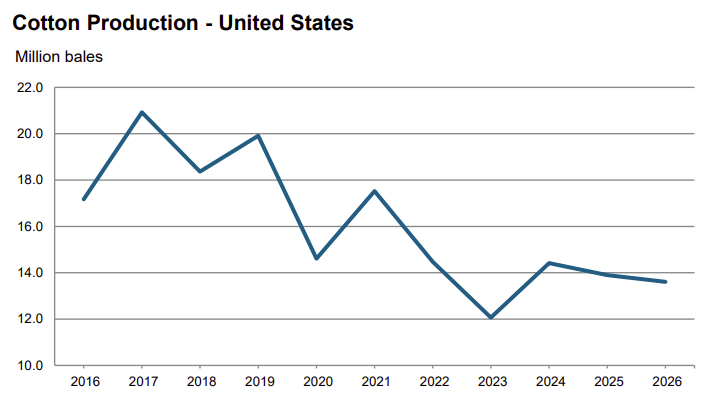
Eighty-eight percent of the Nation’s cotton acreage had reached the squaring stage by August 2, two percentage points ahead of last year and even with the 5-year average. Fifty-five percent of the Nation’s cotton acreage had begun setting bolls, 2 percentage points ahead of last year but 1 percentage point behind the 5-year average. Four percent of the Nation’s cotton had open bolls, 1 percentage point behind last year and 2 percentage points behind the 5-year average. On August 2, forty-two percent of the 2026 cotton acreage was rated in good to excellent condition, 4 percentage points lower than the previous week and 13 percentage points below the previous year.
Oklahoma cotton stats:
- Production: 200,000 bales
- Down 69.9% from 665,000 bales in 2025
- Yield: 300 pounds/acre
- Down 67.1% from 912 pounds/acre last year
- Harvested Area: 320,000 acres
- Down 8.6% from 350,000 acres in 2025
- Down 28.9% from the June forecast of 450,000 acres
Kansas cotton stats:
- Production: 160,000 bales
- Up 3.2% from 155,000 bales in 2025
- Yield: 960 pounds/acre
- Down 0.6% from 966 pounds/acre last year
- Harvested Area: 80,000 acres
- Up 3.9% from 77,000 acres in 2025
- Down 5.9% from the June forecast of 85,000 acres
Texas cotton stats:
- Production: 4.645 million bales
- Down 11.8% from 5.265 million bales in 2025
- Yield: 568 pounds/acre
- Down 9.7% from 629 pounds/acre last year
- Harvested Area: 3.925 million acres
- Down 2.3% from 4.019 million acres in 2025
- Down 27.6% from the June forecast of 5.425 million acres
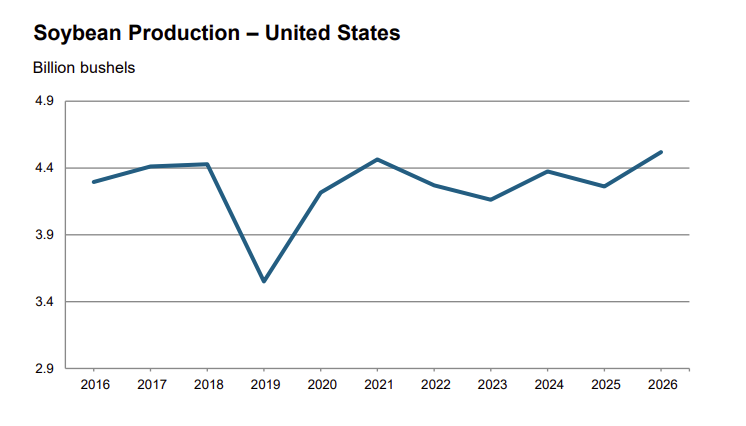
Soybeans: Acreage updates were made in several States based on a thorough review of all available data. Total planted area, at 86.8 million acres, is up 2 percent from the previous estimate and up 7 percent from the previous year. Acreage harvested for beans is forecast at 85.8 million acres, up 2 percent from the previous forecast and up 7 percent from last year. Production is forecast at 4.52 billion bushels, up 6 percent from 2025. The forecasted yield, at 52.7 bushels per acre, is down 0.3 bushel from last year’s final estimate of 53.0 bushels per acre. If realized, this would be the second highest yield on record for the Nation.
Planting was underway by the end of April in all 18 major soybean-producing States. Twenty-three percent of the acreage was planted by April 26, six percentage points ahead of last year and 11 percentage points ahead of the 5-year average. Eighty-seven percent of the soybean acreage was planted by May 31, four percentage points ahead of last year and 7 percentage points ahead of the 5-year average. Nationally, 79 percent of the soybean acreage had emerged by June 7, six percentage points ahead of last year and 8 percentage points ahead of the 5-year average. At that time, soybean emergence was ahead of the 5-year average in all 18 major soybean-producing States. By June 28, nineteen percent of the soybean acreage was blooming, 3 percentage points ahead of last year and 4 percentage points ahead of the 5-year average. By August 2, sixty-two percent of the soybean acreage was setting pods, 6 percentage points ahead of last year
and 7 percentage points ahead of the 5-year average.
Oklahoma soybean stats:
- Production: 14,000,000 bushels
- Up 37.9% from 10,150,000 bushels in 2025
- Yield: 28.0 bushels/acre
- Down 3.4% from 29.0 bushels/acre last year
- Harvested Area: 500,000 acres
- Up 42.9% from 350,000 acres in 2025
Kansas soybean stats:
- Production: 178,220,000 bushels
- Down 9.3% from 196,425,000 bushels in 2025
- Yield: 38.0 bushels/acre
- Down 21.6% from 48.5 bushels/acre last year
- Harvested Area: 4,690,000 acres
- Up 15.8% from 4,050,000 acres in 2025
Texas soybean stats:
- Production: 3,040,000 bushels
- Up 5.6% from 2,880,000 bushels in 2025
- Yield: 32.0 bushels/acre
- Unchanged from 32.0 bushels/acre last year
- Harvested Area: 95,000 acres
- Up 5.6% from 90,000 acres in 2025
Sorghum: Acreage updates were made based on a thorough review of all available data. Production is forecast at 296 million bushels, down 32 percent from last year. Planted area, at 6.11 million acres, is down 3 percent from the previous estimate and down 8 percent from last year. Area harvested for grain is forecast at 5.36 million acres, down 2 percent from the previous forecast and down 11 percent from 2025. Based on August 1 conditions, yield is forecast at 55.4 bushels per acre, 17.2 bushels below the 2025 yield of 72.6 bushels per acre. By August 2, fifty-two percent of the Nation’s sorghum acreage had reached the headed stage, 3 percentage points ahead of last year but 1 percentage point behind the 5-year average. Twenty-eight percent of the Nation’s sorghum acreage was at or beyond the coloring stage by August 2, five percentage points ahead of last year and the 5-year average.
Thirty-six percent of the Nation’s sorghum acreage was rated in good to excellent condition on August 2, down 5 percentage points from the previous week and 30 percentage points below the previous year.
Oklahoma Sorghum Stats
- Production: 14,000,000 bushels
- Down 40.4% from 23,490,000 bushels in 2025
- Yield: 40.0 bushels/acre
- Down 31.0% from 58.0 bushels/acre last year
- Harvested Area: 350,000 acres
- Down 13.6% from 405,000 acres in 2025
Kansas Sorghum Stats
- Production: 167,500,000 bushels
- Down 33.5% from 252,000,000 bushels in 2025
- Yield: 67.0 bushels/acre
- Down 25.6% from 90.0 bushels/acre last year
- Harvested Area: 2,500,000 acres
- Down 10.7% from 2,800,000 acres in 2025
Texas Sorghum Stats
- Production: 75,250,000 bushels
- Down 25.3% from 100,700,000 bushels in 2025
- Yield: 43.0 bushels/acre
- Down 18.9% from 53.0 bushels/acre last year
- Harvested Area: 1,750,000 acres
- Down 7.9% from 1,900,000 acres in 2025
All wheat production for grain is forecast at 1.53 billion bushels, down less than 1 percent from the previous forecast and down 23 percent from 2025. The average yield is expected to be 47.8 bushels per acre, down 0.1 bushel from the previous forecast and down 5.5 bushels from 2025.
Winter wheat: Acreage updates were made based on a thorough review of all available data. Total planted area, at 31.3 million acres, is down 1 percent from the Acreage report, and down 6 percent from 2025. Area expected to be harvested for grain or seed totals 21.0 million acres, down 1 percent from the Acreage report and down 18 percent from last year. Production is forecast at 990 million bushels, down slightly from the previous forecast and down 29 percent from 2025. If realized, the United States production would be the lowest since 1963. Based on August 1 conditions, the United States yield is forecast at 47.0 bushels per acre, up 0.3 bushel from last month but down 7.9 bushels from last year. Record high yields are forecast in Illinois, Michigan, and Pennsylvania for 2026.
Forecasted head counts from the objective yield survey in the six Hard Red Winter States (Colorado, Kansas, Montana, Nebraska, Oklahoma, and Texas) are above last year’s levels in Montana, but below last year’s level in Colorado, Kansas, Nebraska, Oklahoma and Texas. As of August 2, harvest progress was 29 percent complete in Montana, 10 percentage points behind the 5-year pace. In South Dakota, 91 percent of the acreage was harvested, 9 percentage points ahead of the 5-year pace. Harvest progress was complete or nearly complete in Colorado, Kansas, Nebraska,Oklahoma, and Texas.
July Weather Highlights:
July precipitation was patchy across the Plains and Midwest, generally reducing soil moisture availability for
rangeland, pastures, and rain-fed summer crops. Since portions of the Plains were already contending with drought-related impacts as the month began, July’s hotter-and drier-than-normal regime (in most areas) led to locally significant crop stress. By August 2, twenty-nine percent of the Nation’s sorghum crop was rated in very poor to poor condition, up from 13 percent just 5 weeks earlier, on June 28. Midwestern corn and soybeans were more resilient, with the central and eastern Corn Belt escaping extreme heat. Still, less than two-thirds of the Nation’s corn (61 percent) and soybeans (63 percent) were rated in good to excellent condition on August 2, well below the values—73 and 69 percent, respectively—observed the same time a year ago.