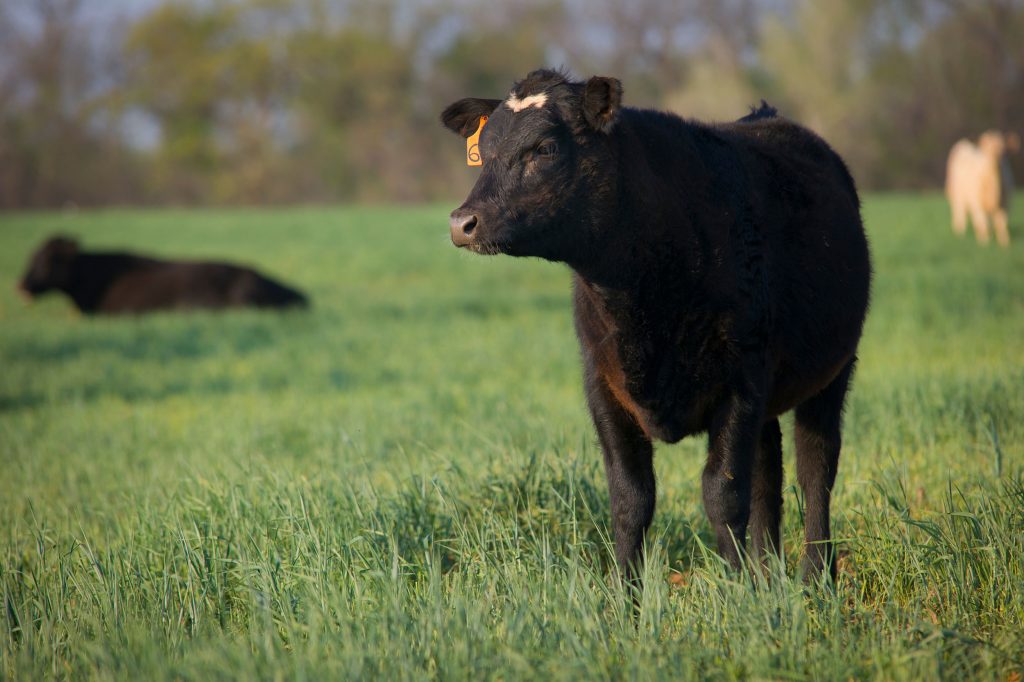
Drought, high temperatures, and other stresses can create forage toxicity concerns for cattle producers. Two of the most commonly discussed problems I am asked about this time of year are prussic acid and nitrate toxicity. They can occur in some of the same forage species and produce similar symptoms in affected cattle , but they are not the same problem and require different management.
Sorghums, sorghum-sudan hybrids, sudangrass, Johnsongrass, and corn can all be associated with these toxicities. Prussic acid is primarily a concern with plants in the sorghum family, while nitrate accumulation can occur in a much wider range of grasses, crops, and weeds. Pigweed, Johnsongrass, corn, sorghums, and Sudan grasses are among the more common nitrate accumulators. Pearl millet and corn do not produce prussic acid but can accumulate nitrates.
The two toxins interfere with oxygen delivery in different ways. Prussic acid, or cyanide, is rapidly absorbed and hemoglobin from releasing oxygen to tissue. Blood from an affected animal may remain bright cherry red because it is highly oxygenated. With nitrate toxicity, nitrate is converted in the rumen to nitrite. Excess nitrite converts hemoglobin to methemoglobin, which does not carry oxygen. Blood from cattle severely affected by nitrate is dark chocolate brown.
Plant stress is important for both problems, but the risk patterns differ. Prussic acid is especially concerning following drought stress and frost. Young plants and new regrowth contain more prussic acid than mature plants, and concentrations are generally higher in leaves than stems. Producers should avoid grazing fresh regrowth after harvest or frost-damaged susceptible plants for at least seven days or until the plants are completely dry and brown. Prussic acid volatilizes so will decrease with wilting and dry hay does not usually retain prussic acid when baled.
Nitrate accumulation occurs when plant growth is slowed while nitrate uptake continues. Drought, high temperatures, cloudy weather, disease, and herbicide injury can contribute to accumulation. Unlike prussic acid, nitrate concentration is generally greatest in the lower portion of the plant stem. Nitrates do not volatilize and will remain in the plants after wilting and baling.
Both toxicities can act rapidly. Signs may include anxiety, weakness, rapid or labored breathing, staggering, tremors, collapse, and death. With prussic acid poisoning, the progression can be so rapid that dead cattle are often the first indication of a problem. Nitrate toxicity can also result in abortions as oxygen supply to the fetus is compromised.
The most important management tool is testing when there is reason for concern. County Extension offices may have screening tests available, and suspect samples can be submitted to a laboratory for quantitative analysis.
Although “stressed forage” does not automatically mean toxicity knowing the forage species, the type of stress, where the toxin accumulates in the plant, and having the forage tested can prevent costly mistakes.
Resources:
Prussic Acid Poisoning, Oklahoma State University, PSS-2904. https://extension.okstate.edu/fact-sheets/prussic-acid-poisoning
Nitrate Toxicity in Livestock, Oklahoma State University, PSS-2903. https://extension.okstate.edu/fact-sheets/nitrate-toxicity-in-livestock
Nitrate toxicity and prussic acid poisoning can pose serious risks for cattle under certain conditions. In this video, Paul Beck, OSU Extension beef cattle specialist, explains the conditions that can increase the risk of nitrate toxicity and prussic acid poisoning in cattle on SunUpTV from August 1, 2026. https://www.youtube.com/watch?v=VKqgKzM6bSY