

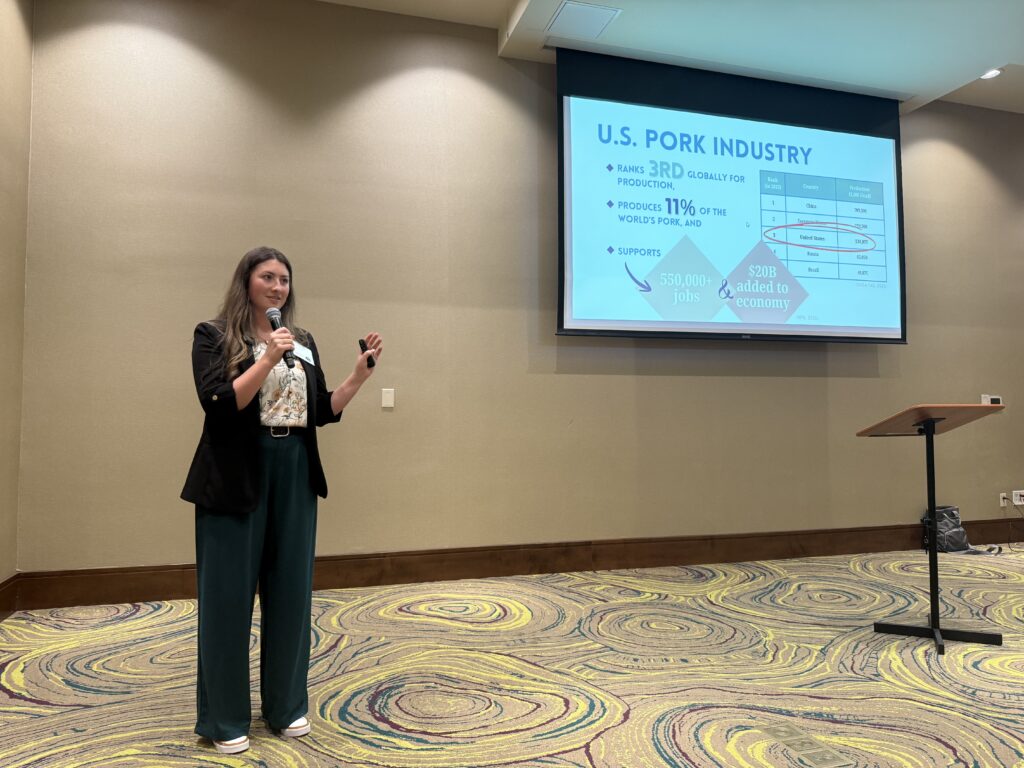
Animal well-being and agriculture advocacy are becoming increasingly important as consumers seek to better understand where their food comes from and how it is produced. Alexis Main with Paradigma Agricultural Innovations and Consulting discussed the importance of sharing the story of agriculture during a session at the Oklahoma Women in Agriculture Convention with intern Presley Strickland.
“Definitely, these stories are becoming more important than ever,” Main said. “A lot of people want to know where their food comes from and what it takes to get it to their plate, and they really just want to know the story of agriculture.”
Main said sharing those stories should go hand in hand with science-based animal care. “And so, being able to share those stories, but also use science as what we base our animal care on, is really what’s most important,” she said.
Farm Policy Brings More Questions About Animal Well-Being
Main said conversations surrounding animal well-being have become especially important as issues such as the Farm Bill and Proposition 12 receive increased attention. “Especially with the Farm Bill and Prop 12 being at the forefront, a lot of people have more questions about it,” Main said.
She said understanding how these issues affect agriculture requires conversations with the people directly involved in the food system. “Being able to talk to those who are involved and really see how that has impacted our producers, our consumers, and really just our food system over the last few years has been where the most questions have come from,” Main said.
At the same time, Main said misinformation can make those conversations more difficult. “But then also, there’s a lot of misinformation out there,” she said. “And so, being able to relate this back to something that people can understand, and being able to really explain what our animal care practices are and why we use science behind them has been a great conversation starter.”
Animal Welfare and Animal Rights Are Different
One of the topics Main addressed was the distinction between animal welfare and animal rights.
“I always like to say that animal rights is a philosophy, whereas animal welfare is a science because we’re able to measure, monitor, and manage animal welfare,” Main said.
Main also discussed misconceptions surrounding organizations that advocate on animal issues. She said some organizations described as animal welfare organizations are actually focused on animal rights.
“These are actually animal rights organizations,” Main said. “I always like to say that animal rights is a philosophy, whereas animal welfare is a science.”
According to Main, the distinction is important because she believes some animal rights organizations have goals that extend beyond improving animal care.
“They are not trying to improve animal welfare,” Main said. “They are trying to remove animal agriculture and animal-based proteins from the diet.”
Young Producers Can Help Tell Agriculture’s Story
Main encouraged young producers to become advocates for agriculture by simply sharing their own experiences.
“I would say really just get out there and share your story,” she said.
That advocacy does not necessarily require a formal presentation or a large audience. Main said producers can have conversations about agriculture in everyday settings.
“You can do this with the people that you meet, whether you’re at church, you’re flying on an airplane, seeing people trying to decide between different things at the grocery store, or even on social media,” Main said. “That’s a big one.”
Main said consumers are interested in connecting with the people behind their food.
“People just want to know where their food comes from and want to relate to the people who are doing it,” she said.
She encouraged young producers to make those connections through simple, relatable content.
“And so, being able to share fun facts or a day in the life is really a great way to start, and just be able to have a dialog, really meet people where they’re at,” Main said.
Misinformation Creates Challenges for Oklahoma Livestock Producers
For Oklahoma livestock producers, Main said one of the biggest challenges surrounding public perception is misinformation.
“I think our producers are really facing more of the misinformation aspect,” she said.
Main said producers are often placed in the position of having to respond to misinformation while simultaneously managing the day-to-day responsibilities of running an agricultural operation.
“They are having to not only respond to it, which they don’t have a lot of time in the day to be able to do to begin with, but really being able to showcase what they do and why they do,” Main said.
She emphasized that livestock producers care deeply about their animals and the work they do.
“They genuinely care about their animals,” Main said. “They’re incredibly passionate about what they do, and really at the end of the day, they are the ones who are feeding the world.”
Main said producers are concerned not only with feeding their own families, but with helping provide food for their communities and consumers.
“And they want not only their own families to be fed, but also for those in the community,” she said.
For Main, agriculture advocacy comes down to opening the door for conversations, explaining science-based animal care and giving consumers an opportunity to better understand the people behind their food.
“Being able to share what they’re doing, but also having to combat the widespread misinformation behind it that has led to different senses and opinions” remains an important challenge for livestock producers, Main said.







