

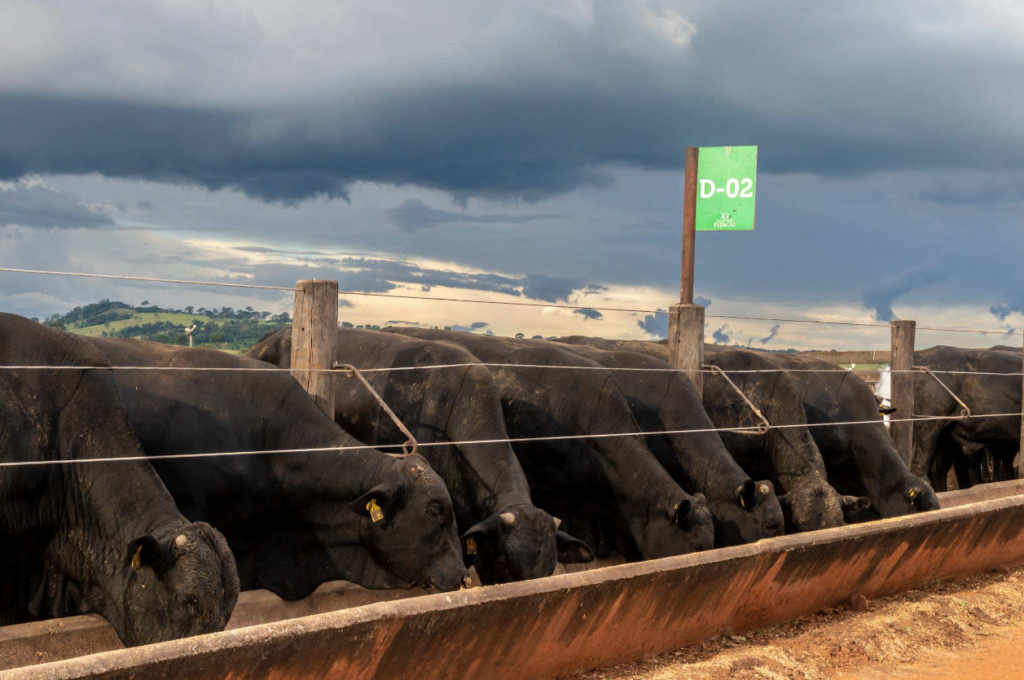
In today’s Beef Buzz, senior farm and ranch broadcaster Ron Hays speaks with Don Close of Terrain, who says the latest USDA Cattle on Feed report contained some encouraging signs for the cattle market, particularly the lower-than-expected placement number.
Placements Below Trade Expectations
Close says he was pleased with the report because placements came in below the average trade estimate, while marketings were generally in line with expectations. “I actually was quite pleased,” Close says. “If you look at both placements and marketings against what the average trade estimates were, specifically the placements, we didn’t place as many cattle as what the market was expecting.”
Close also points out that the marketing figure was historically significant. “It needs to be mentioned that that’s the smallest marketing number we’ve had in the revised series that goes back to 1996,” he says. “So we clearly need to see some additional improvement, but the fact that we’re not placing them as fast will, in time, help us pull that on-feed number down.”
A Bullish Report
Close agrees the report could be viewed as bullish for the cattle market, particularly because of the significant decline in placements. “I agree with that completely,” Close says. “I agree that it is going to be construed as positive to bullish because of the placement number.”
However, Close cautions that the Cattle on Feed report may not be the biggest market-moving factor right now. “With so many moving parts, cattle on feed probably going to be the least dynamic of anything going on right now,” he says.
Heavier Placement Weights Stand Out
One of the biggest surprises for Close was the calculated placement weight. At 766.5 pounds, the average placement weight was 1.5 pounds heavier than a year ago. “That’s actually a pound and a half heavier than we were a year ago,” Close says.
He believes drought conditions and tight cattle supplies are both contributing to the heavier placement weights. “I would say both because of the drought conditions that those cattle have been under, but also that given the tight supply, cattle feeders aren’t having to dip deeper and deeper into the lighter weight categories to find the needed numbers,” he says. “That caught me by surprise.”
Trump Beef Import Proposal Draws Strong Reaction
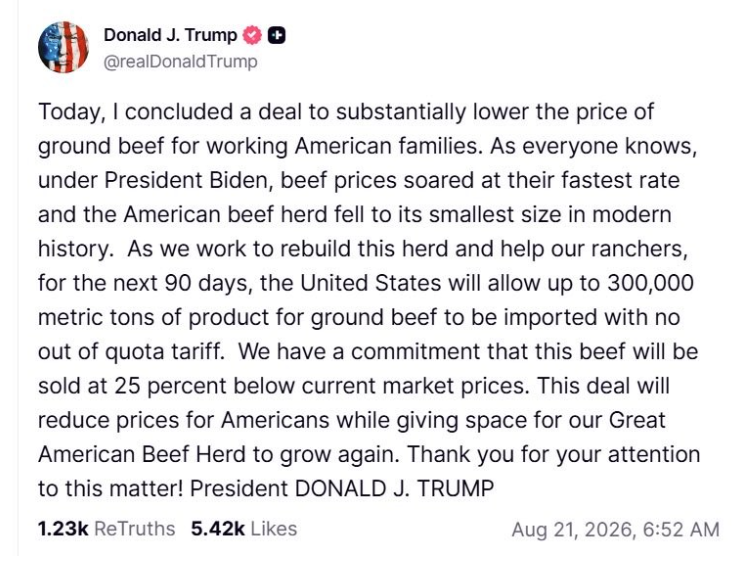
The Cattle on Feed report came the same day President Donald Trump announced a proposal to increase beef imports in an effort to lower beef prices for consumers. The proposal calls for 300,000 metric tons of additional beef imports.
Close says he was surprised by the size of the proposal. “When I saw that headline this morning, I was absolutely dumbfounded,” Close says. “I didn’t know how to- I couldn’t even think my way through how to rationalize the thing. It’s just an absurd, absurd number.”
Close also questions how the proposal would actually work in the marketplace, particularly if the goal is to lower ground beef prices. “If you were to lower the price by 25% for the imported product, how are you going to verify and enforce that?” Close asks.
He says the complexities of producing ground beef make the proposal particularly difficult to implement. “What we need, and then the blending rates of the lean trimmings and the fat trim that we need to blend that out to desirable blend rates for the retail case, I just think this is an incredibly, incredibly short-sighted feature,” Close says.
Ron Hays says the conversation with Close will continue tomorrow as they take a deeper look at the president’s proposal and what it could mean for cattle producers and beef prices.
The Beef Buzz is a regular feature heard on radio stations around the region on the Radio Oklahoma Ag Network and is a regular audio feature found on this website as well. Click on the LISTEN BAR above for today’s show and check out our archives for older Beef Buzz shows covering the gamut of the beef cattle industry today.







