

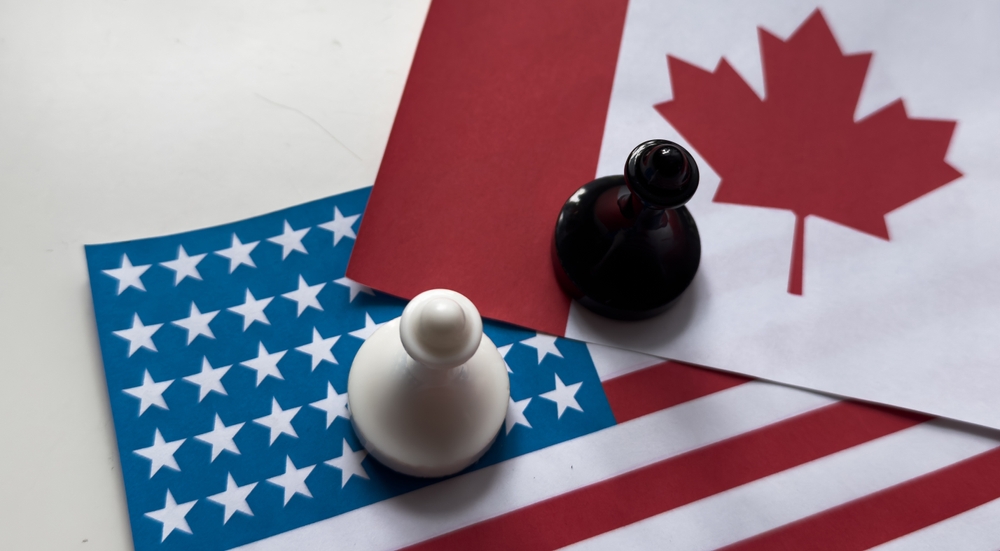
A week of intensive, line-by-line trade negotiations between the United States and Canada ended without an agreement on Friday night, triggering steep 50% U.S. tariffs on roughly $20 billion worth of Canadian goods over the weekend. The new duties took effect at 12:01 a.m. Saturday, prompting Canadian officials to prepare dollar-for-dollar retaliatory measures scheduled to take effect immediately following Labor Day.
With no further talks scheduled, the breakdown marks a significant escalation in North American trade tensions, placing heavy pressure on agriculture, automotive, and manufacturing sectors that rely on cross-border supply chains.
Negotiations Stall Over Automotive, Sovereignty, and Dairy
Negotiation teams in Washington worked throughout the week aiming to craft a compromise that would ease tariffs on Canadian steel and aluminum in exchange for expanded access to Canada’s dairy market and the removal of provincial restrictions on American alcohol.
U.S. Trade Representative Jamieson Greer stated that the U.S. proposed eliminating the 10% softwood lumber tariff, lowering automotive tariffs from 25% to as low as 7%, cutting steel and aluminum duties in half to 25%, and suspending the new 50% Section 338 tariffs on about 5% of Canadian exports.
However, the framework unraveled in the final hours as both sides traded objections. Canadian Prime Minister Mark Carney said last-minute U.S. terms introduced new rules on Canadian auto parts that would render domestic production increasingly uneconomic over time. Carney also pushed back against proposed restrictions on Canada’s ability to negotiate independent trade agreements with other nations, calling the final terms unfair and unreliable.
“You’re at war when you’re attacked, and we got attacked,” Carney said during a press conference on Saturday.
American officials countered that Canadian negotiators walked back previous commitments and introduced late demands. Greer said the administration is moving forward with measures to respond to any Canadian retaliation.
Agriculture at the Center of Dispute
Agricultural trade policy, particularly Canada’s supply-management system for dairy, served as a primary friction point. U.S. negotiators presented a list of 13 demands that included dismantling Canada’s dairy supply management structure entirely.
Earlier in the week, President Donald Trump expressed optimism about securing concessions for American producers. “Our farmers were paying tremendous tariffs into Canada and those tariffs are going to be eviscerated, down to zero,” Trump said. Following the collapse of talks, Trump posted on Truth Social, writing, “Canada wants the benefits of being a State, without being one!!! They have also charged our great farmers, for many years, massive amounts of Tariffs. No more!”
Last year, U.S. dairy exports to Canada totaled $1.3 billion, while Canadian dairy processors shipped $585 million in dairy products south of the border.
Supply Chain Uncertainty and Section 338 Authority
The newly enacted duties stem from the White House invoking Section 338 of the Tariff Act of 1930—a Depression-era statute that allows the president to impose tariffs of up to 50% on countries deemed to place discriminatory burdens on U.S. commerce. Unlike other trade mechanisms, Section 338 does not require an administrative investigation or specify an expiration date.
While the tariffs were initially aimed at dairy quotas, alcohol restrictions, and motor vehicles, the final list covers an extensive range of products, including agricultural seeds, honey, live animals, floriculture products, flower bulbs, and lumber. Greer noted those items would have been exempted had a deal been completed Friday.
U.S. and Canadian agricultural groups are closely monitoring the fallout. Michael Harvey, executive director of the Canadian Agri-Food Trade Alliance, warned that unilateral tariffs disrupt deeply integrated markets.
“American farmers and consumers benefit from the integrated supply chains built up with Canada over the years, and it is in their interest to get back to stability in the trading relationship,” Harvey said.
As Canadian retaliatory tariffs loom, commercial importers on both sides of the border face increased costs, creating heightened uncertainty around the long-term stability of North American agricultural trade and the future of the United States-Mexico-Canada Agreement (USMCA).