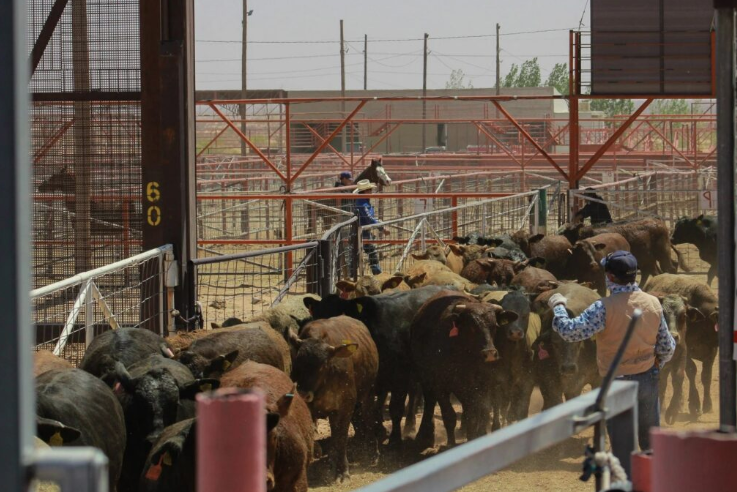
As Mexican live cattle begin crossing into the United States through Douglas, Arizona, after months of enhanced New World screwworm prevention measures, USDA is outlining the animal health protocol cattle must complete before entering the country.
The details were provided by USDA Acting Chief Veterinary Officer Alan Huddleston and Rod Bain of the U.S. Department of Agriculture. Huddleston explained the process during the first cattle crossing earlier this week, detailing a multi-step system designed to detect and prevent New World screwworm from entering the United States.
Huddleston said the protocol consists of three distinct stages, with cattle undergoing inspections, treatments, identification checks and certification before they are cleared to cross the border. “The protocol has three different phases, stages that we go through,” Huddleston said.
The process begins in Mexico at either an export gathering center or the farm of origin. From there, cattle move to a Mexican pre-export facility before undergoing a final inspection at a USDA Animal and Plant Health Inspection Service facility before entering the United States.
First Stage Begins at the Farm of Origin
The first stage takes place at the export gathering center or farm of origin in Mexico.
Within 30 days of movement, an accredited veterinarian inspects the cattle to ensure they are not showing signs of disease, including New World screwworm infestation.
Huddleston said cattle also receive multiple treatments before they are moved toward the border. “Within about seven to 14 days prior to moving from that export gathering center, the animals receive a tick treatment,” he said. “And three to five days before movement, they receive treatment with a product that actually treats and prevents New World screwworm.”
Once those requirements are completed, the cattle receive an international health certificate allowing them to advance to the next stage of the process.
Second Inspection Takes Place Before Export
The second stage occurs at a Mexican pre-export facility, or PIF. Huddleston said cattle arrive there within 24 hours of crossing the border.
At that point, an official veterinarian with Mexico’s Department of Agriculture conducts another inspection to ensure the cattle are free of signs of New World screwworm. “They also share some information, especially with animal identification, because every animal that’s coming across the border has to meet official identification requirements,” Huddleston said.
That identification is critical because it allows cattle to be traced back to their farm of origin if necessary.
Detector Dogs and USDA Inspection
Before cattle reach the USDA inspection facility, they pass through another layer of protection.
Huddleston said detector dog teams are used to identify cattle that could potentially have wounds or screwworm larvae. “The animals move past detector dog teams, where they are scenting the animals to see if there is any suspicion of wounds and/or larva for New World screwworm,” he said. If a dog detects a potential problem, operations can immediately be stopped so the animal can be evaluated.
At the USDA inspection facility, an APHIS veterinarian or animal health technician conducts another physical inspection of the cattle. “We also do check that their official identification is in place and readable in an electronic format, so that we can do a traceback if and as necessary,” Huddleston said.
Final Treatment Before Entering the U.S.
The cattle then undergo another treatment designed to address New World screwworm and other potential pests before crossing into the United States.
Huddleston said the cattle “swim through a vat of a treatment for New World screwworm and/or any other kind of critter that might be hanging out on their hide.” Afterward, the cattle are allowed to dry before they are moved into the United States.
The layered protocol is designed to provide multiple opportunities to identify potential New World screwworm infestations, while also ensuring cattle are treated and individually identified before entering the U.S. livestock supply chain.