
Neither Government Nor Wishful Thinking Will Change the Rules
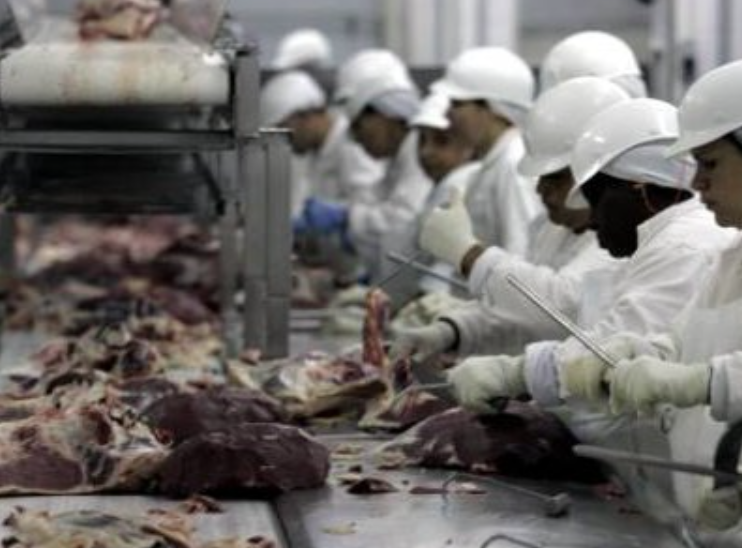
| The following Op-Ed is offered by Steve Dittmer, President of the Agribusiness Freedom Foundation: It’s going to be up to common sense, free market cattlemen thinkers to head off real disaster for our industry from the ignorant, uninformed, naïve, uneconomic “solutions” being bandied about. Glenn Beck told President Trump recently that he needed to break up the meat processing “cartel,” to “allow” ranchers and farmers to process their own cattle. The “Vince Show” replayed those clips, marveling that it took Beck to “inform” Trump about what was “needed.” There was no mention of “who” Trump had been listening to or that the opposite views forwarded by all the mainstream farm and ranch groups have seemingly been ignored. There have been rumbles from the Trump administration and directives to investigate the big meat packers on anti-trust grounds. The meat industry is very complex and dispersed throughout the country. But the basics of what the industry accomplishes is very simple. The reason we have big meat plants is the same reason we have big auto plants. Building complex things like an automobile with hundreds of parts is achievable on a less costly basis with high and consistent quality when done in one location, one series of assembly lines and trained workers rather than building them one at a time “by hand,” with fewer workers and dispersed locations. Even Ferraris and Lamborghinis have more than one or a handful of workers, over a longer period of time building high quality vehicles that cost $200,000 to a million dollars a copy. They also build and sell very few cars a year, a few thousand of the millions of cars sold every year, because the great majority of people can’t afford such a car. We doubt those with such a naïve opinion of the most economic ways of serving up millions of pounds of meat every day have ever been in a big plant. The plants are a beehive of activity producing hundreds of pieces of similar, consistent, high quality items per carcass under advanced food safety standards, preservation standards and disperse them daily over 50 states and dozens of foreign countries. Big meat plants disassemble carcasses efficiently, cost effectively and quickly but it is the ability to provide items that American don’t value to customers in other countries quickly and at scale, where big plants excel and small plants struggle or fail. Variety meats do not have the same shelf life and the same local demand so assembling big lots quickly is essential to the value derived. Then there is the efficient collection of other substances for dozens of other uses that are only economic in large quantities. Those kinds of factors are some of the reasons big plants produce carcasses and turn each one into hundreds of pieces of meat and byproducts quickly, so that the cost of production is literally hundreds of dollars less/head for big than small plants. The advantage was $250/head a half dozen years ago. With the higher prices for cattle and meat these days, it has to be hundreds more now. Economies of scale are very real. Idealists who would like to have every rancher and farmer harvest their own production want to repeal the laws of economics. The laws of economics are immutable. Good operators are able to improve processes to make better use of the laws of economics but they cannot repeal them. Government can interfere but they cannot repeal them. Small processing plants already exist. There are 600 or more plants in the country. There are no rules telling ranchers and farmers they can’t harvest their own animals for their own use. But not everyone has the desire, facilities or ability to do so even for themselves. Shooting and skinning rabbits or squirrels is one thing. But we defy you to find farm-raised kids whose fondest memories were plucking feathers off steaming chicken carcasses. The difference is the ability to sell meat for consumption by the public without state or federal inspection. Food safety is not a luxury or nice perk. It is a basic, absolute qualification for doing business. The confidence in the safety of any product is essential to the functioning of the marketing of that product. Lose that confidence and an industry has nothing. Relying on relative amateurs to strictly observe all food safety practices at every step, guaranteeing sanitation and temperature controls is unrealistic. Training consumers how not to thaw or freeze or prep food is a herculean task itself. It takes weeks to train a worker on the assembly line to correctly, consistently and safely handle the production of a particular cut. Even a big plant like JBS in Greeley has only two or three days harvest of cold storage capacity. Thousands of boxes have to move quickly. As Kenny Monfort told us on a tour years ago, the most important room in the plant was the room with dozens of sales people moving meat. There are more branded lines marketed by smaller ranch operations themselves these days than ever before. It’s not like there are laws preventing that. We’re sure there are some regulations that might not be needed today. But the key is this. The price point of those products is much higher than those in your local grocery chain, especially with the featuring figured into the equation. Not everyone can afford to pay 25 or 50 percent more for value they perceive in supporting smaller brands providing different qualities and attributes. The general public is not willing or able to pay for those attributes on a regular basis. But there is a need those brands serve and that is what the free market provides. Any smaller branded operation has the major problem of finding a profitable market for variety meats, less popular roasts, by-products and hides. People use the term “free market,“ forgetting what it really means. It means the voluntary exchanging of value (money) for a product one desires. It also means the freedom for someone to produce that product or service. Regulation should only be used to protect the safety of one’s person and prevent fraud. But government cannot repeal the rules of economics. Those smaller plants and brands charge more because they have to, to cover higher costs. Mayor Zoran Mamdani of New York City, who wants to run government grocery stores at a 30 percent discount to regular groceries, has already said his administration will likely have to provide subsidies to grocery stores and bodegas impacted by competition from government-subsidized grocery stores. Taxpayers will have to subsidize the government-subsidized groceries at a loss and then have to pay for subsidies to the groceries harmed by subsidized government stores undercutting them. How is that efficient? Why is USDA putting together subsidies for smaller processing plants? Because they cannot compete with the big plants on an economic basis. Should bigger plants have to compete against taxpayer subsidized plants? In certain geographic areas not economically served by the big plants, there might be justification. Have you priced getting an animal processed at a local locker plant lately? We promise you it will cost a lot more than the average cost per head at a big plant. And the wait for a slot is likely weeks or months. We have the market for beef today because of the demand the whole production chain has built for a high quality, consistent product. But that demand is a function of perceived value and availability. Price, even at the high quality and consistency readily available today, is a major topic of consumers today as it is. Arbitrarily destroying the infrastructure that has evolved through economic factors over decades to provide the product people want at a reasonable price is crucial to the industry’s existence. Destroy that, and you’ve destroyed the economic underpinning of agricultural America. This op-ed is from the Agribusiness Freedom Foundation, Steve Dittmer President. |