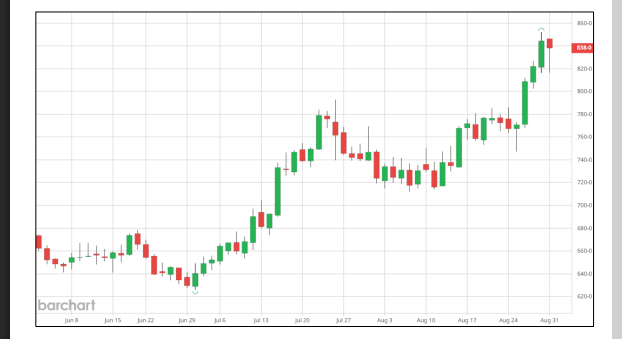
In his latest Newsletter, OSU Crop marketing specialist, Todd Hubbs writes that last week saw a massive rally in grain prices as production issues in the U.S. and geopolitical uncertainty drove futures prices to contract highs. The strength in prices is a welcome occurrence given the bearish sentiment over the past couple of years. Substantial uncertainty remains on outcomes for summer crops domestically and resolution to conflicts around the globe. Expect large price swings as we move into the fall, particularly around USDA reports.
Wheat Market Outlook: The wheat complex moved sharply higher last week. December HRW future price closed at $8.44 on Friday. HRW futures prices climbed over 70 cents higher for the week. Monday saw prices fall back to $8.38 per bushel. Basis sits at -45 to -55 across the state. The potential for holding or follow through on these price levels remains dependent on developments in the Black Sea and corn production prospects in the U.S. Potential impacts from the major El Nino event also sits on the horizon as potential market movers.
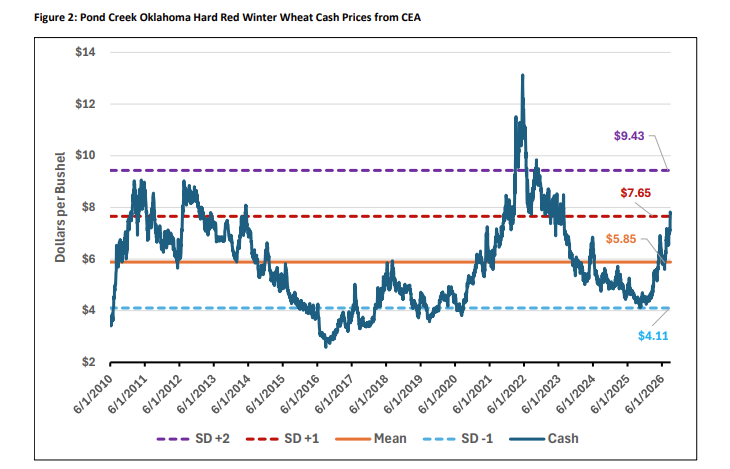
Cash prices in Oklahoma hit levels not seen since the original onset of the conflict between Ukraine and Russia. On Friday, HRW cash prices came in at $7.82 only to fall to $7.75 on Monday. Cash prices eclipsing the one standard deviation level occurred only a few times over the period. The highest price movement occurred at the onset of the Black Sea conflict in 2022. The Russia wheat export ban in 2010 and the major U.S. drought in 2012 constitutes the other incidences. The current price rally takes on aspects of both the initial Black Sea conflict and the drought incidence of 2012. Potential for prices to move higher seems limited by the uncertainties surrounding the conflict and potential for the summer crops here in the U.S. Price drivers remain unpredictable given the lack of compromise in the Black Sea. Russia wheat exports dropped fifty percent below last year’s levels in August with similar expectations for September. Ukraine exports tracked thirty percent lower in early August. News over the weekend indicated Turkey pushed for a Black Sea shipping corridor to resurrect grain flows out of the region. Success of such an initiative remains suspect. Despite the slow pace of Black Sea exports, U.S. wheat exports remain behind the pace to meet USDA’s forecast since port prices remain elevated above major competitors.
Wheat export inspections through August 27 totaled 176 million bushels, down from 245 million bushels at this point last year. Wheat inspections averaged approximately 16 million bushels per week over the last month with hard red spring wheat taking up a considerable portion of the exports. Total commitments thus far in the marketing year for all wheat equals 304 million bushels. At 40 percent of the USDA forecast, wheat total commitments sit 7 percent below the five-year average for this point in the marketing year. HRW total commitments in the 2026-27 marketing year sit at 69 million, down from 185 million bushels at this time last year. New sales need to equal 3.5 million bushels a week to hit USDA’s forecast of 210 million bushels. Over the last month, HRW net sales averaged 1.7 million bushels per week. While wheat exports picked up marginally over the last few weeks, U.S. exports remain subdued given the supplies carried into this marketing year and the high prices.
Corn Market Outlook: December corn future’s price gained 26 cents last week to close at $5.31 on Friday. Monday saw December futures move higher to close at $5.38 as the market waited for the next iteration of the crop conditions report. Cash prices in Oklahoma ranged between $4.63 – $4.68. Corn production potential remains the primary driver with the Pro Farmer crop tour yield projection of 173.2 bushels per acre, putting bullish sentiment in the market. Demand remains robust with exports and domestic usage continuing to support the USDA’s projections.
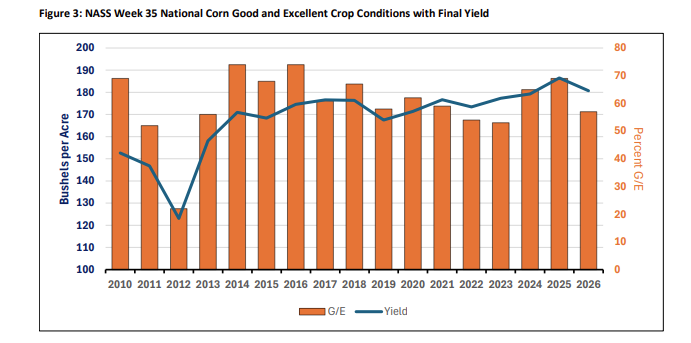
Corn crop conditions deteriorated over the last month and provided support for fading yield potential this year. Since the middle of July, good and excellent conditions have fallen ten percent to yesterday’s 57 percent. Good and excellent crop conditions reflect yield levels last seen in 2021 and 2022. It is unlikely that USDA will lower corn yield by 7.5 bushels per acre to match Pro Farmer’s total in September. National corn yield may move toward that reality as numerous reports of tip back and spotty yield potential emerge from the western Corn Belt. My forecast sits closer to USDA’s August survey level of 180.7. Expect considerable speculation around the yield over the next couple of months with the potential for substantial price volatility around USDA crop production reports.
Demand overall continues to show support for corn prices as ethanol usage looks set to come in near USDA’s estimate for 2025-26. Ethanol crushing margins remain strong under the current biofuel policy stack of tax credits. Ethanol exports will set a record high for the 2025-26 marketing year. As the calendar turns to the next marketing year, corn exports remain a bright spot.
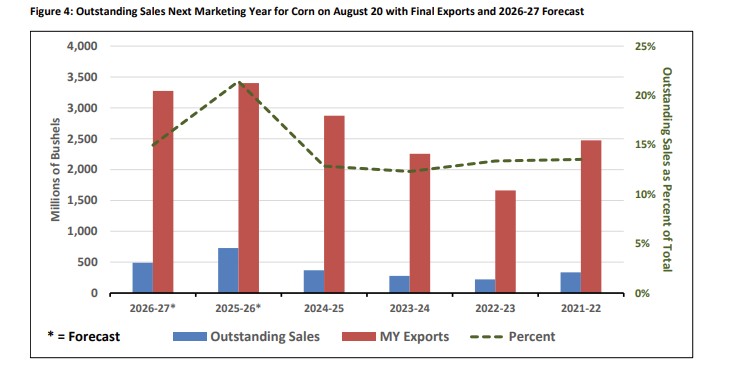
Corn export inspections through August 27 came in at 3.3 billion bushels for the 2025-26 marketing year and remain on pace to hit USDA’s 3.4-billion-bushel estimate. Export inspections tend to run slightly lower than final Census export data. Outstanding sales for next marketing year sit at 490 million bushels. At fifteen percent of the USDA’s export forecast, next marketing year sales are at a level that matches typical levels over the last five marketing years. With U.S. Gulf export prices at competitive levels with major exporters despite the recent price rally, corn exports should remain robust unless production levels deteriorate significantly.