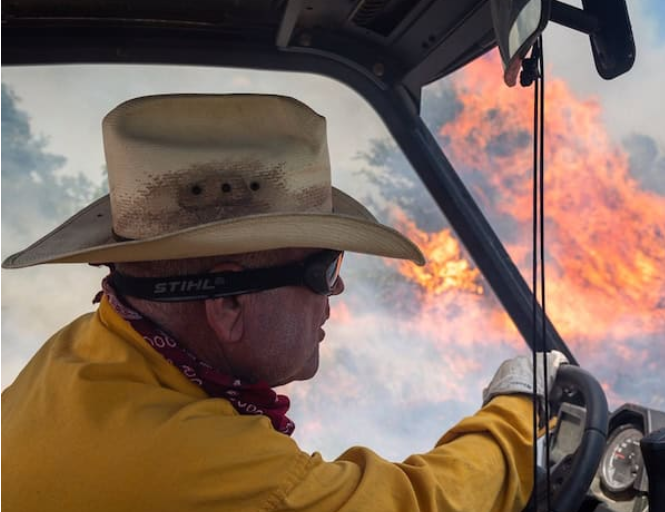
The Coffey family models how to keep prairies healthy and ranches productive by using prescribed fire to beat back encroaching cedar trees. Chuck Coffey’s lifelong mission is to restore his grasslands by getting rid of cedar trees. His favorite tool? Fire.
When Chuck Coffey tells you about his family’s award-winning ranching operation in southern Oklahoma, he begins with the grass.
“It’s your plants that support everything, including the animals,” says Chuck. “Grass comes first, cows second.”
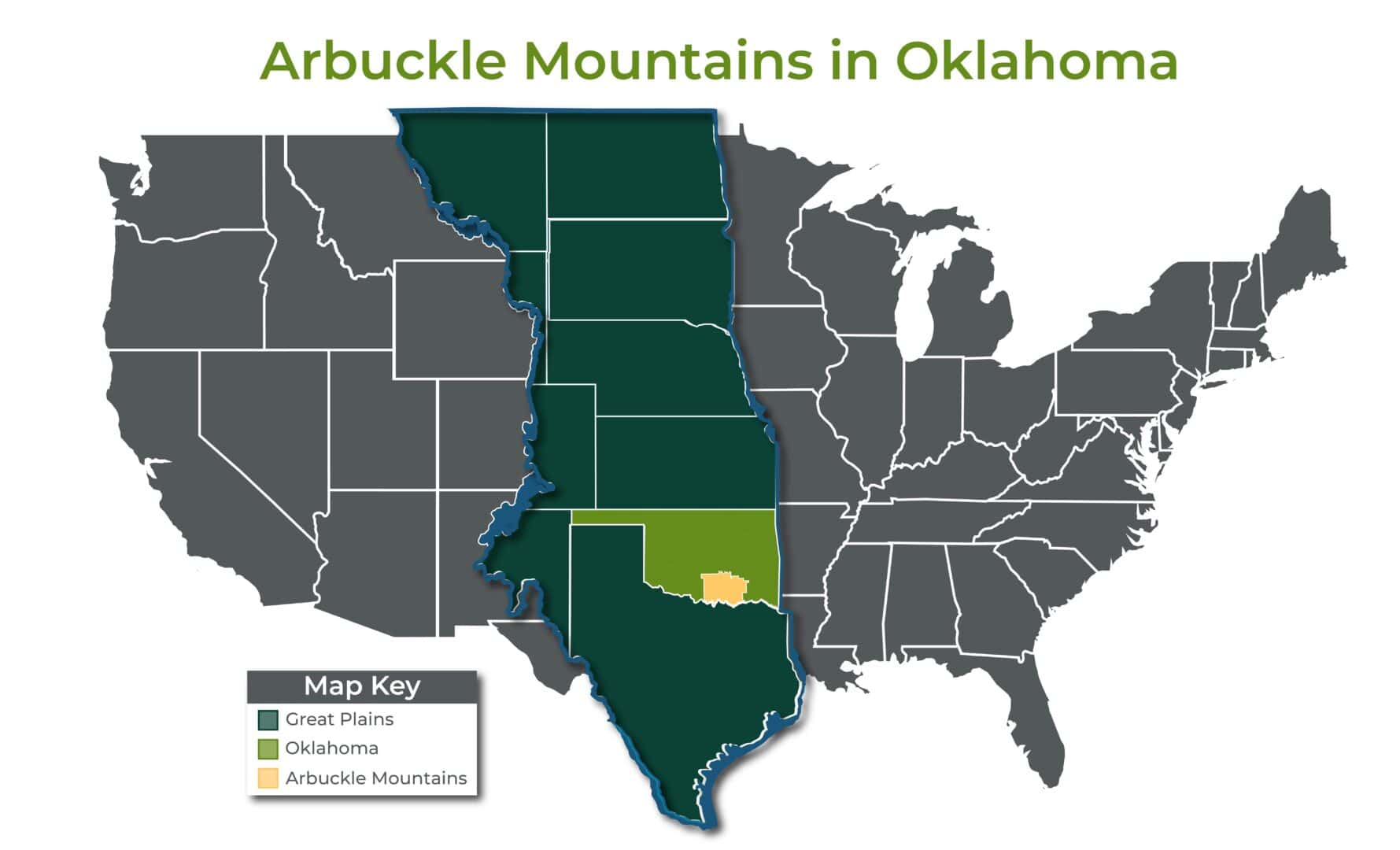
The biggest obstacle to growing grass—and making a profit—on the Coffey’s 30,000 acres of owned and leased land in the Arbuckle Mountains is the spread of eastern redcedar.
Woody species like eastern redcedar have taken over much of America’s grasslands in the past century due to fire suppression.
Along with his wife, Ruth, his two sons, Aaron and Seth, and his daughter, Sarah, the Coffeys have succeeded in reclaiming their prairie by using mechanical thinning, herbicide, and plenty of prescribed fire.
“The Coffeys are one of the culture drivers when it comes to prescribed burns. They’ve been fighting the good fight against cedar trees for a long time,” says Tanner Swank, grassland biome program manager for Pheasants Forever and Working Lands for Wildlife.
Cedar Trees Aren’t Meant For Grasslands
Dense stands of cedar reduce the amount of forage available to livestock. These trees crowd out native grasses and wildflowers—bad news for ranchers’ bottom lines.
“Nothing will grow under them because of the thick needle duff. Plus, that duff really causes problems with wildfires because it will burn for weeks without going out,” says Seth Coffey, who is also president of the Arbuckle Rangeland Restoration Association.
Another downside of cedars taking over prairies is that they steal water from rangelands. They suck up precious groundwater with their roots, and their leaves capture rain before it can recharge groundwater.
“Up to 70% of raindrops that hit a cedar tree stay suspended in the leaves and evaporate into the air, which means it never makes it to our streams or aquifer,” Chuck says.
Dense stands of redcedar also create pest problems.
“The more cedars you have, the more parasites you have, including ticks, horseflies, mosquitoes. You really notice it riding around the ranch—you never see a horsefly riding in the open range,” Seth notes.
Trifecta Of Fire, Cutting, Herbicides Reclaims Pastures
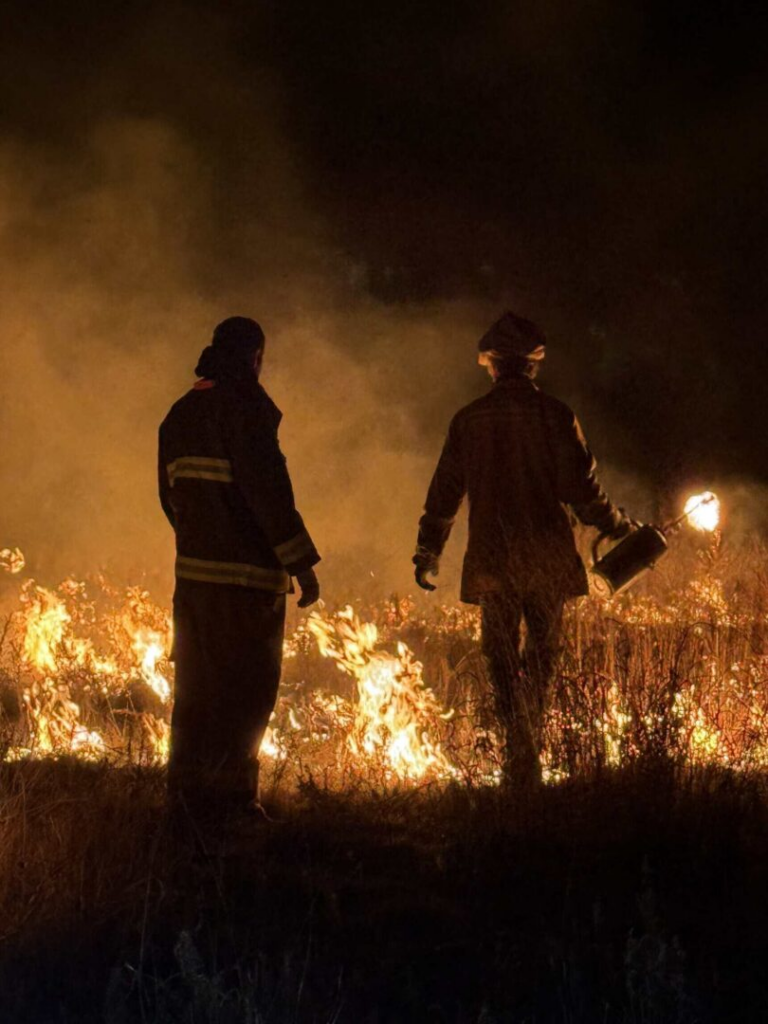
In 2010, the Coffeys inherited part of their ranch from Ruth’s father. Tree canopy cover was 60% in many places on the inherited land. They got to work cutting, burning and spraying cedars to reclaim prairie pastures for their livestock.
After spending hundreds of thousands of dollars—and bucket loads of sweat—on brush management, tree cover on that part of the ranch is now just 17%. This investment has paid off. Fewer cedars means more forage for their cattle, and therefore more profit.
“It’s cheaper to reclaim an acre than it is to buy an acre,” Chuck says. “But really, it’s about restoring the integrity of the rangelands we have in southern Oklahoma.”
Their success restoring grasslands stems from combining a trio of techniques: mechanical removal, prescribed fire, and targeted herbicide treatments.
“Fire helps maintain grasslands,” Chuck says. “The three together help reclaim.”
Both Chuck and Seth are trained ecologists who take a scientific approach to rangeland management. They use bulldozers to remove cedars in heavily infested areas, followed by prescribed burns that eliminate remaining brush and reinvigorate perennial plants. Then they follow up with herbicide applications to nix any seeds or seedlings that survived the fire.
“Even though fire is a big part of it, the real kicker is the constant need for a variety of brush management practices, especially in an environment that gets soaked by 40 inches of rain each year,” Swank explains.
Burning Grasslands Benefits Ranchers
Fire does more than simply keep cedars at bay—it also revitalizes prairie plants and soils. This makes ranches more productive and profitable.
Swank believes that the Coffeys success in restoring their grasslands conveys a simple and powerful message to other Great Plains landowners: “Burn as much as you can whenever you can.”
Each year, the Coffeys and neighboring landowners work together to burn tens of thousands of acres in southern Oklahoma. In 2025, for example, they used prescribed fire on 22,000 acres.
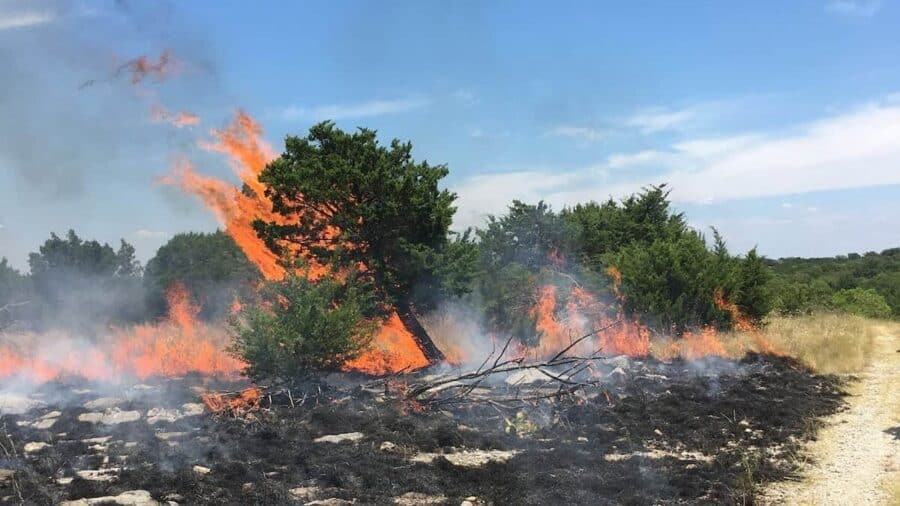
The Coffeys helped start the Arbuckle Rangeland Restoration Association, and both Seth and Aaron Coffey are officers. The association provides the know-how to plan and implement safe, effective prescribed fires that keep prairies healthy.
Swank says that local burn associations are a huge help for landowners, as well as support from agencies like the USDA Natural Resources Conservation Program.
“NRCS Working Lands for Wildlife provides boots on the ground—people like me who give technical assistance and sweat equity during burns,” Swank says. “We also provide landowners with training and financial support for brush management.”
Swank has a family ranch 20 miles east of the Coffeys. He’s noticed that more landowners in the region are using prescribed fire as a tool to make their land healthier, more profitable, and more resistant to devastating wildfires.
“It’s been exciting to see neighbors wanting to get involved, and neighbors burning together. Implementing fire has never been more popular down here,” Swank says.
Prescribed Fire Reduces Wildfire Risk
The Coffeys believe that well-planned prescribed fires are one of the most effective ways to reduce risk from catastrophic wildfires. Carefully planned burns reduce the amount of dangerous fuel available during wildfire season.
“Eastern redcedars are taking over so much land every day, and it is increasing the wildland fire risk across the state,” Seth says.
Prescribed fire is especially important as hotter and larger wildfires are sweeping across the Great Plains. In March 2025, Oklahoma experienced one of the worst wildlife outbreaks in its history—30 different fires burned in 44 counties, scorching 300 homes and causing four fatalities. Further north in March 2026, the worst wildfire in Nebraska’s history scorched nearly a half-million acres, contributing to the state’s record-breaking fire season.
The Coffeys, like other landowners in the region, conduct many of their prescribed burns before Oklahoma’s strong spring winds arrive. This makes prescribed fires safer and allows landowners and fire departments to better prepare for wildfire season.
The strategy works. On several occasions the Coffeys’ already-burned pastures have stopped wildfires in their tracks.
“When wildfire does happen, we’ve already treated much of the landscape, so we’re dealing with it on our terms,” Seth explains.
Seth says the fire departments are “huge fans” of ranchers’ prescribed burns.
“Ag producers are typically burning problem areas that have a significant wildland fuel risk. For their ranch, they would rather choose the day it burns and make sure they’ve got the equipment, the people, and the local volunteer fire departments ready for it,” says Seth Coffey.
The Next Generation: Inheriting Cedar-Free Grasslands
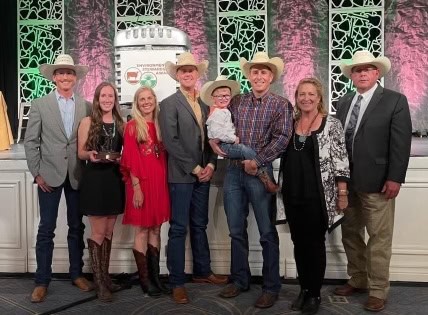
The Coffeys impressive land stewardship practices have earned them awards from the National Cattlemen’s Beef Association, as well as the Leopold Conservation Award for Oklahoma.
“We really value land, livestock and legacy. Those are our three most important words for the Double C Cattle Company,” said Aaron Coffey in this video by the National Cattlemen’s Beef Association.
The family has utilized USDA Farm Bill conservation programs to help cost-share many of their grassland conservation efforts. They put in place innovative grazing strategies that foster healthy perennial grasses.
The Coffeys also developed 20 solar wells, which improves water quality and quantity across their landscape. This buffers their cattle herd during droughts.
“What they’re doing out here is for the betterment of the land,” said Travis Jones, resource conservationist for the Oklahoma USDA Natural Resources Conservation Service in this video by the Sand County Foundation.
Chuck says that cattle production and wildlife conservation go hand in hand. “We have the philosophy that if it’s good for wildlife, it’s also really good for cattle.”
Their ranch is home to white-tailed deer, wild turkey, quail, jackrabbits, raptors, songbirds, and—one of Chuck’s favorite residents—the roadrunner.
Ruth’s and Chuck’s grandchildren are the sixth generation of ranchers in the Coffey family. They are teaching them to continue the family’s tradition of land stewardship so they will inherit healthy, productive grasslands—not cedar forests.
“My primary goal is to see every cedar tree die before I go,” Chuck says. “Give it another ten years, and we won’t have a single cedar tree on the property.”