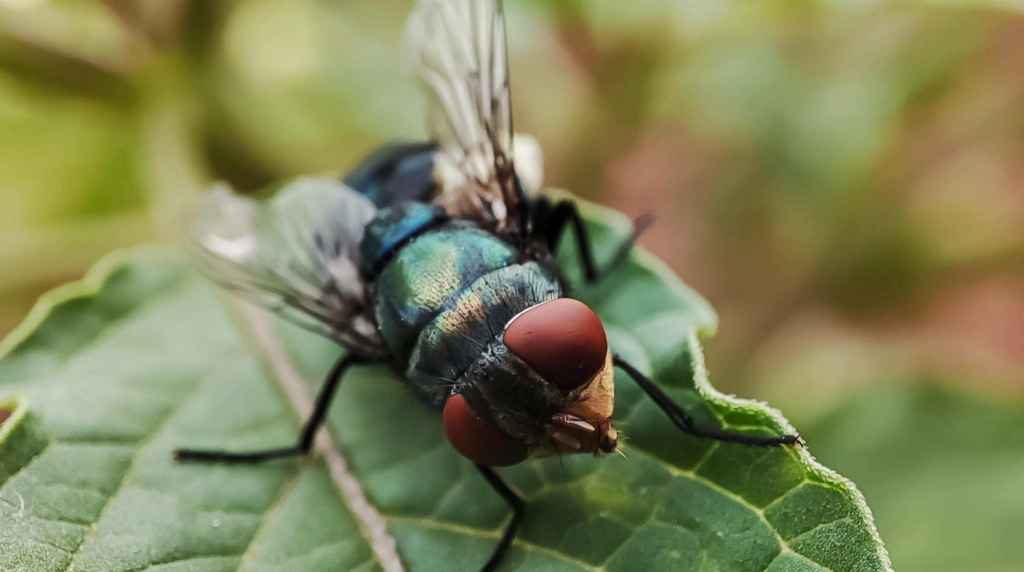
In today’s Beef Buzz, senior farm and ranch broadcaster Ron Hays features comments from Dr. Jonathan Cammack, entomologist with Oklahoma State University Extension, about the latest developments surrounding New World screwworm and what livestock producers can do to help protect their animals as the threat continues.
Sterile Flies Key to Screwworm Eradication
Cammack discussed New World screwworm during OSU Extension’s Ranchers Thursday Lunchtime Series, looking back at how the United States successfully pushed the pest out of the country beginning in the 1950s.
The eradication effort started in Florida before moving west across the United States, into Texas, Oklahoma and the Southwest, and eventually through Mexico and Central America toward the permanent quarantine zone in Panama.
Cammack says the development of sterile flies was critical to that success. “This program started over here in the southeastern United States, so it started in Florida in the late 1950s, and then moved west across the United States into Texas, Oklahoma, and the Southwest, and then moved through Mexico, Central America, down to the permanent quarantine zone in the early 2000s,” Cammack said.
Today, Panama remains the primary location producing sterilized flies at scale, while a facility in Mexico came online in July and continues working to refine its production process.
Controlling Other Pests Can Help Prevent Screwworm
While New World screwworm may seem like a powerful pest on its own, Cammack says livestock producers can reduce opportunities for infestation by controlling other insects that cause wounds. “One thing that I think might come as a surprise to everyone on the call, I know it certainly did to me when I was pulling together this information over the past couple of weeks, is that really screwworm management starts with managing a lot of the other pest arthropods that we deal with in livestock production,” Cammack said.
Blood-feeding pests such as horn flies, horse flies and ticks can create wounds that provide potential sites for screwworm infestations.
U.S. Cases Remain Below 50
Cammack says the number of confirmed New World screwworm cases in the United States remains relatively low three months after the parasite was first discovered. “We’re still at less than 50 cases,” he said.
Currently, there are three active infestations and 45 inactive infestations. Most of the cases have involved cattle and sheep, which together account for just over 79% of the cases reported in the United States to date. The number of cases has also declined considerably since June. There were 30 cases reported in June, followed by 14 in July and just four in August.
Federal Response and Sterile Fly Releases
Cammack says several factors may be contributing to the decline in cases, including a significant response from federal and state agencies. “This is a big deal to the federal government, so there was a huge response from ARS and APHIS and a lot of federal and then even at the state level, Texas Animal Health Commission agencies and others that are working to get this under control,” Cammack said.
That response has included extensive trapping and coordinated releases of sterile flies across South Texas. “There’s been a lot of trapping, and then there’s been that very kind of coordinated release of sterilized flies across South Texas to really kind of interfere with any wild flies that might be coming in,” he said.
Cammack also noted that USDA and the Texas Animal Health Commission have been working directly with livestock producers. “They’re going to be in the area trapping, looking for screwworms, and also reiterating to livestock producers across South Texas the importance of checking animals,” he said.
Dry Weather Helping — For Now
Weather conditions may also be playing a role in the reduced number of cases. “We also have a nice hot, dry summer kind of in our favor at the moment,” Cammack said.
He explained that many insects are positively correlated with humidity and rainfall, and historical screwworm outbreaks have shown a similar pattern. “The wetter the summer was, the more likely or the higher number of cases of screwworms we saw,” he said.
However, Cammack cautions that producers should not become complacent as the weather begins to change.
Fall Weather Could Bring Increased Risk
With September arriving and hurricane season underway, Cammack says conditions could become more favorable for screwworm activity. “Here we are at the beginning of September and the beginning of hurricane season, and our first tropical storm hit kind of the Texas-Louisiana border.” he said.
“So again, this is a time not to be complacent,” Cammack said. “We’re probably going to continue to see an uptick in cases as weather patterns change, and it starts to cool off just a little bit, and we start to get those fall rains coming in from hurricanes and tropical storms.”
The Beef Buzz is a regular feature heard on radio stations around the region on the Radio Oklahoma Ag Network and is a regular audio feature found on this website as well. Click on the LISTEN BAR above for today’s show and check out our archives for older Beef Buzz shows covering the gamut of the beef cattle industry today.