

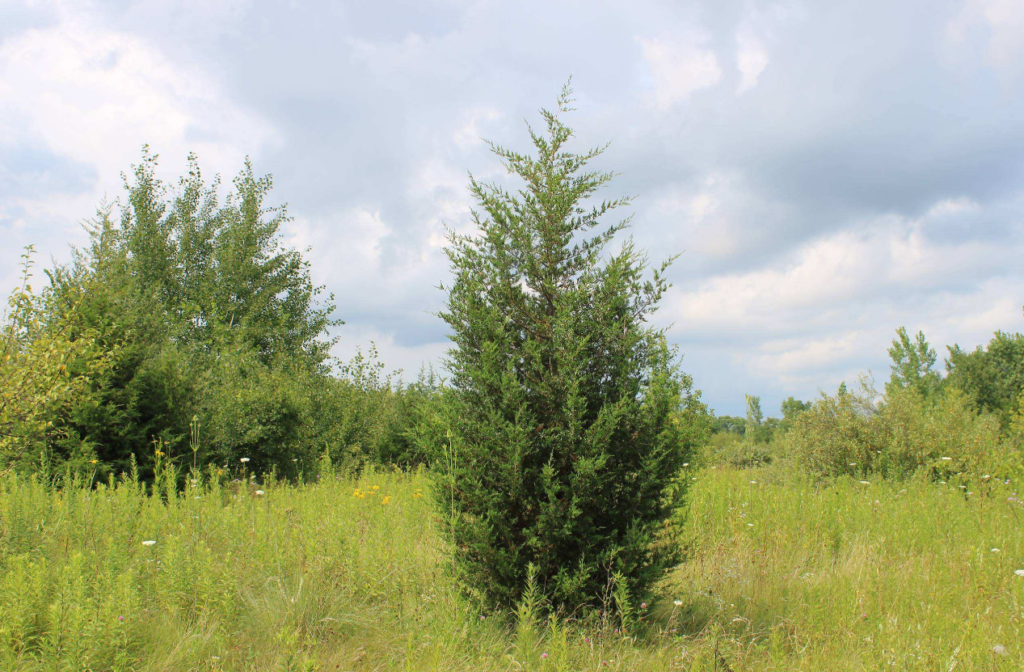
Controlling the encroachment of eastern redcedar trees is critically important. Soil water content is lower where redcedar trees exist. These trees have a huge negative impact on grazing ecosystems. As covered last week, the eastern redcedar tree uses water every day, year-round, sapping soil water content at a rate between 0.5 – 21 gallons/day. When redcedar trees are not controlled, they thrive in a wide variety of soils, have a high tolerance to drought, are highly resilient, and increase in biomass quickly. These trees are invading prairies, shrublands, riparian zones, forests and introduced pastures. These trees increase the risk and intensity of wildfires!
Best Management Practices for Controlling Eastern Redcedar
- Prescribed Fire. Burning of pastures and rangeland is the most effective and economical tool for controlling redcedar and maintaining healthy ecosystems. The suppression of fire has led to more redcedar encroachment. Fire kills cedar trees and helps suppress other woody plants. Fire improves soil, water and wildlife habitat. Prescribed burns are recommended every three years.
- Mechanical Control. If fire isn’t possible or infestations are too numerous and large, mechanical control can be effective. For smaller trees and lighter infestations, use hand tools, chain saws and brush cutters. For heavy infestations of large trees, a ball and chain pulled by bulldozers or hydraulic saws. Follow mechanical control with prescribed fire to prevent reinvasion by seedlings and seeds. Beware, mechanical methods of control are more expensive (in both time and money) and don’t provide the ecosystem benefits of fire.
- Grazing Management. Proper grazing allows enough dormant grass to serve as fuel for an effective prescribed fire. If redcedar is not controlled, forage production declines, reducing grazing capacity and ultimately reducing cattle inventory.
Cattle producers and landowners should assess land and pastures to take inventory of the number and size of redcedar trees present. Being proactive in redcedar control practices pays dividends and offers an excellent return on investment. Ignoring a redcedar tree problem can permit invasions and growth to get out of control rapidly. More information on prescribed fires and redcedar control is available in the material referenced below.
Reference:
https://extension.okstate.edu/fact-sheets/best-management-practices-for-controlling-eastern-redcedar







