Authors: Wes Brondos, James Mingie, and Sreedhar Upendram write in Southern Ag Today: Drinking water systems across the South face increasing repair, replacement, and upgrade costs. State Revolving Funds (SRFs) are an important source of affordable financing. Under the Drinking Water State Revolving Fund (DWSRF), the U.S. Environmental Protection Agency (EPA) provides capitalization grants to states, which combine federal and state matching funds to provide loans and other assistance to eligible water systems. Since states have flexibility in setting loan terms, the rate a community pays can vary substantially across state lines.
A comparison of nine Southern states – Alabama, Florida, Georgia, Kentucky, Louisiana, Mississippi, North Carolina, South Carolina, and Tennessee – shows that DWSRF rates differ both in level and structure. Figure 1 summarizes the range between standard and most-discounted published rates. Some states rely mainly on a single benchmark or formula, while others use multiple discount tiers based on household income, fiscal capacity, or other affordability measures. Consequently, a state’s standard rate may not reflect the financing available to a lower-income or financially constrained community.
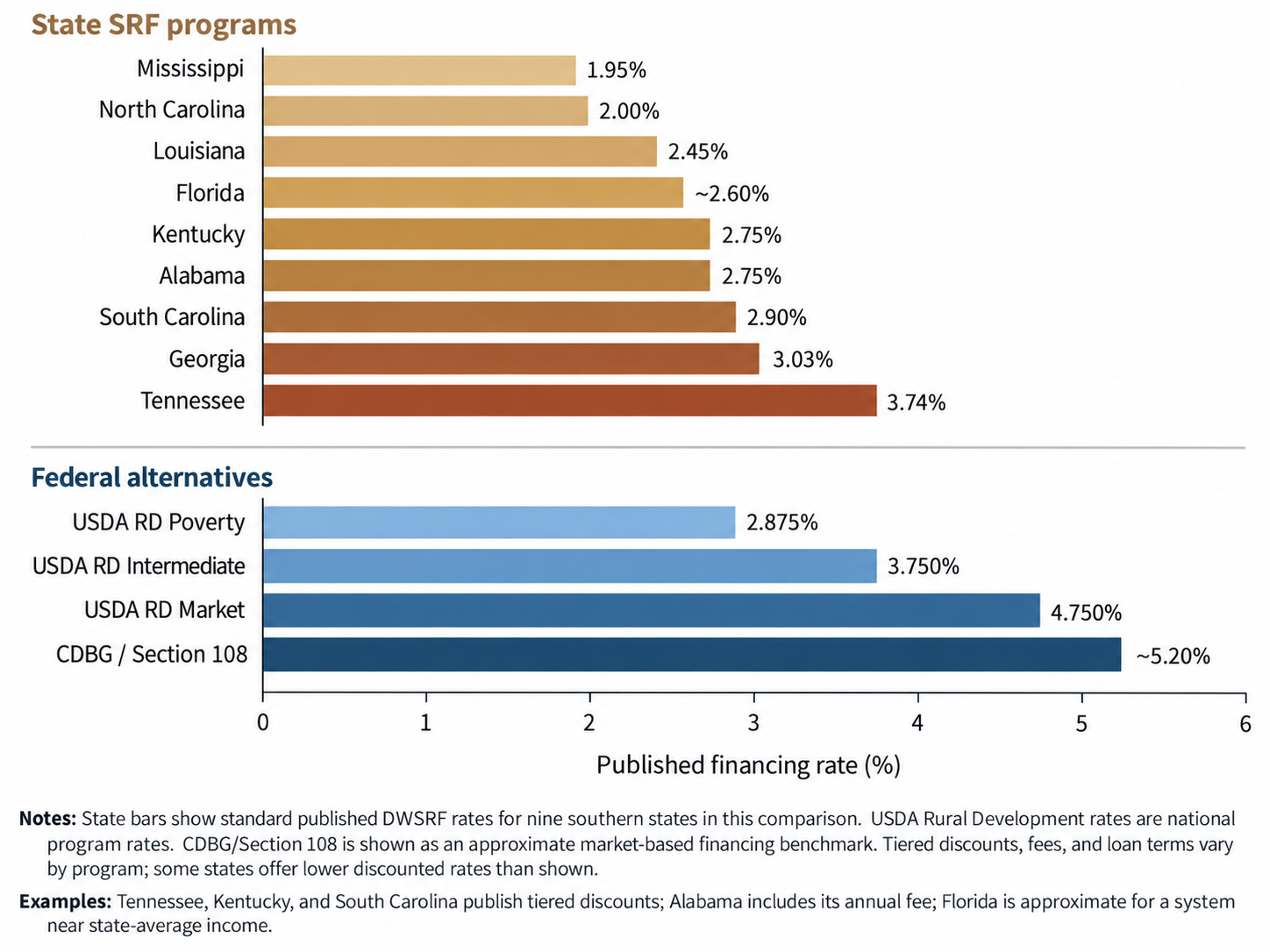
Figure 2 illustrates the standard DWSRF rates in the nine Southern states. Mississippi has the lowest standard DWSRF rates at 1.95 percent with no discount tiers, followed by North Carolina and Louisiana at 2.00 percent and 2.45 percent, respectively. Alabama’s rate includes an interest rate of 0.10 percent and a yearly fee of 2.65 percent that adds up to a rate of 2.75 percent.
Tennessee’s standard DWSRF rate is the highest of the nine, at 3.66 percent without discounts. The state sets a quarterly base rate and applies discounts based on an Ability-to-Pay Index (ATPI). For July-September 2026, Tennessee’s standard rates range from 3.29 percent for 20-year loans to 3.74 percent for 30-year loans, while qualifying communities receive lower rates. While Tennessee’s loan interest range starts at 1.03 percent for a five-year loan, South Carolina’s interest rates start at 2 percent for a five-year loan. States such as Kentucky and South Carolina also use tiered approaches while states such as Georgia use relatively flat rates or formulas tied to market conditions or local income. Fees, loan terms, principal forgiveness, and assistance for disadvantaged communities can further change borrowing costs. Lower financing costs can reduce debt-service pressure on utilities and lessen the need for customer rate increases.
Communities also have federal financing alternatives. USDA Rural Development’s Water and Waste Disposal program serves eligible rural communities, generally those with populations of 10,000 or fewer, and offers repayment terms of up to 40 years. For July-September 2026, USDA’s poverty, intermediate, and market rates are 2.875, 3.750, and 4.750 percent. Community Development Block Grant (CDBG) assistance is primarily related to grant funding, while HUD’s Section 108 program allows eligible communities to leverage future CDBG allocations through loan guarantees.
The key takeaway is that there is no single consistent SRF rate across the South. Water systems should compare the rates they are eligible to receive and consider fees, repayment terms, service area limitations and the potential for available subsidies. For policymakers, the comparison highlights a choice of three sources to seek water infrastructure funds and enable water systems to choose between simpler, broadly uniform pricing and targeted discounts that direct assistance toward communities with greater financial need. Based on the information presented, water systems can strategize which funding source to target to get better terms on their loans and avail the maximum discounts to repair, replace and upgrade water systems. As a consequence, the savings can be potentially passed on to consumers with lower rate increases for water infrastructure upgrades.
Figure 1. Published DWSRF standard and discounted rate ranges in nine Southern states, July 2026.
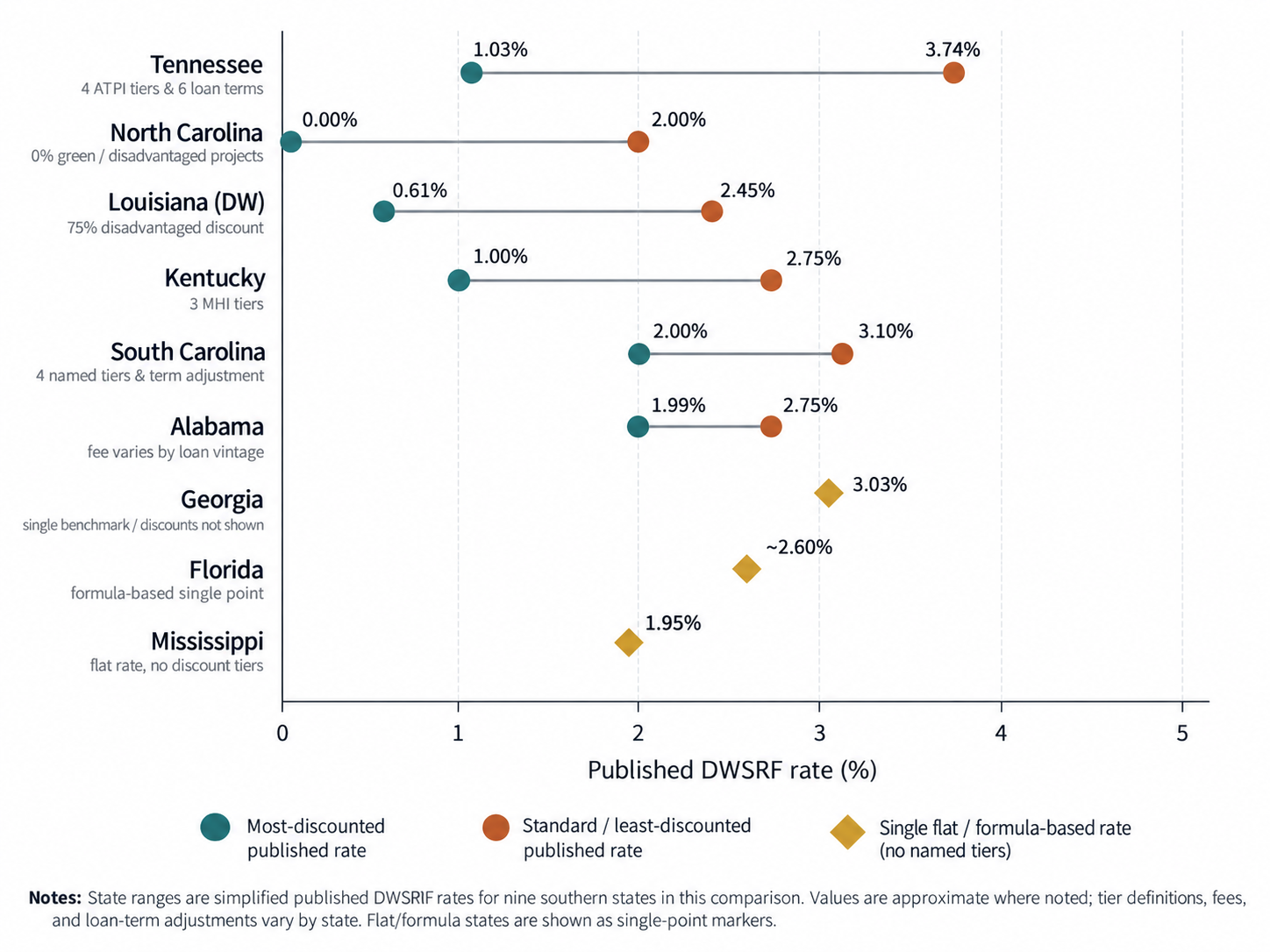
Figure 2. Standard Drinking Water State Revolving Fund Rates across the nine Southern States, July 2026.
Sources: U.S. Environmental Protection Agency, Drinking Water State Revolving Fund program overview; state SRF rate sheets and Intended Use Plans from Alabama ADEM, Florida DEP, Georgia GEFA, Kentucky Infrastructure Authority, Louisiana DEQ/DOH, Mississippi Department of Health/MDEQ, North Carolina DEQ, South Carolina Rural Infrastructure Authority, and Tennessee Department of Environment and Conservation; USDA Rural Development, Water and Waste Disposal Loan and Grant Program; and U.S. Department of Housing and Urban Development, Section 108 Loan Guarantee Program. Tennessee rates shown are State Fiscal Year 2027 first-quarter rates, updated July 22, 2026; USDA rates are for July-September 2026.
Brondos, Wes, James Mingies, and Sreedhar Upendram. “The Headline Rate Does Not Tell the Whole Story: Water Infrastructure Financing Across the South.” Southern Ag Today