

OSU’s Todd Hubbs writes that Grain and oilseed futures rebounded sharply coming out of the weekend, recovering from late-week weakness. Continued conflict in the Black Sea and optimism surrounding high-level U.S.–China trade discussions provided solid support for prices across the board.
Wheat Market Outlook
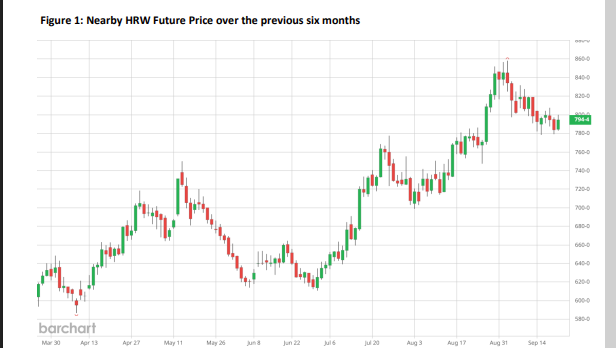
December Hard Red Winter (HRW) wheat futures gained 10 cents on Monday to close at $7.94 per bushel, clawing back recent losses. Over the past month, nearby futures traded between $7.90 and $8.50, with resistance establishing around the $7.90 mark. In Oklahoma, cash delivery basis ranges from -55 to -70 cents across the state.
Geopolitical risks remain elevated. While rumors surfaced regarding potential diplomatic progress, Ukraine’s strike against Russian energy infrastructure cast fresh doubt on a near-term resolution, pointing to sustained volatility.
Global tender activity showed mixed results:
- Algeria secured 500,000 tons of milling wheat at $319 to $321 per ton, with supplies originating from the European Union or Baltic-routed Russian grain.
- Jordan passed on a 120,000-ton milling wheat tender, pushing it back to later in September.
- Pakistan’s widely watched tender for 750,000 tons drew low offers of $348 per ton cost and freight (C&F).
U.S. Gulf wheat values held firm at $8.95 per bushel ($350 per ton), leaving American offers priced well above international competitors and out of reach for major buyers across North Africa and the Middle East.
Export capacity constraints continue to throttle Russian and Ukrainian shipments, leaving Black Sea quotes largely theoretical. Alternative logistics routes for Ukraine, including the Danube River corridor, face bottlenecks with wait times running twice as long as normal. In Russia, slow winter wheat planting alongside low producer prices and backlogged domestic logistics raise the prospect of significant acreage reductions across the Black Sea region.
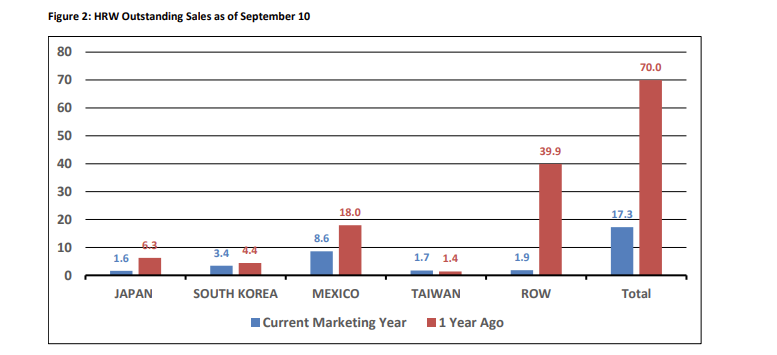
U.S. HRW export commitments for the 2026–27 marketing year sit at 73 million bushels, compared to 195 million bushels at the same point last year. Reaching USDA’s target of 190 million bushels requires weekly sales of 3.2 million bushels, though net sales over the past month averaged just 1.4 million bushels weekly. Outstanding sales total 17.3 million bushels, primarily destined for Mexico, Taiwan, and Japan. While Southern Hemisphere crop conditions look favorable, any drop in Black Sea planted acres could open new opportunities for HRW wheat down the road.
Soybean Market Outlook
November soybean futures advanced nearly a quarter on Monday to settle at $13.28 per bushel, closing near the upper boundary of the monthly $12.90 to $13.35 range. Oklahoma cash prices traded between $12.38 and $12.53. Anticipation surrounding the upcoming Trump-Xi bilateral meeting served as a primary catalyst, with traders eyeing trade developments that could support U.S. soybean flows.
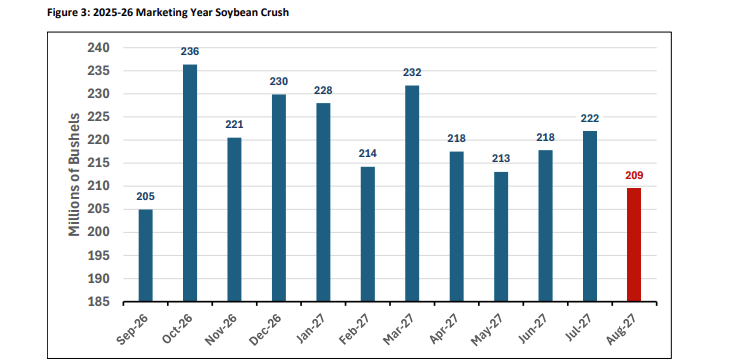
Domestic crush numbers showed signs of slowing. The National Oilseed Processors Association (NOPA) pegged August crush at 205.5 million bushels, trailing trade expectations. Correlating NOPA data to USDA historical reporting suggests a final August crush near 209 million bushels, which puts the total marketing year crush at 2,445 million bushels—10 million bushels below the current USDA projection. USDA is expected to lower both 2025–26 crush figures and biodiesel-related soybean oil usage in upcoming reports.
Renewable fuel data aligns with that softer crush reading. Environmental Protection Agency (EPA) figures revealed a decline in August D4 RIN generation, signaling reduced soybean oil usage for biodiesel. D4 generation remains well behind pace to meet 2026 Renewable Volume Obligations (RVO), meaning obligated parties will likely carry a deficit into 2027. Combined with EPA’s reallocation of 2025 small refinery exemptions, soybean oil demand could see renewed strength through late 2026 and into 2027.
Soybean meal export demand continues at a steady pace. Census data through July shows cumulative marketing year exports of 17.322 million short tons. Keeping on track with USDA projections requires monthly shipments to average 1.589 million short tons over the final two months; April through July shipments averaged 1.711 million short tons monthly. Export commitments through September 10 stand at 19.917 million short tons, leaving USDA’s annual projection within reach despite recent weekly slowdowns.
Whole bean export commitments are setting an early strong tone, totaling 758 million bushels—45 percent of USDA’s full-year target and 9 percent above the five-year average. Recorded commitments to China stand at 362 million bushels (9.9 million metric tons), with additional purchases and unassigned destination sales likely destined for Chinese ports as they work toward their 25 million metric ton annual commitment.
Global supply risks are also surfacing ahead of South America’s growing season:
- High diesel prices are complicating early planting operations in South America.
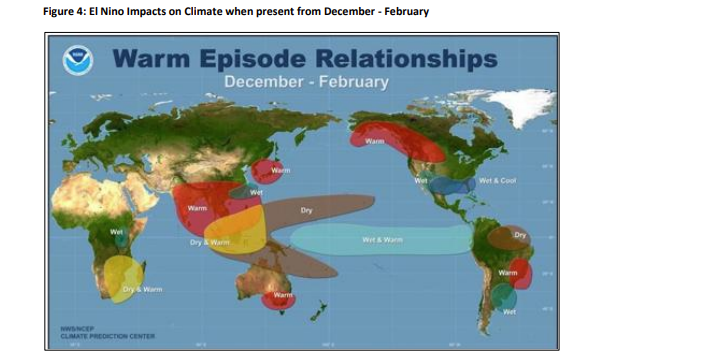
- NOAA estimates a 95 percent probability of an exceptionally strong El Niño event from December through February.
- Historical El Niño patterns bring drier conditions to northern Brazil, a region that has expanded production significantly over the past decade.
With global soybean production projected at 16.25 billion bushels—including 6.8 billion bushels from Brazil and a combined 13.2 billion bushels across the U.S., Brazil, and Argentina—any weather-driven yield setbacks in northern Brazil could reshape world balance sheets.